Why the road through Duck Creek Village is called Movie Ranch Road, and which films were made on Cedar Mountain
Why is it called Movie Ranch Road?
The main road through Duck Creek Village is named Movie Ranch Road because the high meadows and aspen forest of Cedar Mountain were a working Hollywood filming location for four decades. From the late 1930s through the 1970s, film crews came up Highway 14 to shoot Westerns and family pictures against the mountain’s 8,400-foot scenery, and the name stuck. It is the question guests ask most often at check-in, so the filmography below lists every production we could document, with its source.
Era filmed
1930s–1970s
Documented productions
9+
Elevation on screen
~8,400 ft
What survives
Movie Ranch Road
The filmography
Productions documented on Cedar Mountain and in the Duck Creek Village area, earliest first. Where a siting rests on thinner evidence, we say so in the write-up rather than flagging the title.
For John Ford’s first Technicolor feature, the studio built a complete Revolutionary War-era fort on Cedar Mountain. Crews cut miles of access road and raised a full fort and frontier settlement in Sidney Valley, immediately beside present-day Duck Creek Village, with additional filming at Aspen Mirror Lake, Navajo Lake, Strawberry Valley, and Cedar Breaks.
The boy-and-his-horse Technicolor picture used Duck Creek and Aspen Mirror Lake for its high-country ranch scenery, with more Utah locations in Strawberry Valley, Johnson Canyon, and Cedar Breaks. D’Arc singles out the Duck Creek Flicka shoots as a record of rural Utah that has since changed.
Deanna Durbin’s only Technicolor film, and a rare musical among the mountain’s Westerns, filmed at Duck Creek, Strawberry Point, Navajo Lake, and Cascade Falls. Cedar Breaks and Johnson Canyon round out the Utah work.
The Flicka sequel, the first Technicolor Monopack 35mm feature, returned to Duck Creek for its ranch and range scenery. Some references list a “Duck Creek, Nevada” by mistake; the Kane County and D’Arc records place the shoot in Utah.
The Will James horse story is placed at Duck Creek and Cedar Mountain by the Kanab museum’s studio-attributed list. (One local retelling misdates it to 1950; the film is 1946.)
The third Flicka-universe film worked Strawberry Valley on Cedar Mountain (a young, uncredited Marilyn Monroe appears as an extra). Some local lists extend the credit to Duck Creek itself, but the firmly documented Cedar Mountain location is Strawberry Valley.
A wild-horse Western built around real-life war hero Audie Murphy, filmed at Duck Creek and Aspen Mirror Lake with additional work at Cascade Falls, Cedar Breaks, and Kanab Canyon. An early Tony Curtis appears in a small role.
A cavalry-and-frontier Western that used Strawberry Point on Cedar Mountain among its southern Utah locations, alongside the Kanab Movie Fort and Three Lakes.
The Kane County filmography lists Cedar Mountain and Strawberry Point among this cavalry Western’s locations, with the Kanab Movie Fort and Pipe Spring.
Part of this Clint Walker Western is placed at Duck Creek by the Kanab museum. D’Arc’s book preserves a local memory from the era: residents were allowed onto the Duck Creek sets if they stayed quiet during takes, and some came away with Clint Walker autographs.
Fess Parker’s long-running NBC series used Duck Creek to stand in for the Kentucky backwoods, filming in color to show off the southern Utah scenery. A cabin was built for the production at Duck Creek in 1965, photographed at the time by the U.S. Forest Service. No source confirms that cabin still stands. The Forest Service later photographed the “Movie Ranch” set buildings falling into disrepair, so we describe the cabin as built and photographed, not surviving.
The James Arness television series, not the 1962 Cinerama feature of the same name, brought production back to Duck Creek for its late-1970s seasons, alongside the Kanab Movie Fort and Johnson Canyon. This is the “How the West Was Won” with a documented Duck Creek connection.
1939
Drums Along the Mohawk
Feature film · 20th Century-Fox · dir. John Ford
Henry Fonda, Claudette Colbert, Edna May Oliver, Ward Bond, John Carradine
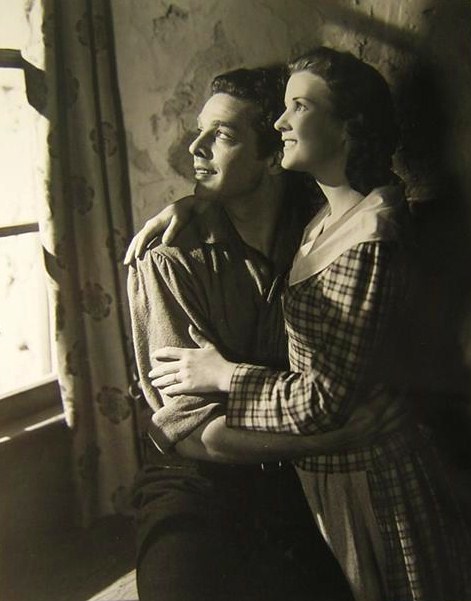
A 1939 publicity still from Drums Along the Mohawk, whose fort was built on Cedar Mountain.20th Century-Fox (publicity still) · Public domain · via Wikimedia Commons
For John Ford’s first Technicolor feature, the studio built a complete Revolutionary War-era fort on Cedar Mountain. Crews cut miles of access road and raised a full fort and frontier settlement in Sidney Valley, immediately beside present-day Duck Creek Village, with additional filming at Aspen Mirror Lake, Navajo Lake, Strawberry Valley, and Cedar Breaks.
Fort set in Sidney Valley, adjacent to Duck Creek Village
The 1939 theatrical trailer, in the public domain (published without separate copyright notice and never separately renewed), hosted by the Internet Archive. The feature film itself remains under copyright.
Sources
D’Arc, When Hollywood Came to Town (2010), pp. 287–288
Feature film · 20th Century-Fox · dir. Harold D. Schuster
Roddy McDowall, Preston Foster, Rita Johnson
The boy-and-his-horse Technicolor picture used Duck Creek and Aspen Mirror Lake for its high-country ranch scenery, with more Utah locations in Strawberry Valley, Johnson Canyon, and Cedar Breaks. D’Arc singles out the Duck Creek Flicka shoots as a record of rural Utah that has since changed.
Duck Creek and Aspen Mirror Lake
Sources
D’Arc, When Hollywood Came to Town (2010), pp. 287–288
Deanna Durbin’s only Technicolor film, and a rare musical among the mountain’s Westerns, filmed at Duck Creek, Strawberry Point, Navajo Lake, and Cascade Falls. Cedar Breaks and Johnson Canyon round out the Utah work.
Duck Creek and Strawberry Point
Sources
D’Arc, When Hollywood Came to Town (2010), pp. 287–288
The Flicka sequel, the first Technicolor Monopack 35mm feature, returned to Duck Creek for its ranch and range scenery. Some references list a “Duck Creek, Nevada” by mistake; the Kane County and D’Arc records place the shoot in Utah.
The Will James horse story is placed at Duck Creek and Cedar Mountain by the Kanab museum’s studio-attributed list. (One local retelling misdates it to 1950; the film is 1946.)
Duck Creek / Cedar Mountain (single-source siting)
The third Flicka-universe film worked Strawberry Valley on Cedar Mountain (a young, uncredited Marilyn Monroe appears as an extra). Some local lists extend the credit to Duck Creek itself, but the firmly documented Cedar Mountain location is Strawberry Valley.
Strawberry Valley, Cedar Mountain
Sources
D’Arc, When Hollywood Came to Town (2010), pp. 287–288
Feature film · Universal-International · dir. Alfred E. Green
Audie Murphy, Wanda Hendrix, Burl Ives, Tony Curtis, Dean Jagger
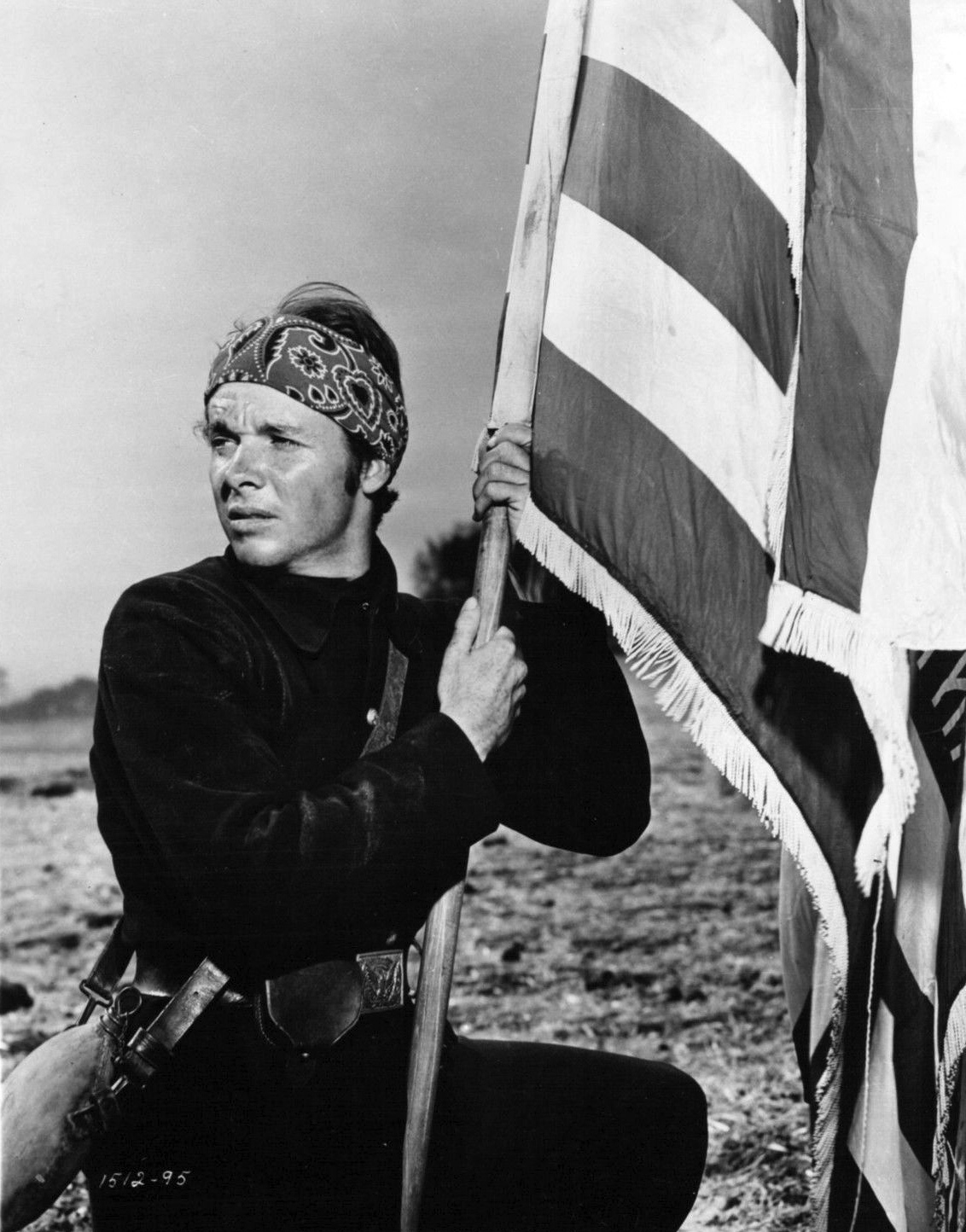
Audie Murphy, star of Sierra (1950), filmed at Duck Creek and Aspen Mirror Lake.MGM (publicity photo) · Public domain · via Wikimedia Commons
A wild-horse Western built around real-life war hero Audie Murphy, filmed at Duck Creek and Aspen Mirror Lake with additional work at Cascade Falls, Cedar Breaks, and Kanab Canyon. An early Tony Curtis appears in a small role.
Duck Creek and Aspen Mirror Lake
Sources
D’Arc, When Hollywood Came to Town (2010), pp. 287–288
Feature film · United Artists · dir. Lesley Selander
Rory Calhoun, Peggie Castle, Rita Moreno, Peter Graves, Lee Van Cleef
A cavalry-and-frontier Western that used Strawberry Point on Cedar Mountain among its southern Utah locations, alongside the Kanab Movie Fort and Three Lakes.
Feature film · United Artists · dir. Lesley Selander
Tony Martin, Peggie Castle, John Bromfield
The Kane County filmography lists Cedar Mountain and Strawberry Point among this cavalry Western’s locations, with the Kanab Movie Fort and Pipe Spring.
Cedar Mountain / Strawberry Point (single-source siting)
Part of this Clint Walker Western is placed at Duck Creek by the Kanab museum. D’Arc’s book preserves a local memory from the era: residents were allowed onto the Duck Creek sets if they stayed quiet during takes, and some came away with Clint Walker autographs.
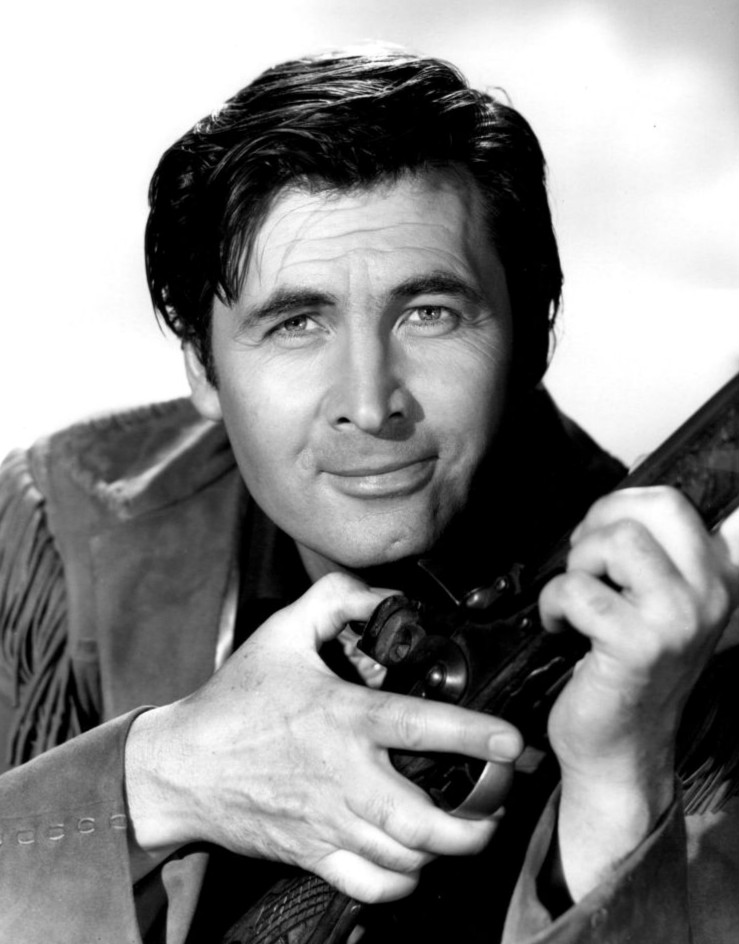
Fess Parker as Daniel Boone. The NBC series used Duck Creek to stand in for Kentucky.NBC Television (publicity photo) · Public domain · via Wikimedia Commons
Fess Parker’s long-running NBC series used Duck Creek to stand in for the Kentucky backwoods, filming in color to show off the southern Utah scenery. A cabin was built for the production at Duck Creek in 1965, photographed at the time by the U.S. Forest Service. No source confirms that cabin still stands. The Forest Service later photographed the “Movie Ranch” set buildings falling into disrepair, so we describe the cabin as built and photographed, not surviving.
The James Arness television series, not the 1962 Cinerama feature of the same name, brought production back to Duck Creek for its late-1970s seasons, alongside the Kanab Movie Fort and Johnson Canyon. This is the “How the West Was Won” with a documented Duck Creek connection.
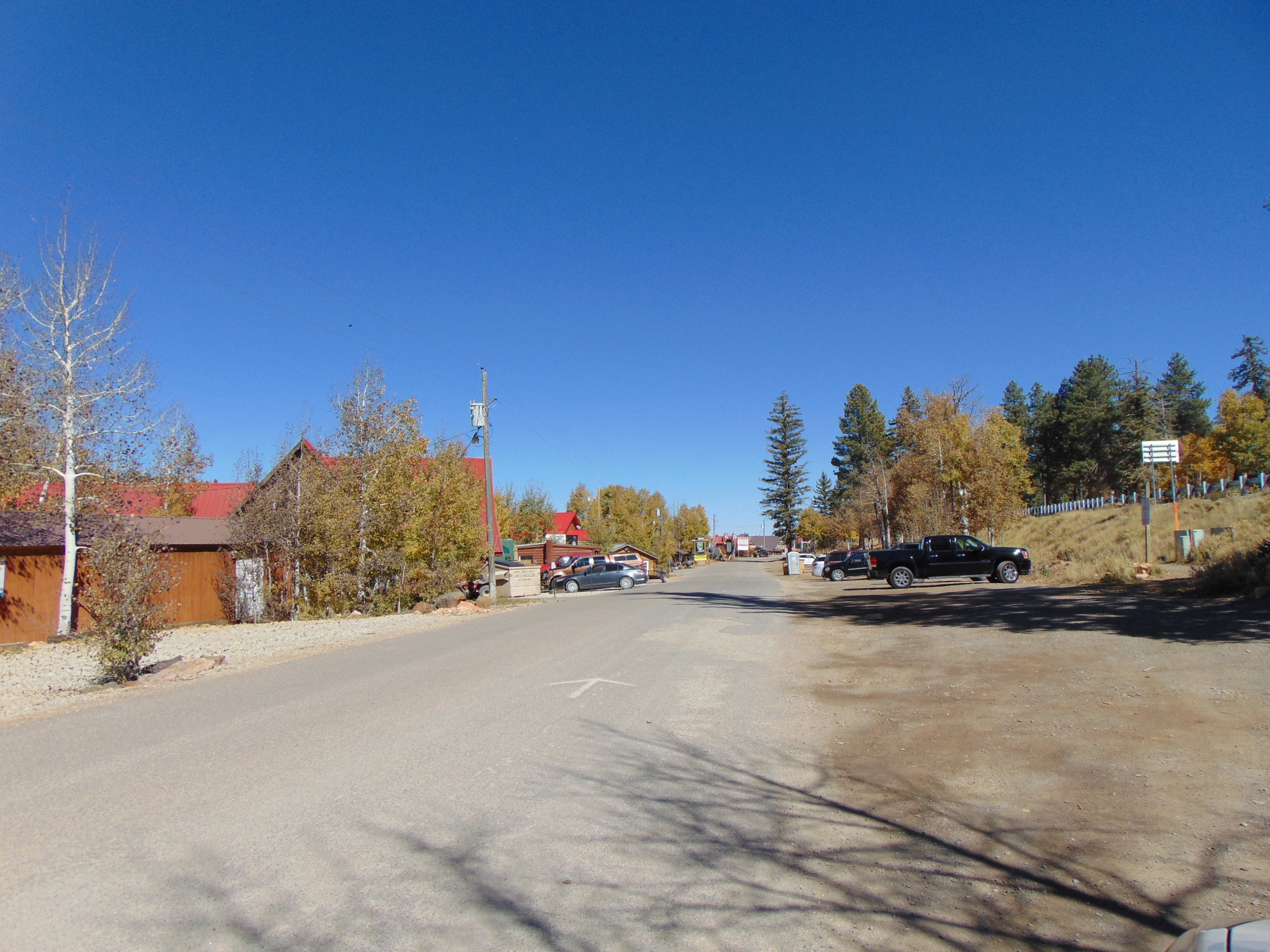
Movie Ranch Road, the main road through Duck Creek Village, is the most visible legacy. Drive it and you are on the ground the studios used. Do not expect a movie set: the Forest Service later photographed the Movie Ranch set buildings falling into disrepair, and no source confirms that the 1965 Daniel Boone cabin still stands.
The open meadows and aspen stands that framed those shots are still here, largely unchanged. That high-country look is why crews chose Cedar Mountain, and it is what you see today from the village and along Highway 14. Aspen Mirror Lake, Navajo Lake, Strawberry Point, Cascade Falls, and Cedar Breaks all appear in the filmography and are the same places you can visit today.
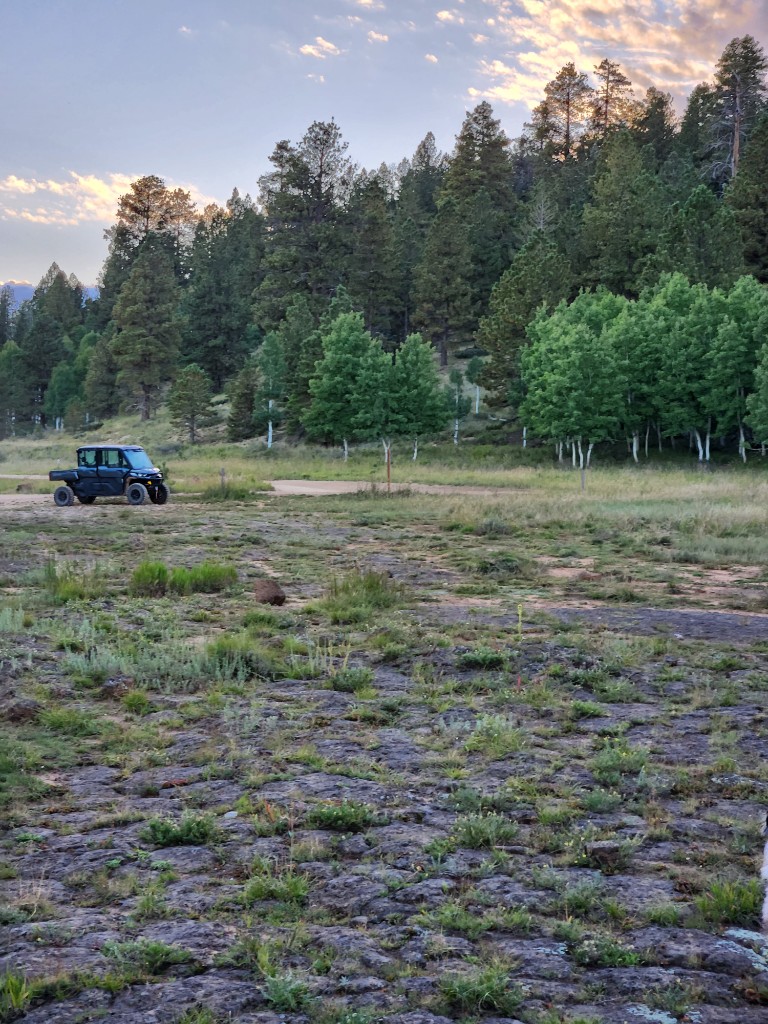
Movie Ranch Road, Duck Creek Village, the road named for the town’s filming history.An Errant Knight · CC BY-SA 4.0 · via Wikimedia Commons
Seeing it for yourself
No guide or permit is needed. From the inn, Movie Ranch Road and the meadows around the village are a short walk or drive. Early morning and the hour before sunset give the light the cinematographers came for.
Pair it with the fall-color drive on Highway 14, an ATV loop through the same country, or an evening at Aspen Mirror Lake, where My Friend Flicka and Sierra were filmed.
National Velvet was not filmed here
Several local guides claim National Velvet (1944) was filmed at Duck Creek, and one even says Elizabeth Taylor “called the village home” while making it and Drums Along the Mohawk. Neither holds up: National Velvet’s location work was done in California, it appears in no Kane County filming record, and Taylor, whose film debut came in 1942, is not in Drums Along the Mohawk (1939) at all. We leave it off the filmography.
Sources & further reading
Public, citable records. Where a claim rests on a single local account, the write-up says so. If you have a documented correction or a family photo you own the rights to, please get in touch.
When Hollywood Came to Town: A History of Moviemaking in Utah James V. D’Arc (Gibbs Smith, 2010; rev. ed. 2019)Pages 287–288 carry the Duck Creek / Cedar Mountain location lists most other references trace back to.
Sources are public film-commission records, published film histories, and archive catalogs. Dates and titles were checked against more than one source before being marked confirmed. No copyrighted photographs or text are reproduced; every fact is restated in our own words with its source named. Corrections from local families and film historians are welcome.
What guests ask about Movie Ranch Road and the films.
Why is the road in Duck Creek Village called Movie Ranch Road?
Because Cedar Mountain and the Duck Creek Village area were a working Hollywood filming location from the late 1930s through the 1970s. Crews came up Highway 14 to shoot Westerns and family films against the high-country scenery, and the road that runs through the village kept the name.
Was How the West Was Won filmed at Duck Creek?
The How the West Was Won television series (1976–79) used the Cedar Mountain area, not the earlier 1962 Cinerama feature of the same name. It is a common mix-up; the TV series is the Duck Creek connection.
Is there anything to see there today?
Yes. Movie Ranch Road itself, and the open meadows and aspen forest that framed the films, are still here and largely unchanged. There is no formal movie-set attraction; the experience is driving the road and standing in the landscape the studios used.
Stay on the Movie Ranch
Book a room or cabin at Duck Creek Village Inn, steps from Movie Ranch Road and the meadows Hollywood filmed for forty years.