
Was ist Brian Head von Duck Creek aus?
Brian Head ist der Abenteuer-Partner von Duck Creek Village.
Duck-Creek-Guide
Utah’s highest town, built around a ski hill — skiing, snow tubing, and summer chairlift days, 23.5 miles from Duck Creek Village Inn in summer and 61 miles once the Cedar Breaks road closes
Auf einen Blick
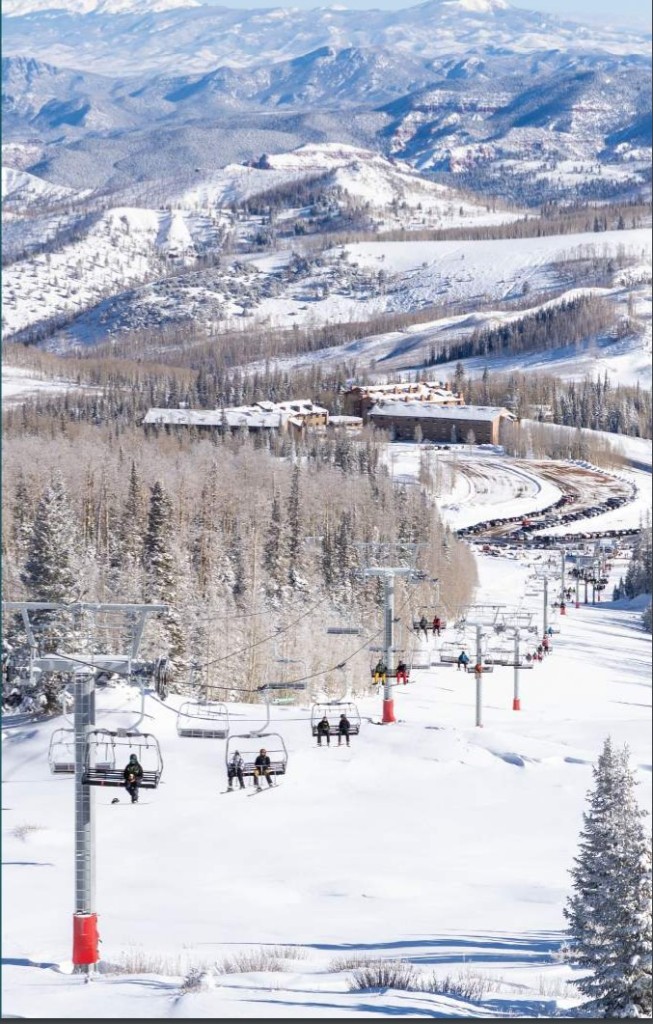
Brian Head is a ski town wrapped around a ski hill at the top of Parowan Canyon, and it is the nearest place to Duck Creek Village where you can buy a lift ticket, rent skis, or put a kid on a snow tube and let gravity do the rest. In summer the same chairlift keeps turning for mountain bikers and sightseers, so what there is to do in Brian Head changes completely depending on which month you are asking about.
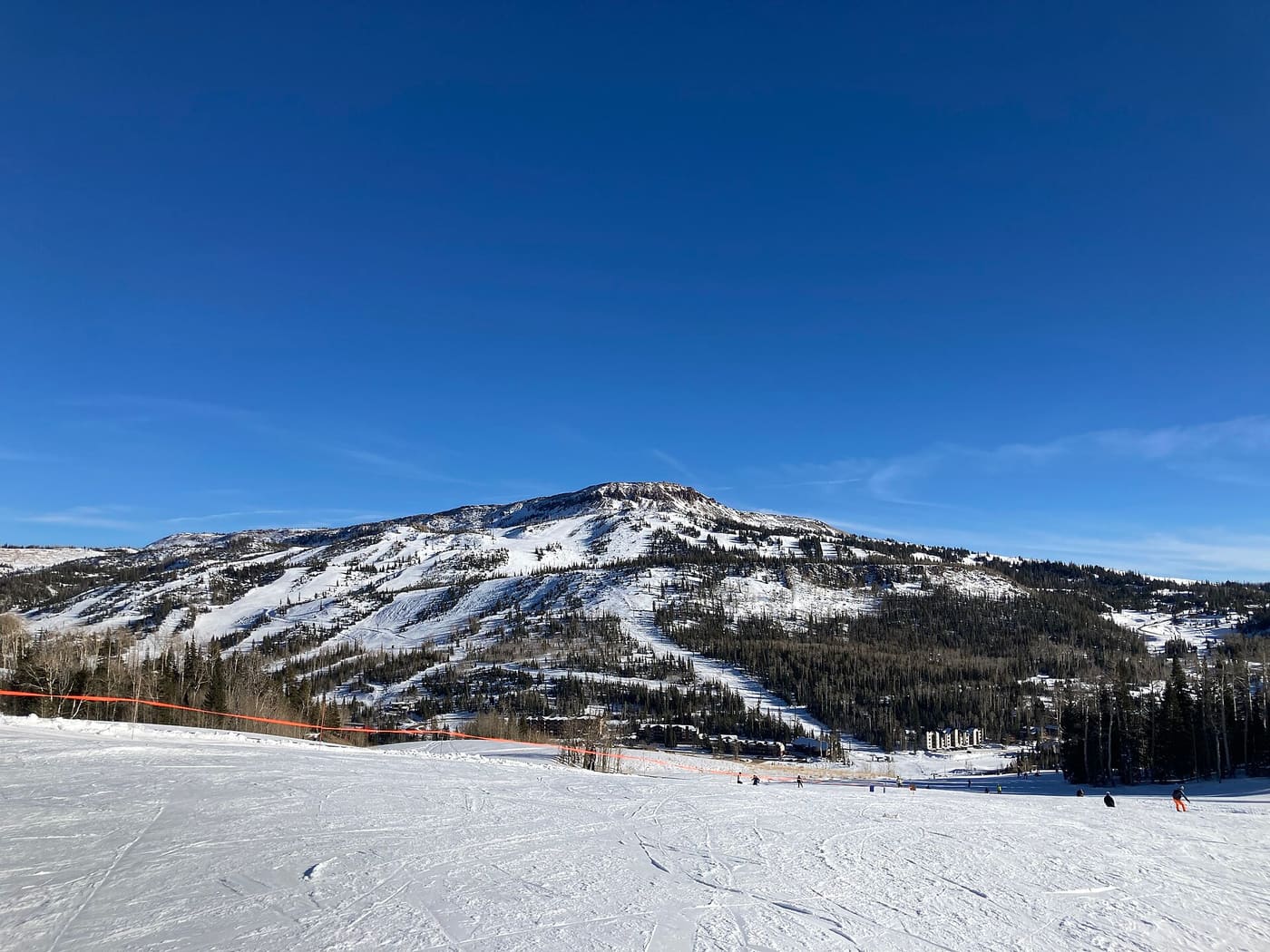
Four elevation numbers get quoted for this place and they all mean different things, which is why the internet cannot agree on how high Brian Head is. Brian Head Town sits at 9,800 ft and is the highest incorporated town in Utah. Brian Head Peak, the bare summit above it, is 11,307 ft — and you can drive most of the way up it in summer. The resort's lowest lift base is 9,600 ft and its highest lift tops out at 10,920 ft. Nothing at the resort is at 11,300 feet, and nothing on the mountain is below 9,600.
Everything below is measured or sourced rather than repeated: the drive comes from routing engines and USGS elevation data, the lift table from mapped lift geometry, and the snow from the federal snow-telemetry station that sits on the mountain itself. Resort dates, hours, and prices are the one part that changes every season, and those are flagged as patterns rather than promises.
This is the single thing worth understanding before you plan a Brian Head day from Duck Creek. There are two drives, and which one you get depends entirely on whether Highway 148 through Cedar Breaks is open.
The interactive map needs JavaScript. In summer the route is SR-14 west, SR-148 north through Cedar Breaks, then SR-143 into Brian Head. In winter, SR-14 down to Cedar City, I-15 north to Parowan, then SR-143 up Parowan Canyon.
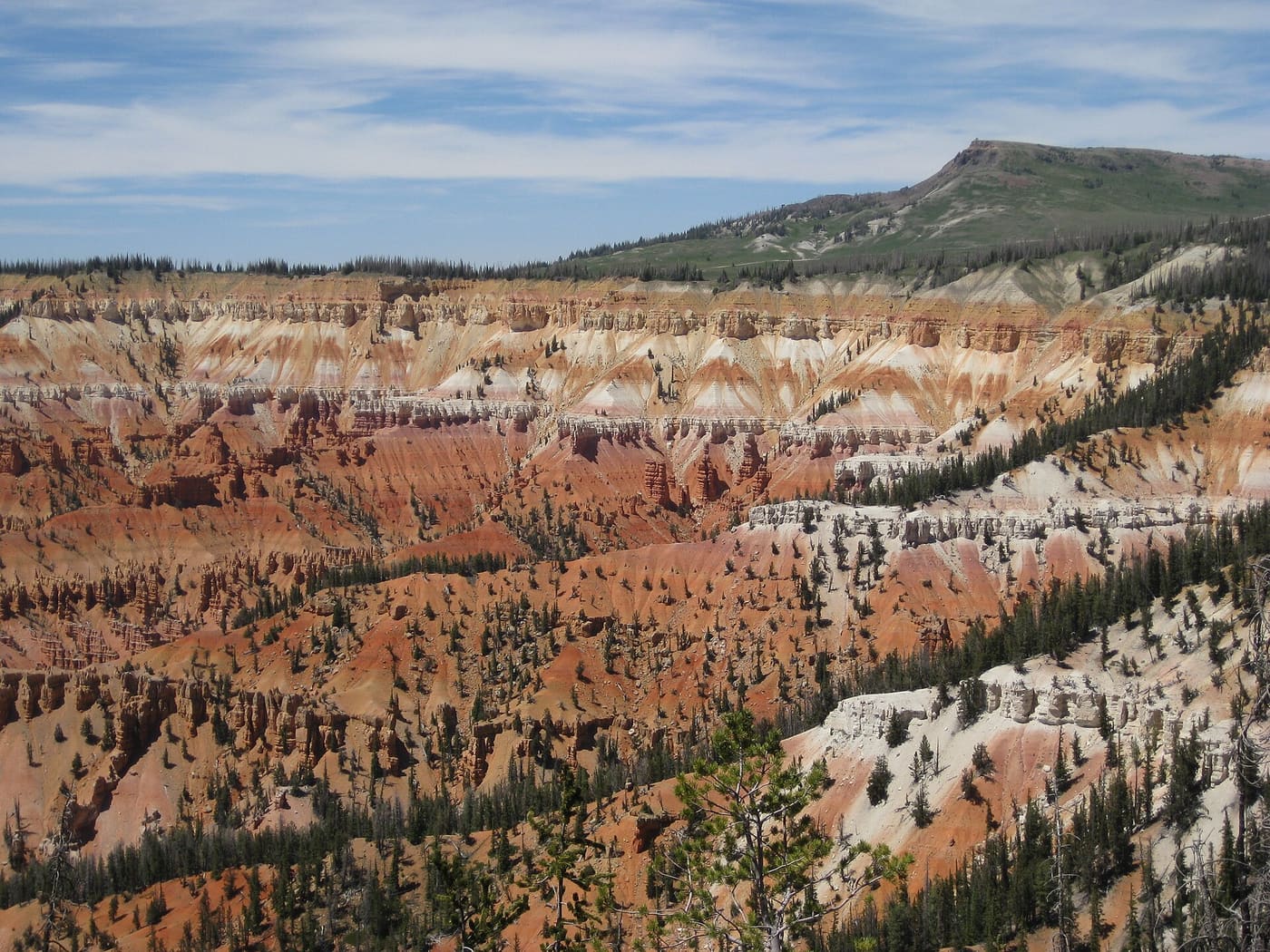
In summer it is a short, spectacular hop: Highway 14 west from the village, north on Highway 148 through Cedar Breaks National Monument, then Highway 143 into town. 23.5 miles, about 41 minutes, and you cross the Cedar Breaks rim at 10,601 ft on the way — higher pavement than any lift base at the resort. If you have never done it, budget extra time, because you will stop.
Around mid-November the National Park Service gates Highway 148 for winter and it does not reopen until mid or late May. The drive then becomes Highway 14 down to Cedar City, I-15 north to Parowan, and Highway 143 back up Parowan Canyon: 61.2 miles and about 1 hr 35 min in good conditions. You lose 4,200 ft of elevation to the valley floor and then climb 3,950 ft back up in the final thirteen miles. Cumulatively the winter route makes you climb 5,954 ft against the summer route's 2,476.
Parowan Canyon is the part that deserves respect. The steepest sustained two miles on the approach average close to ten percent, and UDOT classifies Highway 143 over the canyon as a Class II traction-law segment, a step above Highway 14. When the traction law is active there, four-wheel drive alone is not enough — the rule is about tires, not drivetrain.
Check the drive before you check the forecast. Our road conditions page, the Brian Head corridor page, the snow report, and the mountain weather forecast all update live. The storm that makes Brian Head worth the drive is the same storm that can make the drive a bad idea for the wrong vehicle.
| Leg | Road | Miles | Time |
|---|---|---|---|
| Summer — 23.5 mi, 41 min | |||
| Inn to the SR-148 junctionRolling plateau forest, climbing about 1,450 ft to the turn. In winter the plowing on SR-148 stops right here. | SR-14 west | 12.3 | 18 min |
| Junction to Point SupremeInto Cedar Breaks past the visitor center. You are on the rim at 10,350 ft, and the highest pavement of the day is still ahead. | SR-148 north | 3.2 | 7 min |
| Cedar Breaks to Brian HeadOver the top of the rim road at 10,601 ft, past the Brian Head Peak turnoff, then down into town. | SR-148 to SR-143 north | 8 | 16 min |
| Winter — 61.2 mi, 1 hr 35 min | |||
| Inn down to Cedar CityOver the SR-14 summit at 9,890 ft, then 4,200 ft down through Cedar Canyon. The descent is the part that needs your attention in winter. | SR-14 west | 29.8 | 46 min |
| Cedar City to ParowanThe only flat, fast, plowed-first stretch of the whole drive. | I-15 north | 18.9 | 23 min |
| Parowan up to Brian HeadParowan Canyon: 3,950 ft of climbing in 13 miles, with a two-mile stretch near the top that averages almost 10 percent. This is the Class II traction-law segment. | SR-143 south | 12.5 | 26 min |
Brian Head Resort spans two connected mountains. Navajo is the beginner side, with the learning area, the kids' programs, and the lowest base on the hill. Giant Steps is where the main lodge sits, along with the rental counter, the snow tubing hill, and the lift that runs all summer for bikes. The resort counts 72 runs across more than 650 acres, split roughly 32 percent beginner, 36 percent intermediate, and 32 percent advanced.
The chart is the part the trail map does not tell you. Measured from mapped lift geometry and USGS elevations, Giant Steps Express serves the biggest single stretch of vertical at 1,142 ft, and 3 lifts top out above 10,800 ft. That high cluster is why Brian Head can still be skiing in April when lower Utah resorts are closing: the snow that matters is sitting a thousand feet above the parking lot.
Night skiing runs on Friday and Saturday evenings from 4pm to 9pm once the season is going, on the Blackfoot lift, and expands to every night during holiday weeks. Rentals stay open in the Giant Steps Lodge on those evenings. The resort has been advertising free skiing for children 12 and under through a free Power Kids Pass, and day tickets starting as low as $9 when bought well ahead — both are season-by-season promotions, so read the current terms rather than ours.
For 2026-27 the resort has announced Friday, November 6, 2026 as opening day. Its published day hours are weekdays 10:00am–4:00pm; weekends and peak periods 9:30am–4:30pm.
Snow tubing is the best reason to drive up here if nobody in your group skis. It is a groomed hill with its own lanes and its own ticket at the Giant Steps base area, and the tube comes with the ticket.
In a normal week the tubing hill has run Sunday through Thursday from 10:00am to 4:00pm, and Friday and Saturday from 10:00am to 7:00pm, with extended hours seven days a week over the holiday periods — the resort has been publishing those blocks around the Christmas and New Year stretch, Martin Luther King Jr. weekend, and Presidents Day week. Those are patterns, not a promise: tubing is snow dependent, and the hill needs deeper coverage than the first ski runs do, so it typically opens later in the season than the lifts.
Two practical notes from the elevation. First, dress for standing around in the cold, not for a car ride: waterproof gloves, snow boots, and a hat matter more here than a heavy coat. Second, a 1.5-hour session is genuinely enough for most young kids at 9,700 feet — do not assume you will want to buy a second one.
If you are coming on a weekend or over a holiday, buy the session online rather than hoping for a walk-up slot.
Resorts publish an average annual snowfall — Brian Head's is 360 inches — and that number tells you almost nothing about whether there will be snow on the ground the week you visit. There is a better source. The federal snow-telemetry network runs a station on this mountain: NRCS SNOTEL site 1154:UT:SNTL, "Brian Head", at 10,040 ft, roughly three hundred feet above the Giant Steps base. It has measured snow depth every day since 2011. We pulled 15 complete seasons of it.
Three things come out of that record. Opening weekend is early: the median snow depth at the station on November 6 is a few inches, which means opening day is a snowmaking achievement rather than a natural one, and early-season terrain is limited. The pack does not get genuinely deep until January. And it tops out in the middle of March, when a median year has about 50 inches on the ground — seasons peak on different dates, so the median season's own high-water mark is higher, 64 inches, reached around March 18. Then it drops away fast. The median season holds 24 inches or more for 132 days, from about December 18 to about May 2.
The second chart is the one to look at if you are booking early. Season to season, the peak depth here has ranged from 38 inches (2014) to 108 inches (2023). A thin peak and a short season usually arrive together, so a poor year is poor in both depth and length. If your trip has to be a ski trip, February and the first half of March are the weeks that have held up best across the record.
We keep a live version of this on the Duck Creek snow report, which reads the same network from the two stations that bracket the village.
Snowmobiling is the big one, and it is the activity that connects Brian Head back to Duck Creek. The Cedar Mountain snowmobile complex covers the plateau between the two towns. If you would rather ride from our side of the mountain, our snowmobile guide covers snowpack, grooming, rentals, and the rules that apply on Dixie National Forest land.
Cedar Breaks National Monument becomes a winter destination in its own right, but only under its own terms. Once Highway 148 and the Rim Road close, the snow-covered road becomes a marked, groomed snowmobile route — and riding off that marked route inside the monument is prohibited, with fines up to $5,000 and impoundment. Snowshoers and cross-country skiers are freer: the Park Service sets track only on the road, but all trails are open to travel on foot, and rangers lead guided snowshoe walks on the monument calendar.
The plowed lot at the Highway 143 junction with the monument road is the closest winter access point to Brian Head, and Point Supreme overlook is 4.1 miles from there. Trailers are not allowed in that lot. If you would rather start from the Duck Creek side, the maintained lot where Highway 14 meets Highway 148 puts the overlook 3.5 miles away — that is the same junction that turns your 23-mile drive into a 61-mile one.
Brian Head Resort also lists snowshoeing, cross-country skiing, ice skating, and spa services among its winter offerings, which is useful on a storm day when the lifts are on wind hold. Our Cedar Breaks guide covers the monument in more depth across all four seasons.
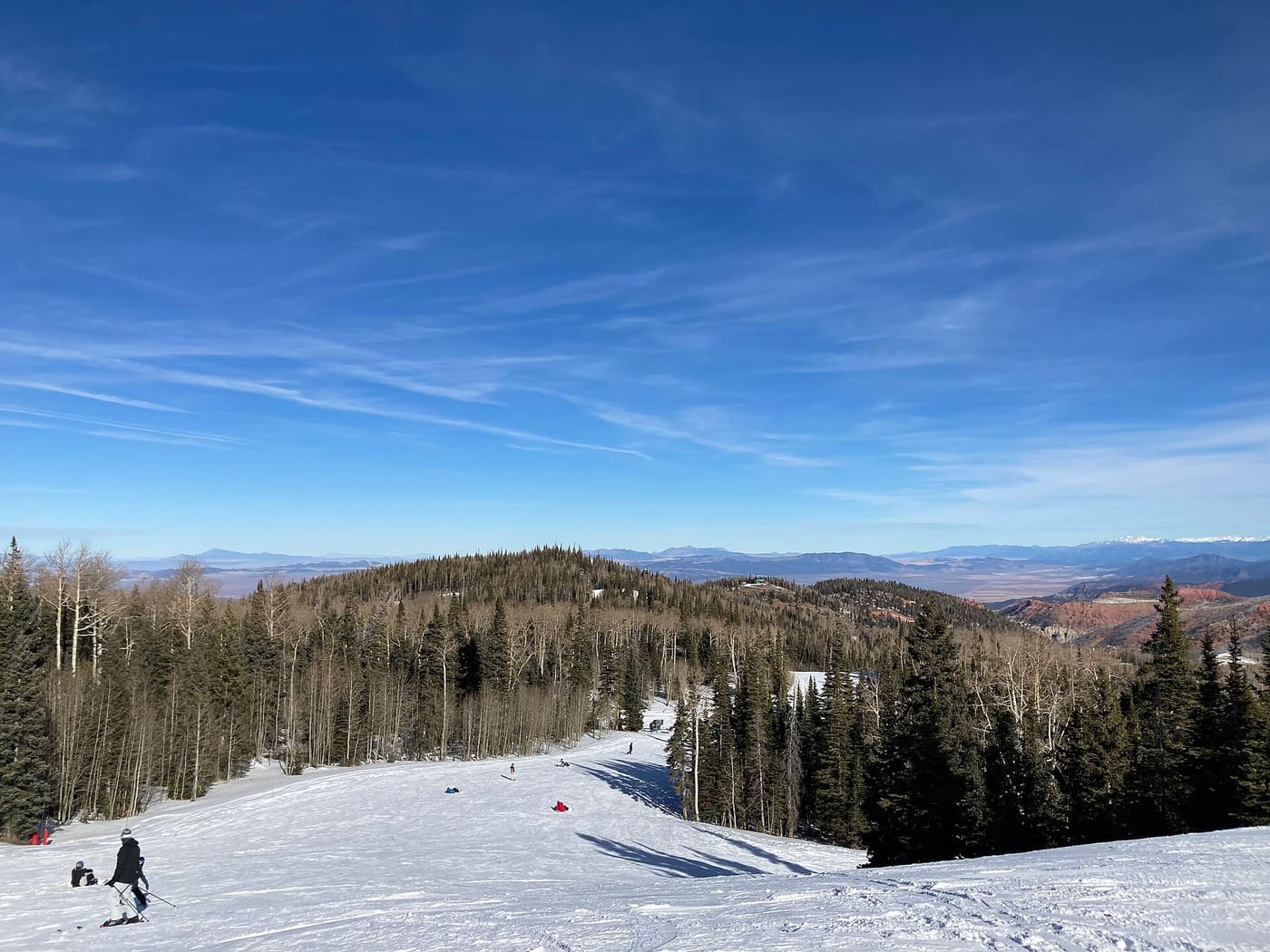
Summer at Brian Head is lift-served rather than snow-covered. The Giant Steps Express keeps running for downhill mountain biking on more than 100 miles of single track, and the same lift sells scenic rides for people who just want the view. The Vista Trail is the hiking version: ride the lift up, then walk three miles back down through aspen.
The base area fills in around that with an 18-hole disc golf course and an Adventure Zone that runs Thursday through Sunday: a climbing wall, a 300-foot mini zip line, a bungee trampoline, and Avalanche Tubing, a summer tubing hill with a conveyor lift back to the top. Avalanche Tubing has both an age and a weight minimum, so check the requirements if you are bringing small kids.
The resort has recently run Friday through Sunday from mid-June, daily from late June through the end of August, then weekends into the third week of September with Labor Day added. Summer lift hours have been 9:30am to 5:00pm. Those dates shift year to year, so confirm the current calendar before planning around it.
Above the resort, a Dixie National Forest spur road climbs from Highway 143 toward the Brian Head Peak observation site, where a stone shelter built by the Civilian Conservation Corps in 1935 still stands. On a clear day the view reaches Nevada's Wheeler Peak, Arizona's Mount Trumbull and Navajo Mountain, and the Tushar Range. The road is unpaved and only snow-free for part of the year, so check Dixie National Forest alerts first.
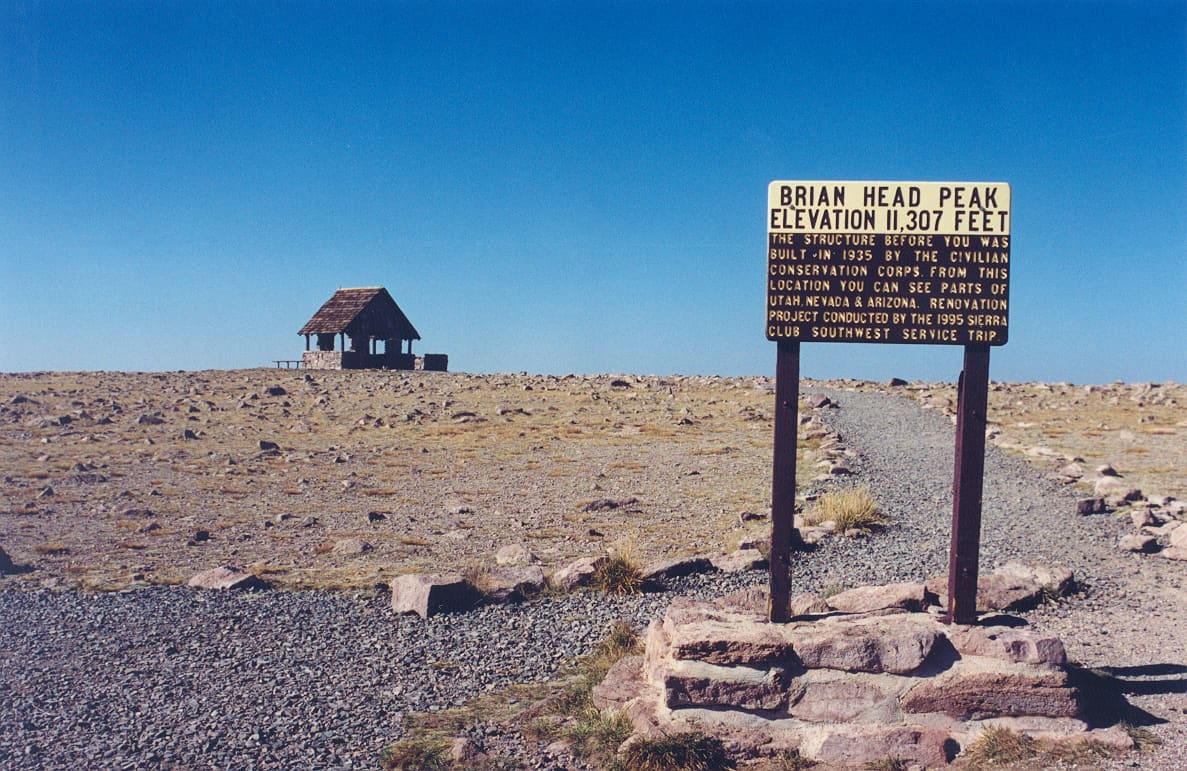
The CCC shelter on the summit went up in 1935, and it was built by Camp F-16 — the Civilian Conservation Corps camp stationed at Duck Creek. The stone hut people photograph at 11,307 feet was, in a real sense, built by our neighbours.
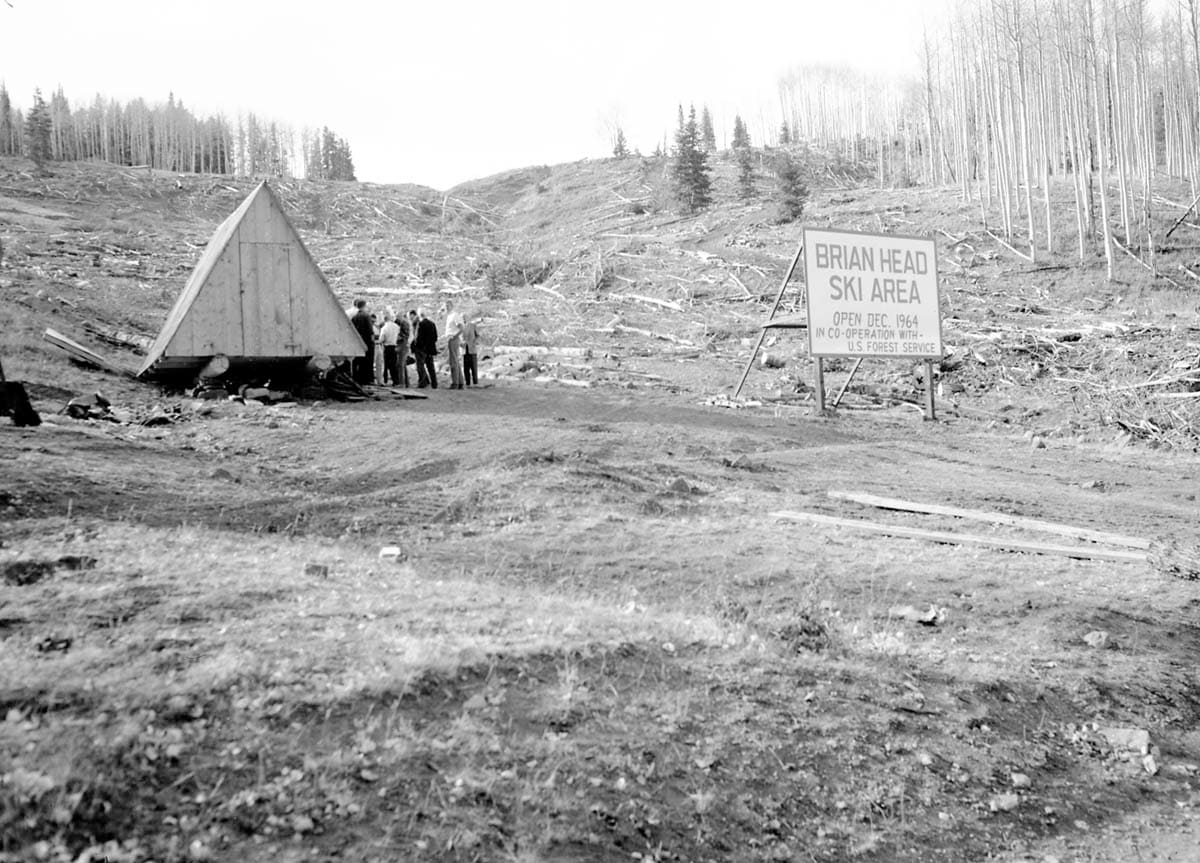
The ski area itself is much younger than the shelter. Brian Head opened in December 1964, at a place the Forest Service paperwork called Bear Flat, southwest of the peak. The photo below was taken that October, with the sign already up and the lift not yet running.
Brian Head Town did not incorporate until 1975, nine years after the first season, and at the 2020 census it had 151 permanent residents. It is a town built entirely around a chairlift, which is worth remembering when you are deciding where to sleep.
We will be straight about the trade-off. If your whole trip is skiing and you want to walk to the lift in ski boots, stay in Brian Head. Nothing we can offer beats ski-in convenience on a powder morning, and a 61-mile winter drive each way is a real cost.
What Duck Creek Village Inn offers instead is a quieter, less expensive base with more to do when you are not on the hill. You are 41 minutes away in summer and about 1 hr 35 min in winter, in a village with restaurants, a snowmobile trail network out the door, and no resort-village bustle in the evening. For a trip that mixes one ski or snow tubing day with snowmobiling, Cedar Breaks, and slow mornings, that balance works better than paying resort rates for nights you spend asleep.
Compare our rooms and cabins, or start from the 3-day winter itinerary if you want the whole week sketched out before you book.
September 2026
We write this page for guests driving up from Duck Creek Village Inn, so the parts we spend the most effort on are the drive, the seasonal road closure, and what the snow actually does. The routes and elevation profiles here are OSRM routing lines sampled against USGS 3DEP; the lift table is OpenStreetMap lift geometry with USGS terminal elevations; the snow charts are fifteen water years of NRCS SNOTEL data from the station on the mountain. Resort dates, hours, and prices change every season — cross-check those against the official sources below before you go.
The questions trip planners usually ask next.
Brian Head ist der Abenteuer-Partner von Duck Creek Village.
Brian Head liegt laut den aktuellen Guide-Daten ~35 Min. im Sommer; im Winter ~1 Std. 15 Min. vom Duck Creek Village Inn entfernt.
Der Winter ist die klassische Brian-Head-Saison, während der Sommerbetrieb davon abhängt, wann der Schnee weg ist und die Bergaktivitäten für das Jahr öffnen.
Start from the broader guide hub if you want the bigger set of destinations, activities, and planning pages first.
Sideways links to the nearby destinations and guide pages guests usually compare.
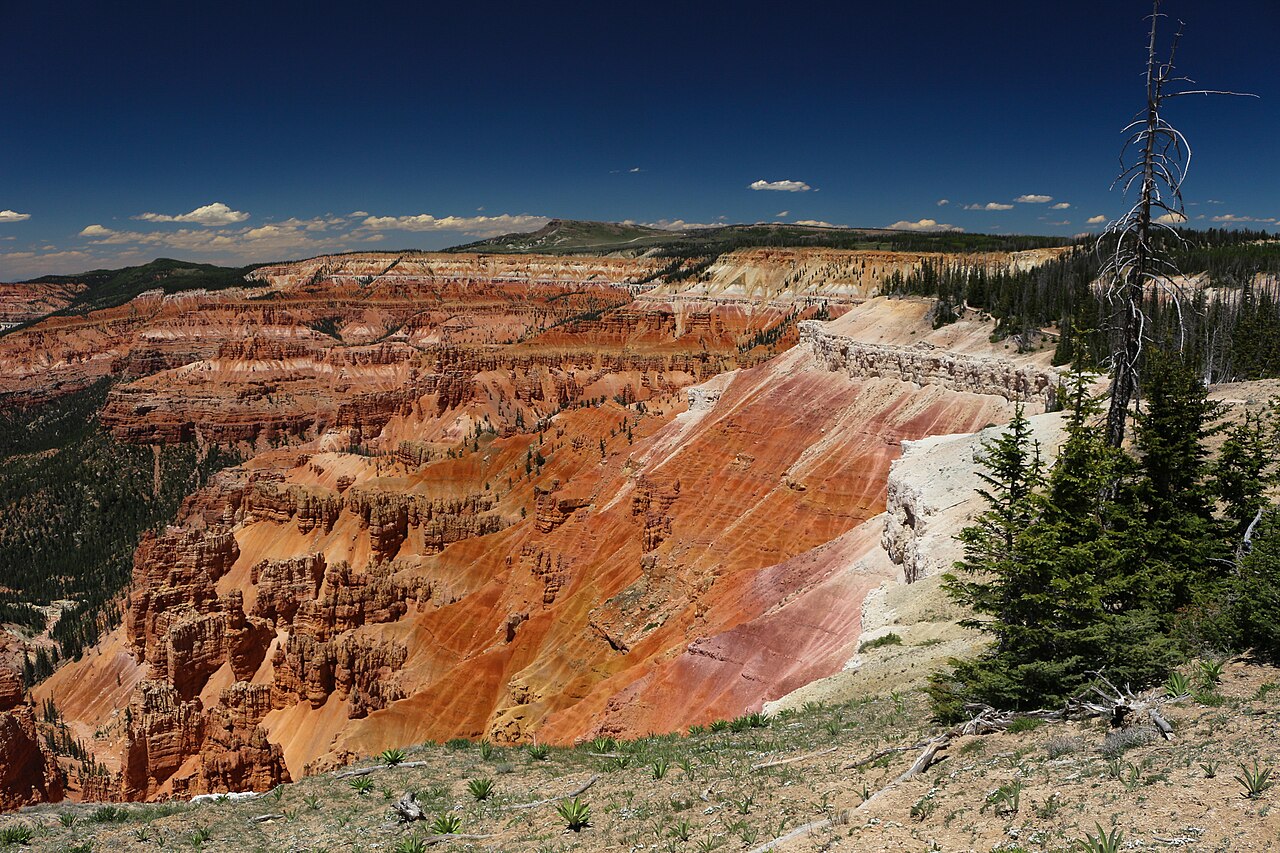
Alpines Amphitheater, Sonnenuntergangsblicke und ein International Dark Sky Park, 20 Minuten vom Inn entfernt
Guide ansehen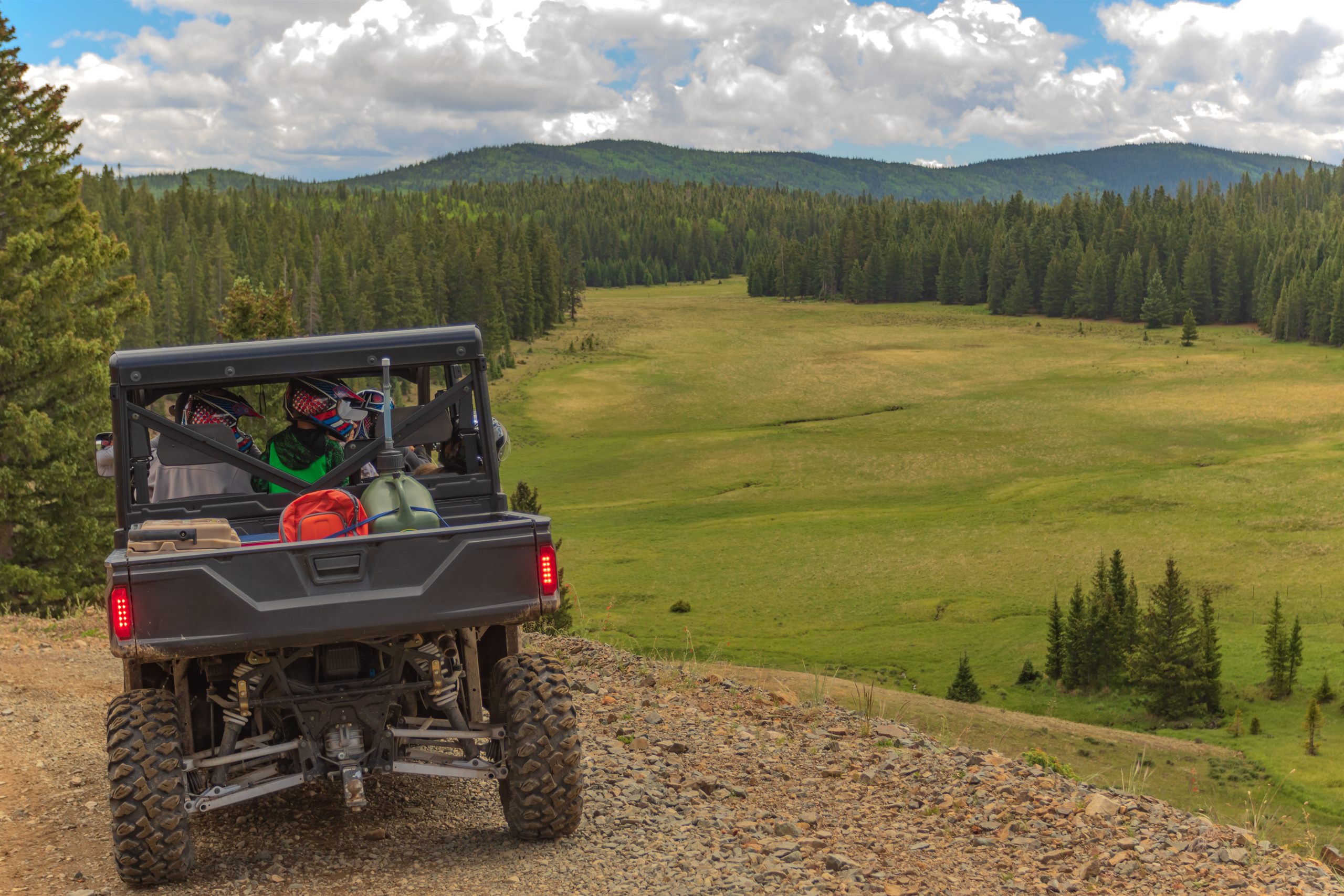
Ganzjähriges Abenteuer auf dem Markagunt Plateau
Guide ansehen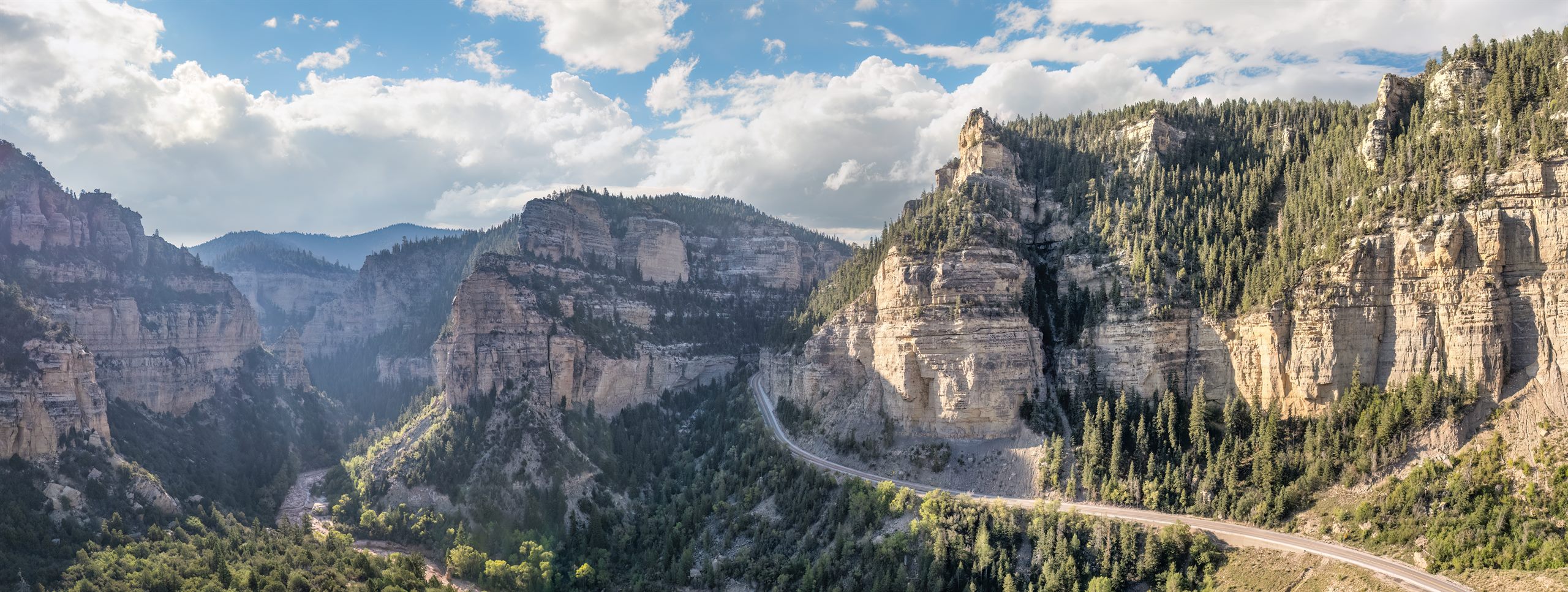
Die Straße nach Duck Creek und eine der schönsten Fahrten in Utah
Guide ansehenUse these pages to move from a guide idea into a concrete itinerary or comparison.
Live SR-143 cameras from both sides of the mountain, traction requirements, and honest winter route advice.
Seite ansehenSchnee, Skifahren, Schneemobile und Hüttenzeit im Hochland
Tagesroute ansehenAlpines Amphitheater, Sonnenuntergangsblicke und ein International Dark Sky Park, 20 Minuten vom Inn entfernt
Guide ansehenThe climb up Highway 14, chains and 4WD, snow depths, daylight, and storm-day calls
Jetzt planenChoose the stay type that matches the trip you are building.
Book your room or cabin at Duck Creek Village Inn — a quieter, cheaper winter base with snowmobile trails at the door and Brian Head an easy drive away.