Is Cedar Breaks goed voor sterrenkijken?
Ja. Het is een officieel dark-sky gebied met zeer weinig lichtvervuiling en een hoge, droge ligging die de hemel helder houdt.
Duck Creek-gids
Een korte avondtrip met grote beloning - licht boven de rim en een van de donkerste hemels in Zuid-Utah
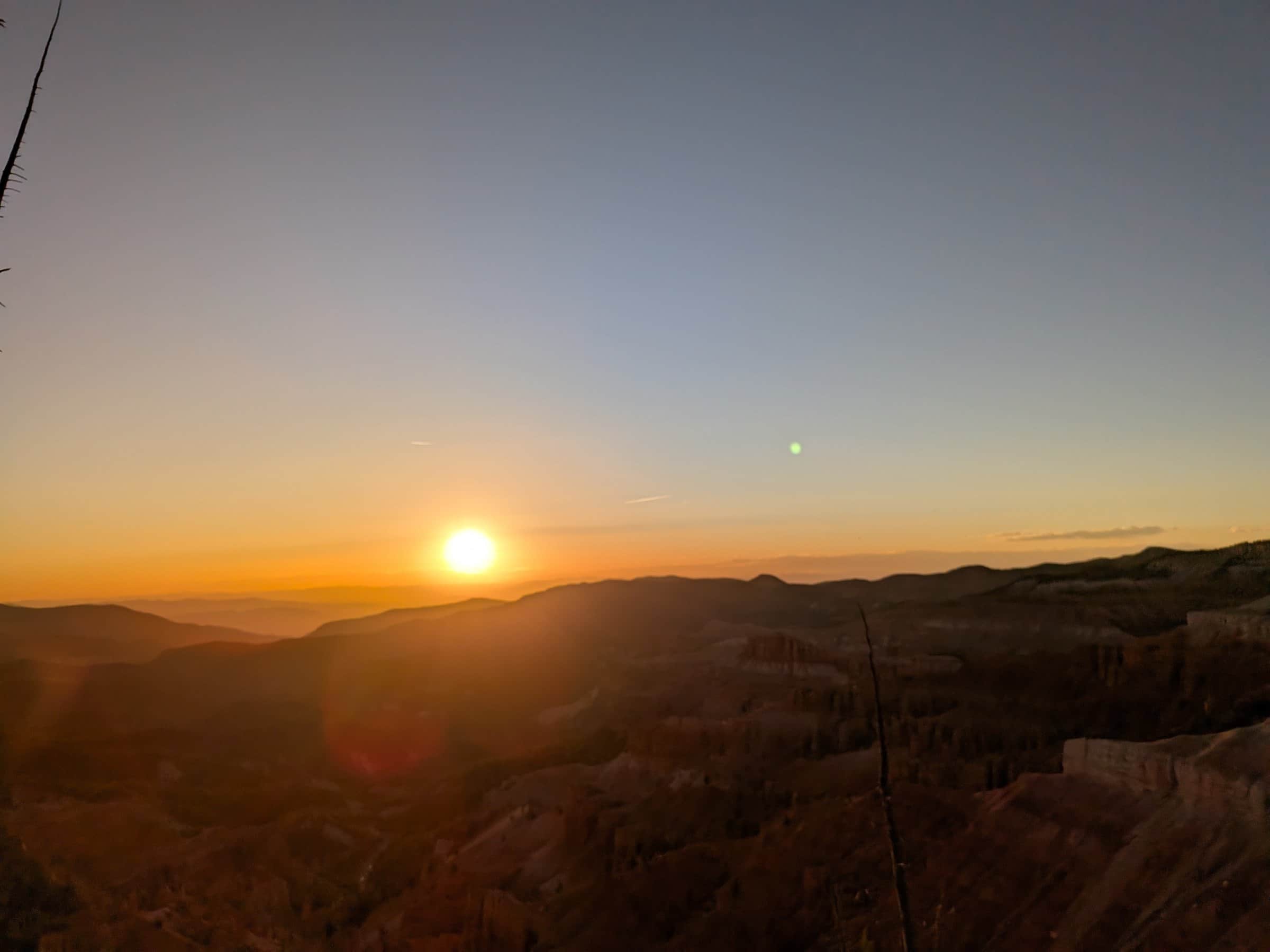
Cedar Breaks is een van de mooiste plekken in Zuid-Utah om de zon onder te zien gaan. De amfitheaterwanden kleuren in avondlicht nog warmer en dramatischer, en zodra de zon wegzakt wordt de lucht snel donker genoeg voor uitstekend sterrenkijken.
Omdat het monument hoog en relatief afgelegen ligt, krijg je hier echt dark-sky-omstandigheden zonder ver te hoeven rijden vanaf Duck Creek Village.
Live, for the day you are reading this
The sun sets over the Cedar Breaks amphitheater at Mountain time today. Golden light starts about 7:00 PM, the sky is fully dark by 9:03 PM, and the moon is 60% lit.
The next seven evenings on the rim
| Date | Leave the inn | Be parked | Sunset | Fully dark |
|---|---|---|---|---|
| Sat, Sep 19 | 6:25 PM | 6:50 PM | 7:35 PM | 9:03 PM |
| Sun, Sep 20 | 6:23 PM | 6:48 PM | 7:33 PM | 9:01 PM |
| Mon, Sep 21 | 6:21 PM | 6:46 PM | 7:31 PM | 8:59 PM |
| Tue, Sep 22 | 6:20 PM | 6:45 PM | 7:30 PM | 8:58 PM |
| Wed, Sep 23 | 6:18 PM | 6:43 PM | 7:28 PM | 8:56 PM |
| Thu, Sep 24 | 6:17 PM | 6:42 PM | 7:27 PM | 8:54 PM |
| Fri, Sep 25 | 6:15 PM | 6:40 PM | 7:25 PM | 8:53 PM |
Highway 148 through the monument is normally open at this point in the year, so you can drive to the overlook. Snow can close it early or late in the season. Check the road status for today.
One evening, three photos, the camera's clock on each. Arrive for the first frame and you get all three.
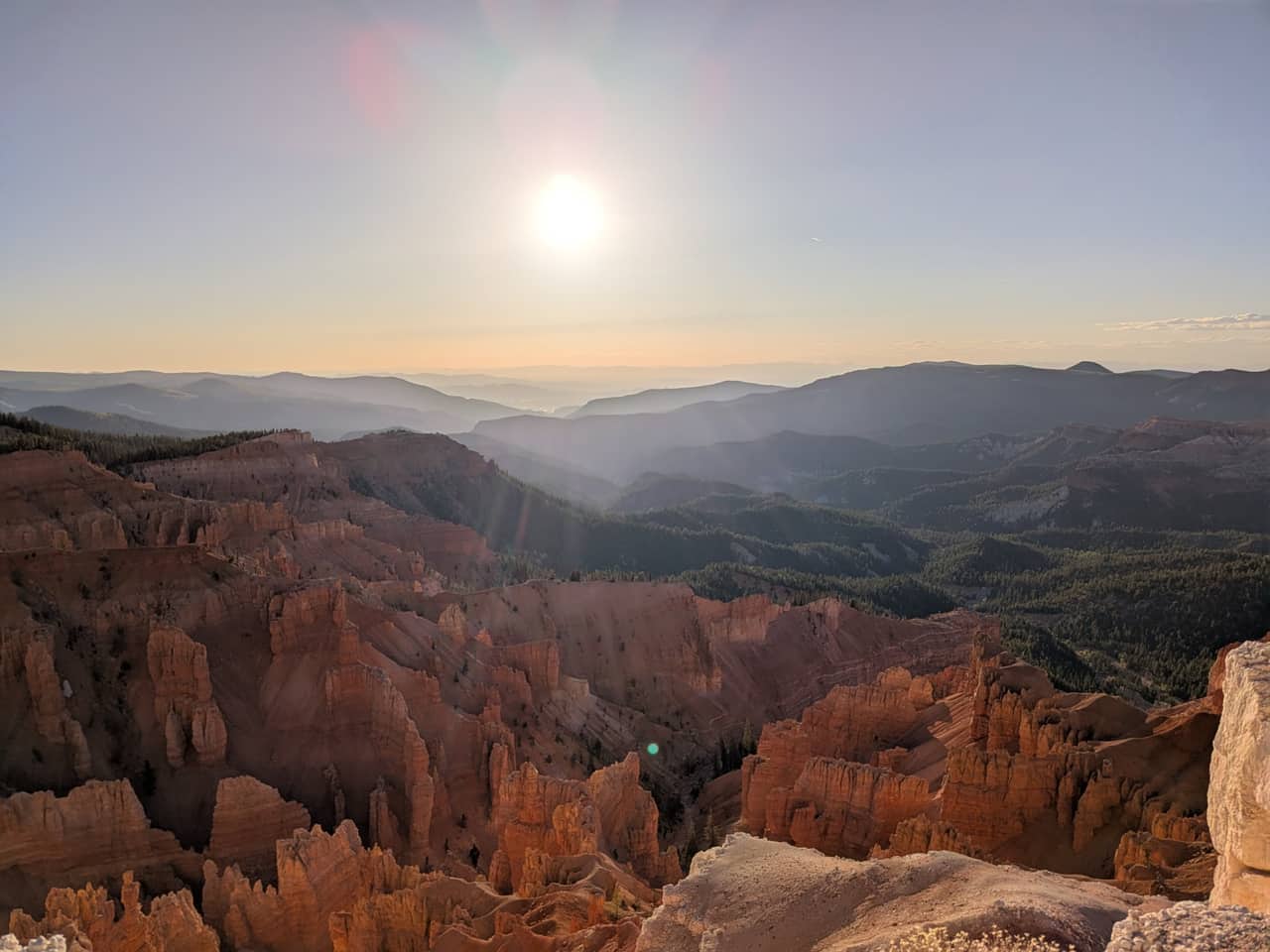
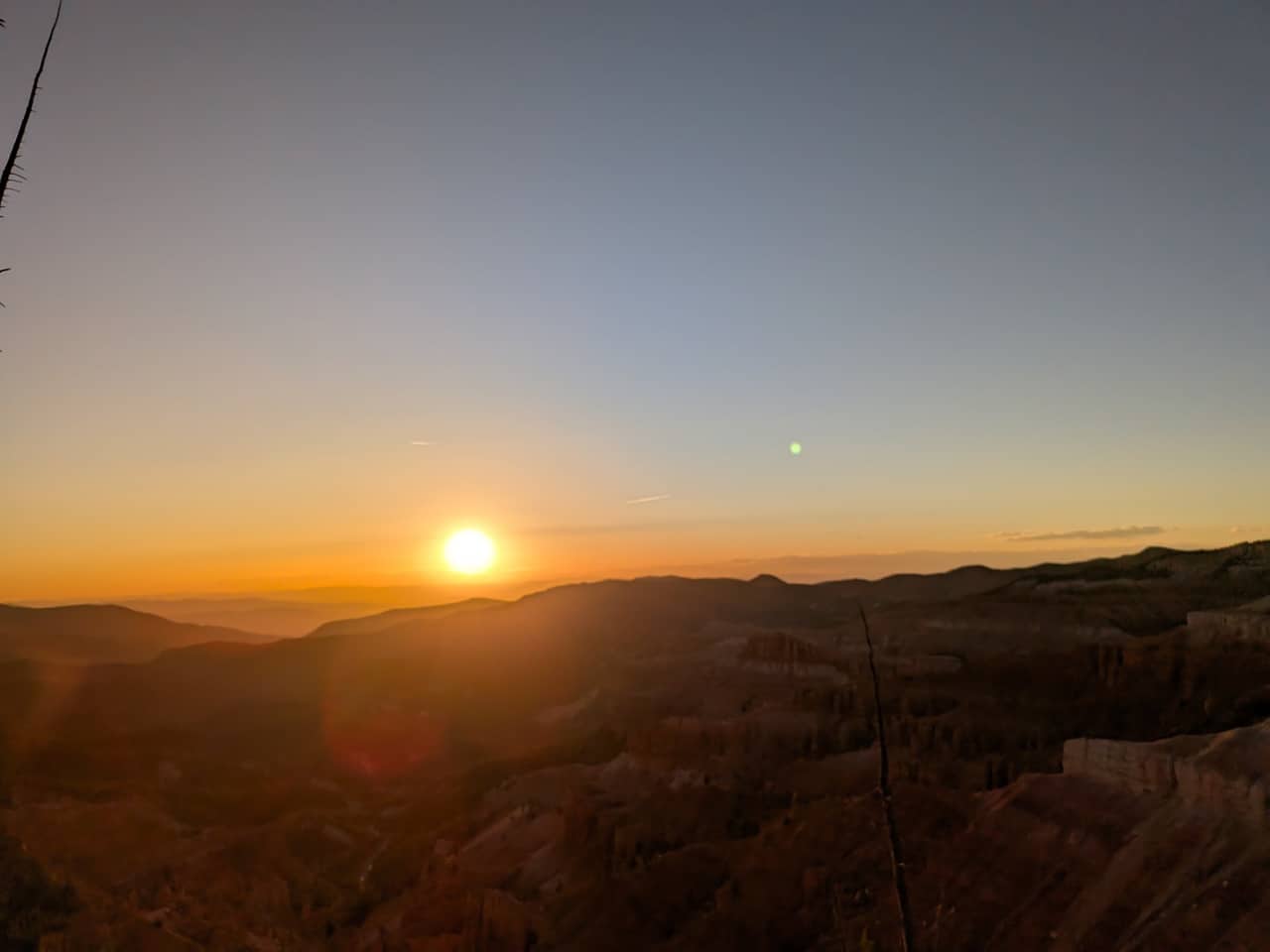
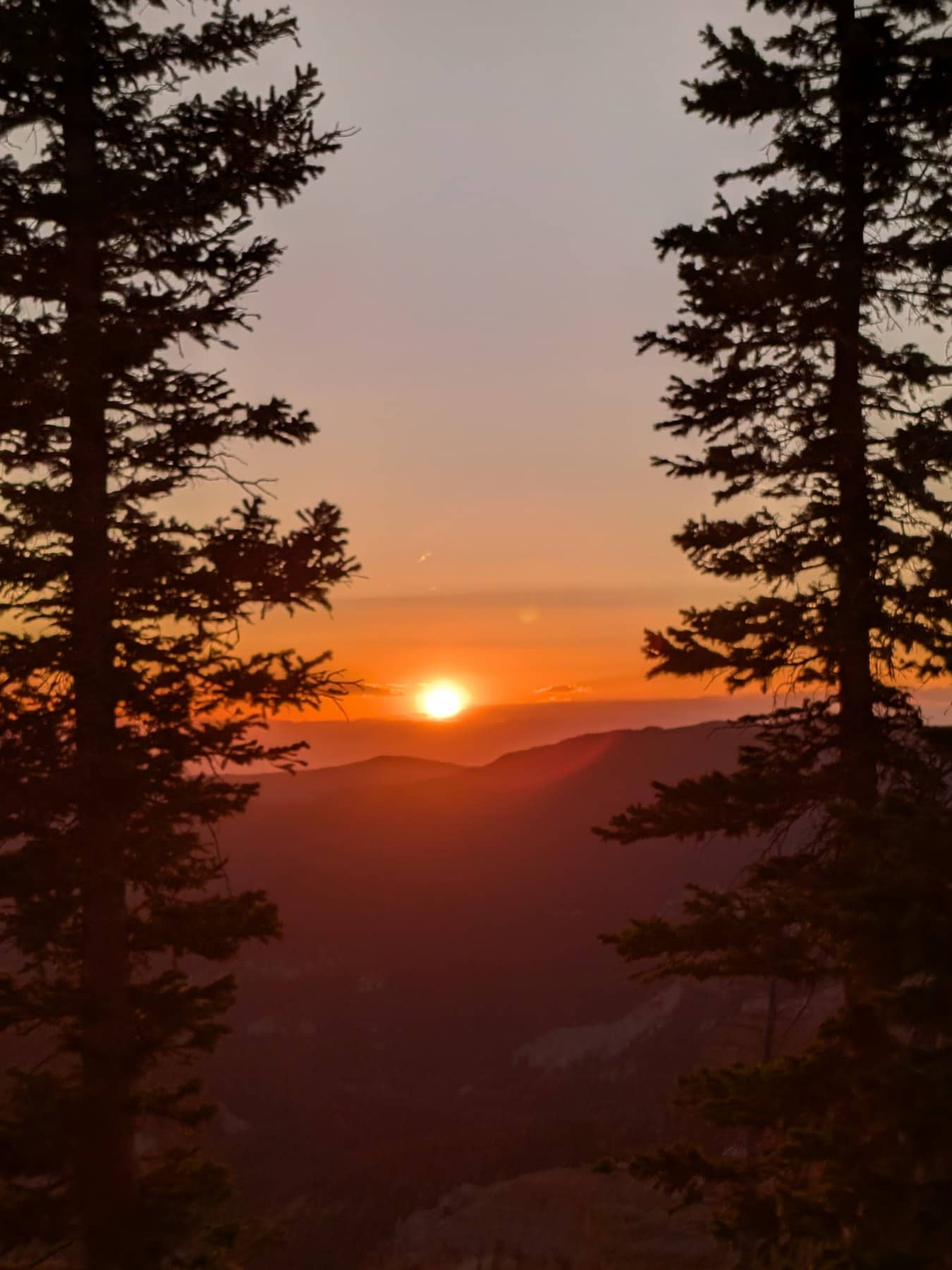
Our photos, Sunset View and the rim near Point Supreme, 1 June 2026. Camera clock times, Mountain Daylight Time.
Sunset moves by more than an hour and a half across the road season, and the moon decides whether you see the Milky Way. Both are computed here for the rim; no other Cedar Breaks guide gives you the parking time and the dark-moon tour nights in one place.
Sunset at Cedar Breaks, 2026
| Date | Be parked by | Golden light from | Sunset | Fully dark |
|---|---|---|---|---|
| Mid May | 7:49 PM | 7:56 PM | 8:34 PM | 10:09 PM |
| Early June | 8:02 PM | 8:08 PM | 8:47 PM | 10:22 PM |
| Mid June | 8:09 PM | 8:15 PM | 8:54 PM | 10:29 PM |
| Early July | 8:11 PM | 8:18 PM | 8:56 PM | 10:31 PM |
| Mid July | 8:07 PM | 8:14 PM | 8:52 PM | 10:27 PM |
| Early August | 7:55 PM | 8:03 PM | 8:40 PM | 10:15 PM |
| Mid August | 7:40 PM | 7:49 PM | 8:25 PM | 10:00 PM |
| Early September | 7:16 PM | 7:27 PM | 8:01 PM | 9:36 PM |
| Mid September | 6:55 PM | 7:06 PM | 7:40 PM | 9:15 PM |
| Early October | 6:30 PM | 6:41 PM | 7:15 PM | 8:50 PM |
| Mid October | 6:10 PM | 6:19 PM | 6:55 PM | 8:30 PM |
Times are Mountain time, computed for the rim's latitude and longitude. "Be parked by" is 45 minutes before sunset, which is when the Sunset View lot fills on summer weekends. "Fully dark" is the end of astronomical twilight, when the Milky Way shows its full width. Highway 148 closes with snow, usually in mid November, so the October rows only apply while the road is open.
Night Sky Tour dates with a dark moon, 2026
Rangers run free Night Sky Tours at Point Supreme every Friday and Saturday, June through September, from 8:30 p.m. to 10:30 p.m.. A bright moon washes out the Milky Way, so these are the tour nights when the moon is a quarter lit or less:
Moon phase is computed from the mean lunar month and is accurate to a few hours. Programs depend on weather and staffing; confirm on the NPS Night Sky Tours page before you drive up. You do not need a program to stargaze: the road stays open all night.
Where to watch: Sunset View Overlook, a mile north of the visitor center on Highway 148. It sits on the western rim with an open horizon and the amphitheater directly below. Point Supreme, by the visitor center, is the larger lot and the backup; the angle is a little more southerly and just as good on most evenings.
When to arrive: be parked 45 minutes before sunset. The Sunset View lot holds a couple of dozen cars, and on July and August weekends it fills, with latecomers on the shoulder walking in. The table below gives the "be parked by" time for every part of the season. Weeknights are quieter but the light is the same.
What makes it different: most Utah viewpoints face east and are sunrise places. Cedar Breaks faces west, so you watch the sun set into the amphitheater. The rock does its best work in the hour before sunset, going from cream to gold to orange as the light lowers, and then it drops into shadow the moment the sun touches the ridge. From that point the show is the sky, not the stone, and the best color comes 10 to 20 minutes after the sun is gone.
After sunset: stay. The sky turns pink and then purple, the amphitheater takes on a blue twilight glow that photographs well with a tripod, and the first planets appear. The temperature falls fast once the sun is down; this is when the jacket comes out.
Cedar Breaks earned its International Dark Sky Park designation in 2017 because the sky here is genuinely dark: 10,000 feet up, far from any city, on a plateau with no light pollution in any direction. On a clear, moonless summer night the Milky Way is a bright band across the entire sky, satellites cross it every few minutes, and the August Perseids fall into it.
The rangers run free Night Sky Tours every Friday and Saturday, June through September, from 8:30 p.m. to 10:30 p.m., at Point Supreme Overlook. A short talk, then telescopes on planets, star clusters and nebulae. No reservation; the $25 vehicle entry covers it. The park also hosts a Southwest Astronomy Festival in September and, in a good winter, occasional snowshoe star walks. Dates are on the NPS Night Sky Tours page and in the live strip at the top of this page.
You do not need a program. The road through the monument stays open all night in season, so you can park at any overlook and look up. Give your eyes 20 to 40 minutes with no white light, including your phone. A red-light headlamp is the single most useful thing you can bring. Point Supreme has the most room to spread out; North View is the quietest.
Sunset View is the small lot a mile north of the visitor center; Point Supreme, where the tours meet, is the big one by the visitor center; North View, at the far end, is where you go to be alone with the sky. All three are on Highway 148 with paved parking.
Overlooks along Highway 148. Tap a pin for its note; the dashed line is the road through the monument.
A sunset and stargazing evening at Cedar Breaks is the natural end to a park day at Bryce Canyon or Zion. Use Plan Your Days to build the itinerary and compare our rooms and cabins. The drive home after the telescopes is 25 minutes on a road you will have almost to yourself; our stargazing stays page has the details.
Reviewed September 2026
We watch sunsets and stars from Cedar Breaks all season and the photographs on this page are ours, with the camera clock times left on. Sunset and twilight times are computed with the standard NOAA solar method for the rim; the Night Sky Tour schedule and the Dark Sky designation come from the National Park Service and DarkSky International, checked in September 2026. Programs change with weather and staffing, so confirm before you drive.
Veelgestelde vragen van reizigers die een avond in de rim willen plannen.
Ja. Het is een officieel dark-sky gebied met zeer weinig lichtvervuiling en een hoge, droge ligging die de hemel helder houdt.
Op hoogte kan het snel koud worden, zelfs in de zomer. Een warme laag en een jas zijn verstandig voor elke avondstop.
The rest of the Cedar Breaks guide.
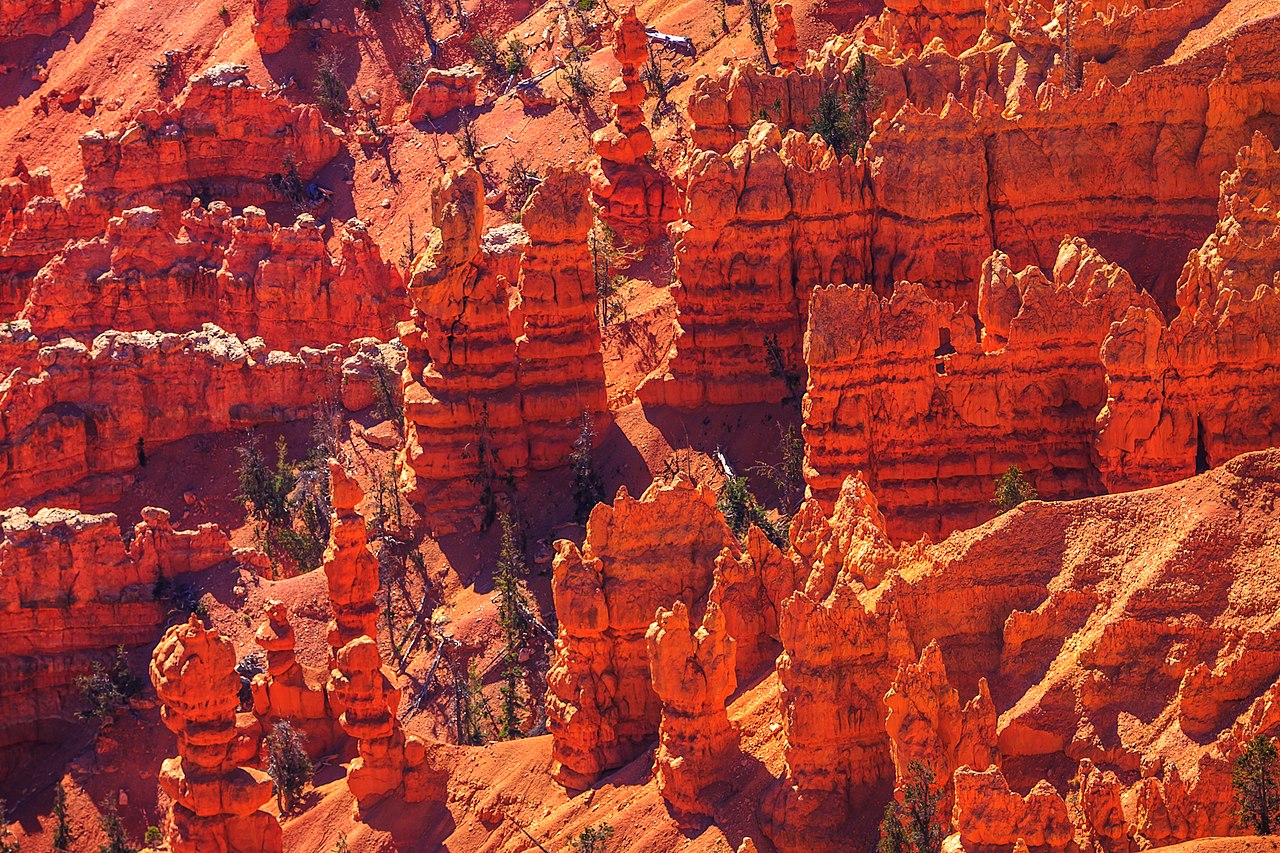
Cedar Breaks-routes per moeilijkheidsgraad, van makkelijke weidewandelingen tot rim-routes met bristlecone-dennen
See best hikes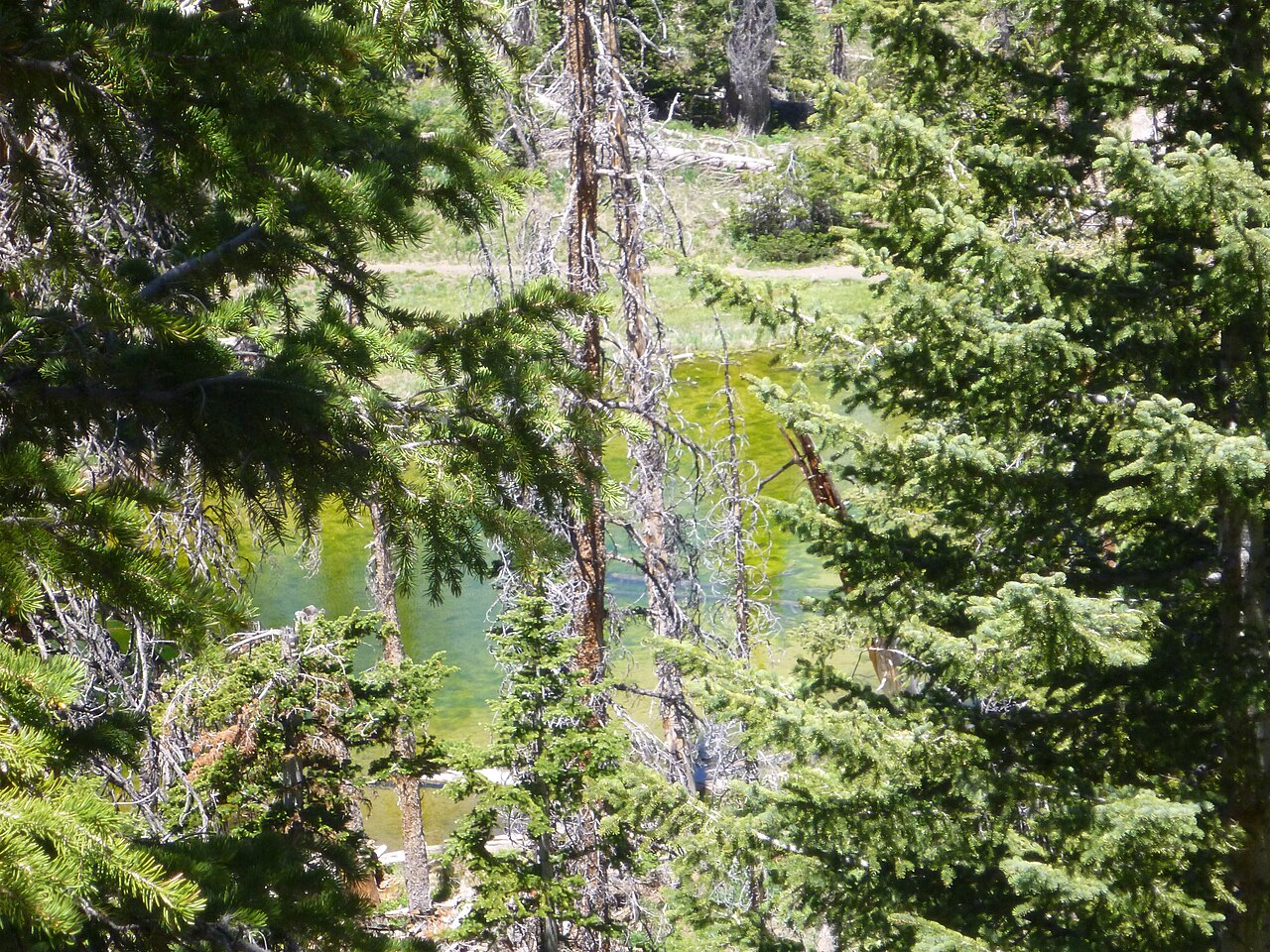
De kenmerkende Cedar Breaks-wandeling - bloemenweiden, een subalpiene vijver en bristlecone-dennen in twee makkelijke mijl
See alpine pond trail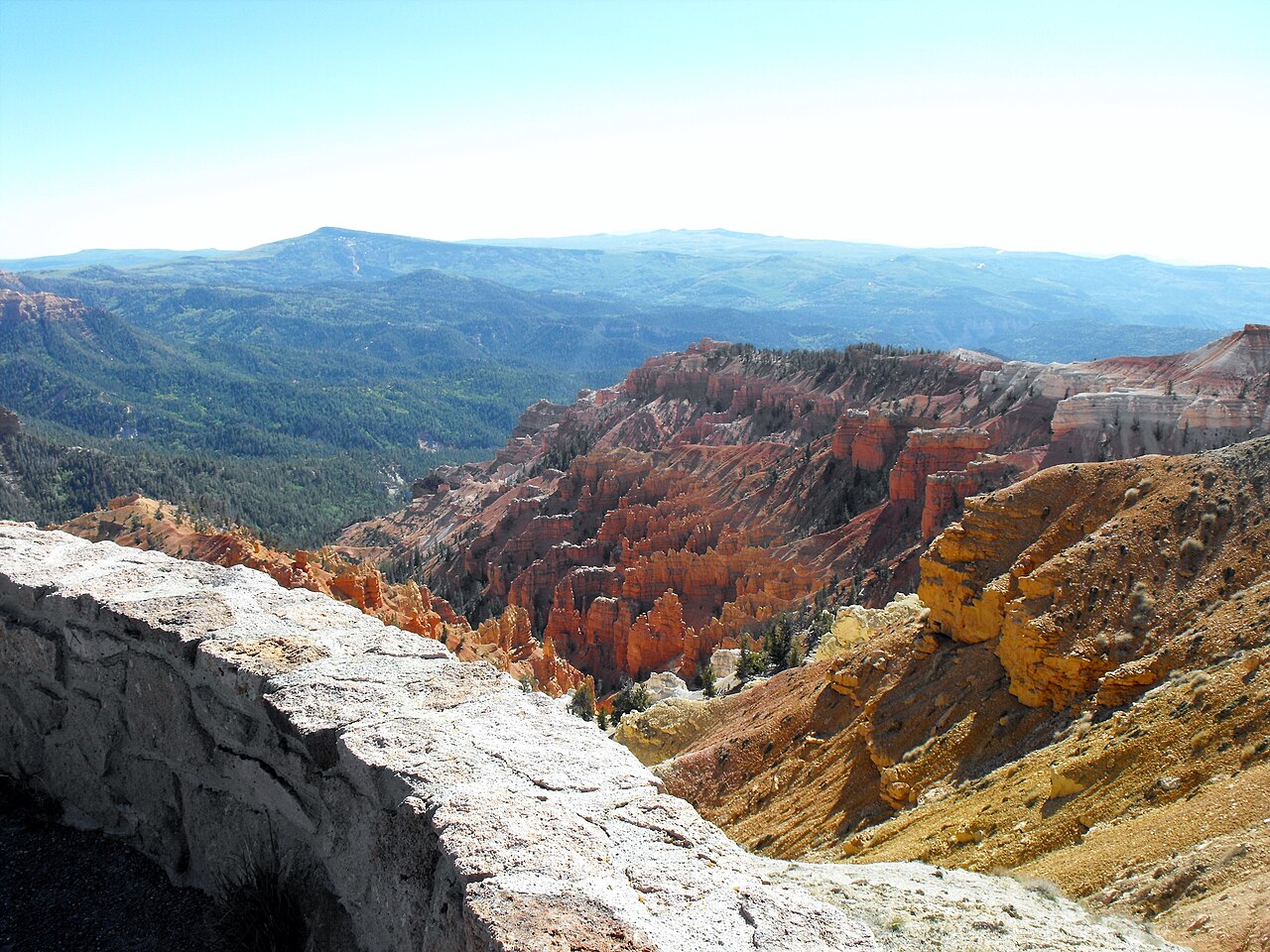
Point Supreme, Sunset View, North View en Chessmen Ridge - alle uitzichtpunten en wat je ziet bij het visitor center
See overlooks & visitor centerTurn an evening at the rim into a full plan.
Rooms for an easy start, cabins for a slower week.
Boek je kamer of cabin bij Duck Creek Village Inn en maak van Cedar Breaks een zonsondergangsstop.