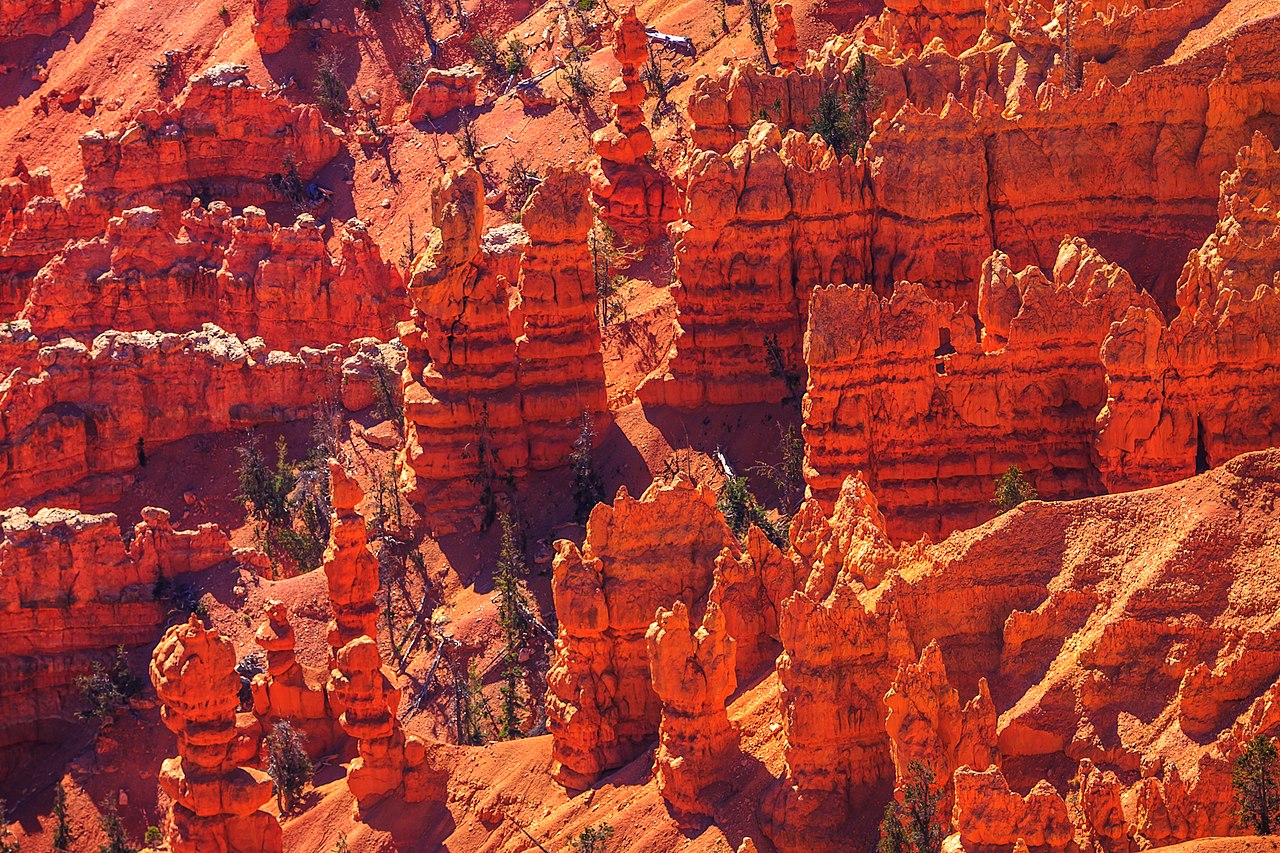
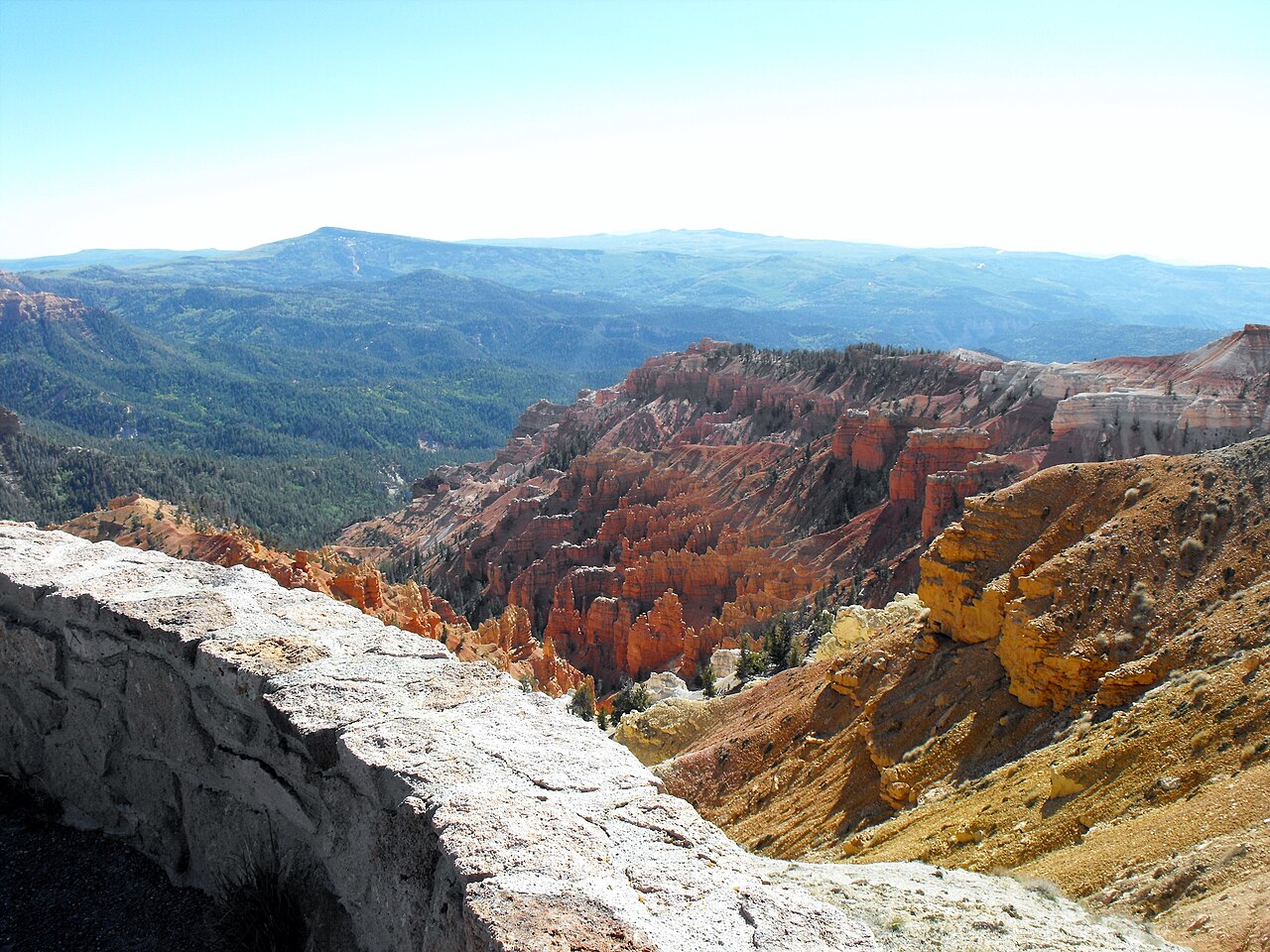
Si hay algo que la gente recuerda de Cedar Breaks, es el atardecer. El anfiteatro mira al oeste, así que el sol ilumina directamente la roca. Cuando el cielo empieza a bajar, las capas de color se vuelven más intensas y el borde toma tonos cálidos que cambian minuto a minuto.
Después del atardecer comienza la segunda parte: cielos realmente oscuros, la Vía Láctea y una observación de estrellas de primer nivel. Cedar Breaks es International Dark Sky Park, así que una vez que cae la noche, el espectáculo sigue de una forma completamente distinta.
Live, for the day you are reading this
Sunset at Cedar Breaks tonight, Saturday, September 19, 2026
The sun sets over the Cedar Breaks amphitheater at
Mountain time today. Golden light starts about
7:00 PM, the sky is fully dark by
9:03 PM, and the moon is
60% lit.
Sunset7:35 PMat Sunset View Overlook, 10,300 ft, facing west over the amphitheater
Golden light from7:00 PMthe hoodoos go cream, then gold, then orange as the sun drops the last six degrees
Be parked by6:50 PMleave the inn by 6:25 PM: 25 minutes up the mountain, 45 to park and walk to the railing
Fully dark9:03 PMend of astronomical twilight, when the Milky Way shows its full width
MoonFirst quarter60% lit: bright enough to wash out the fainter stars
The next seven evenings on the rim
Date
Leave the inn
Be parked
Sunset
Fully dark
Sat, Sep 19
6:25 PM
6:50 PM
7:35 PM
9:03 PM
Sun, Sep 20
6:23 PM
6:48 PM
7:33 PM
9:01 PM
Mon, Sep 21
6:21 PM
6:46 PM
7:31 PM
8:59 PM
Tue, Sep 22
6:20 PM
6:45 PM
7:30 PM
8:58 PM
Wed, Sep 23
6:18 PM
6:43 PM
7:28 PM
8:56 PM
Thu, Sep 24
6:17 PM
6:42 PM
7:27 PM
8:54 PM
Fri, Sep 25
6:15 PM
6:40 PM
7:25 PM
8:53 PM
Highway 148 through the monument is normally open at this point in the year, so you can drive to the overlook. Snow can close it early or late in the season.Check the road status for today.
Computed for Sunset View Overlook (37.6206, -112.8287) with the standard NOAA solar method, within a minute or two, and shown in Mountain time: the same figure NOAA and the almanac sites publish. Standing 4,500 feet above the valley to the west lowers your horizon, so the sun usually hangs on a minute or two past the listed time; the far ranges beyond Cedar City can take it a little sooner. Across the year, sunset here runs from about 5:15 p.m. in early December to 8:58 p.m. in the last week of June.
De un vistazo
Sunset in July
About 8:52 PM; be parked at Sunset View 45 minutes earlier
Night Sky Tours
Friday and Saturday evenings, June through September, 8:30 p.m. at Point Supreme Overlook. Free with entry
Where
Sunset View for the sunset, Point Supreme for the telescopes, North View for quiet
Temperature
Summer nights in the 30s and 40s at the rim, plus wind. Coat, hat, gloves
Back at the inn
25 minutes down Highway 148 and Highway 14, no other traffic
Cost
$25 per vehicle, good for 7 days and both visits. Cards only
Cincuenta minutos en el borde
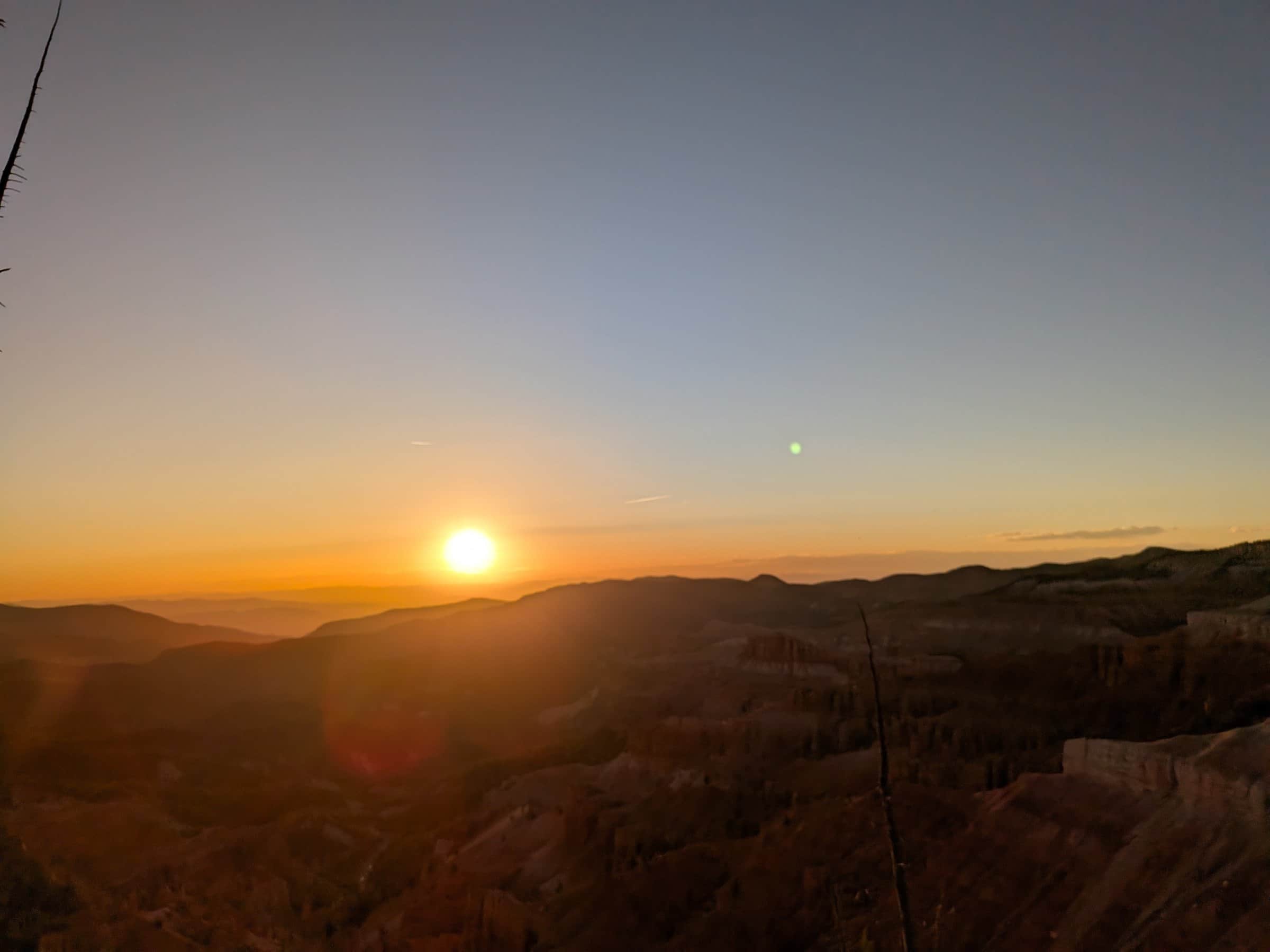
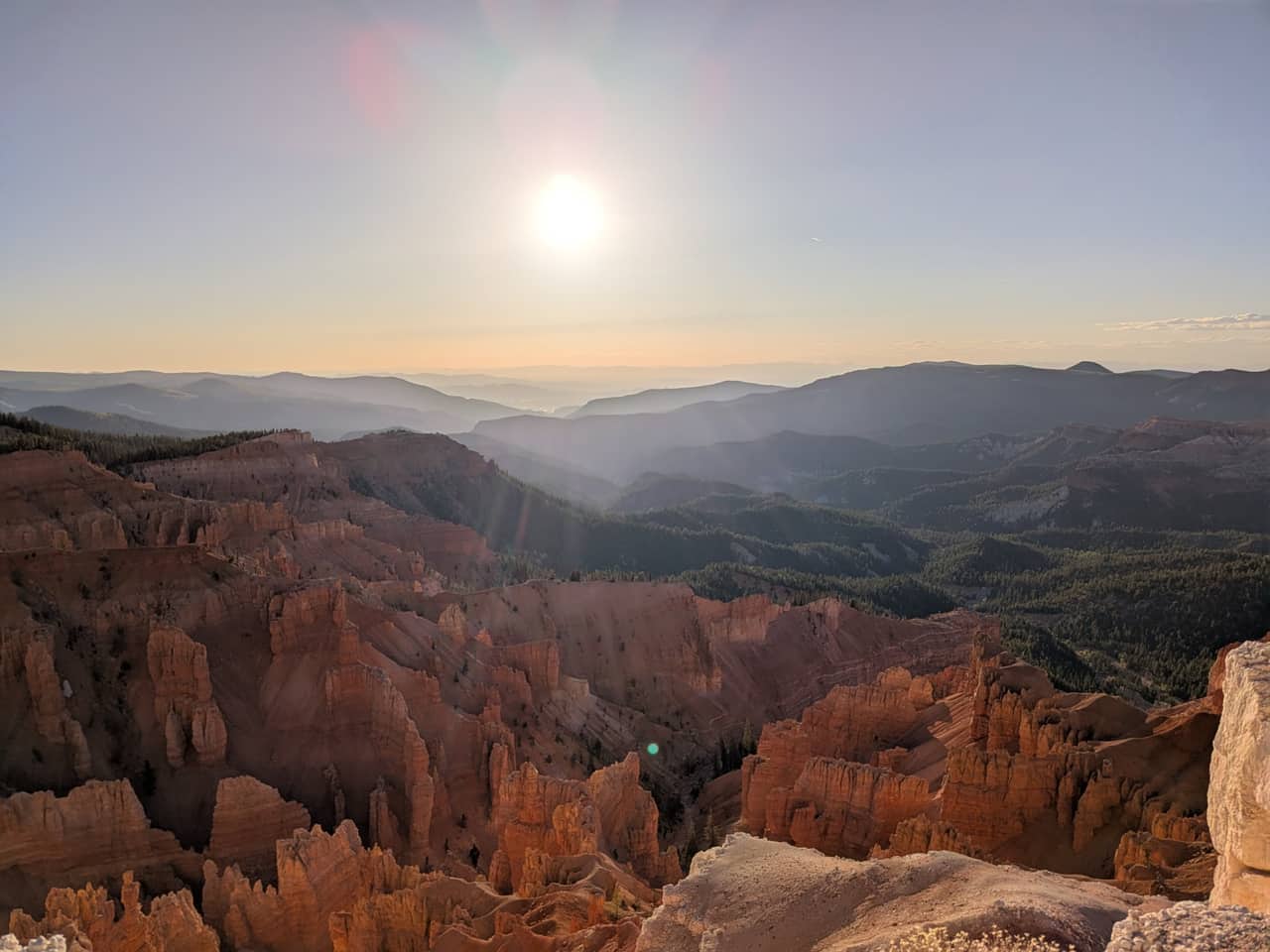
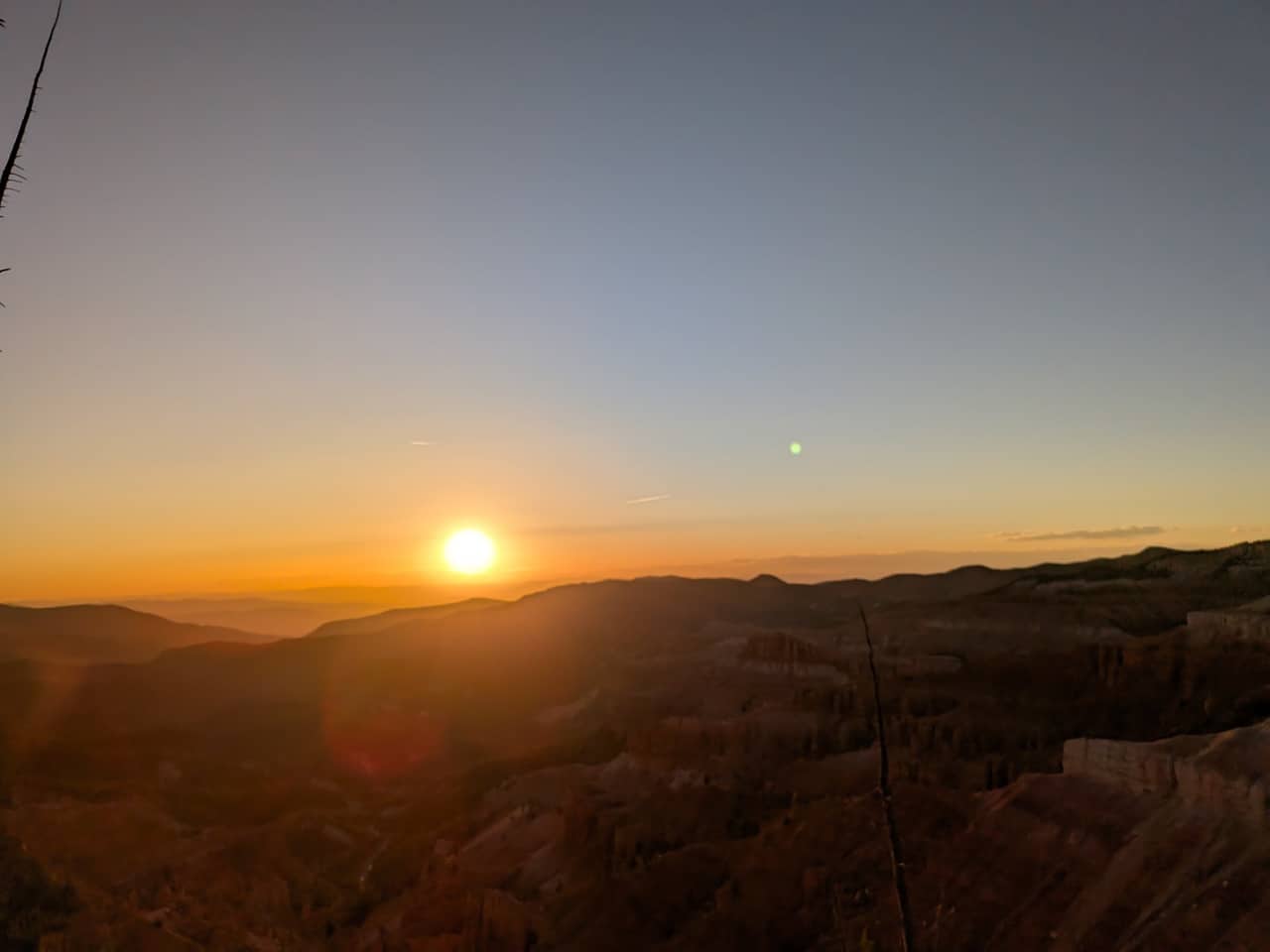
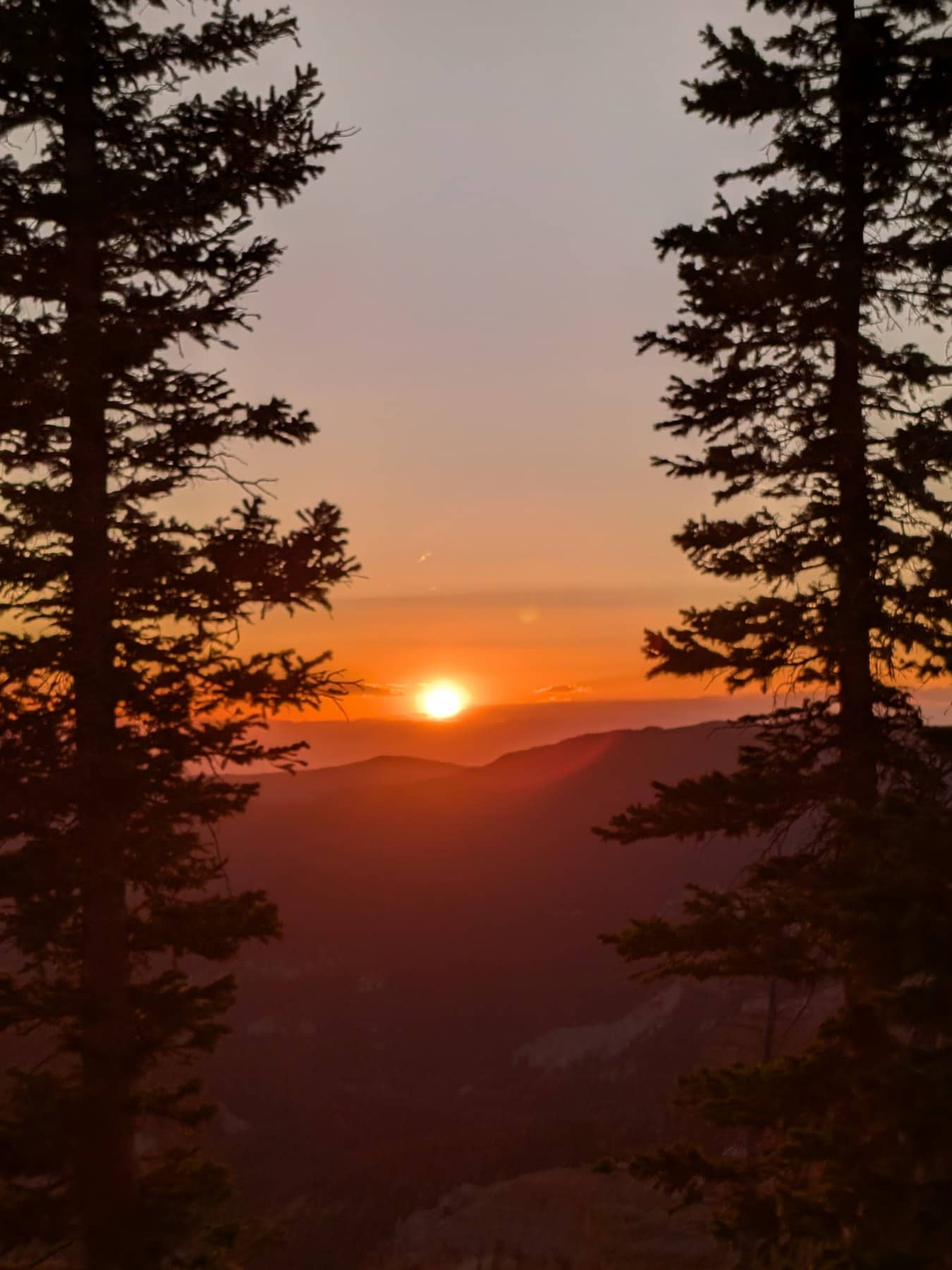
One evening, three photos, the camera's clock on each. Arrive for the first frame and you get all three.
17:56 PM
Fifty minutes outThe sun is still high over the Escalante Desert and the amphitheater is lit from the side. This is when the hoodoos show their colors best, and when the lot at Sunset View still has space.
28:35 PM
Sun on the ridgeThe sun touches the ranges to the west, the sky goes orange, and the amphitheater below drops into shadow. From here on the show is in the sky, not the rock.
38:47 PM
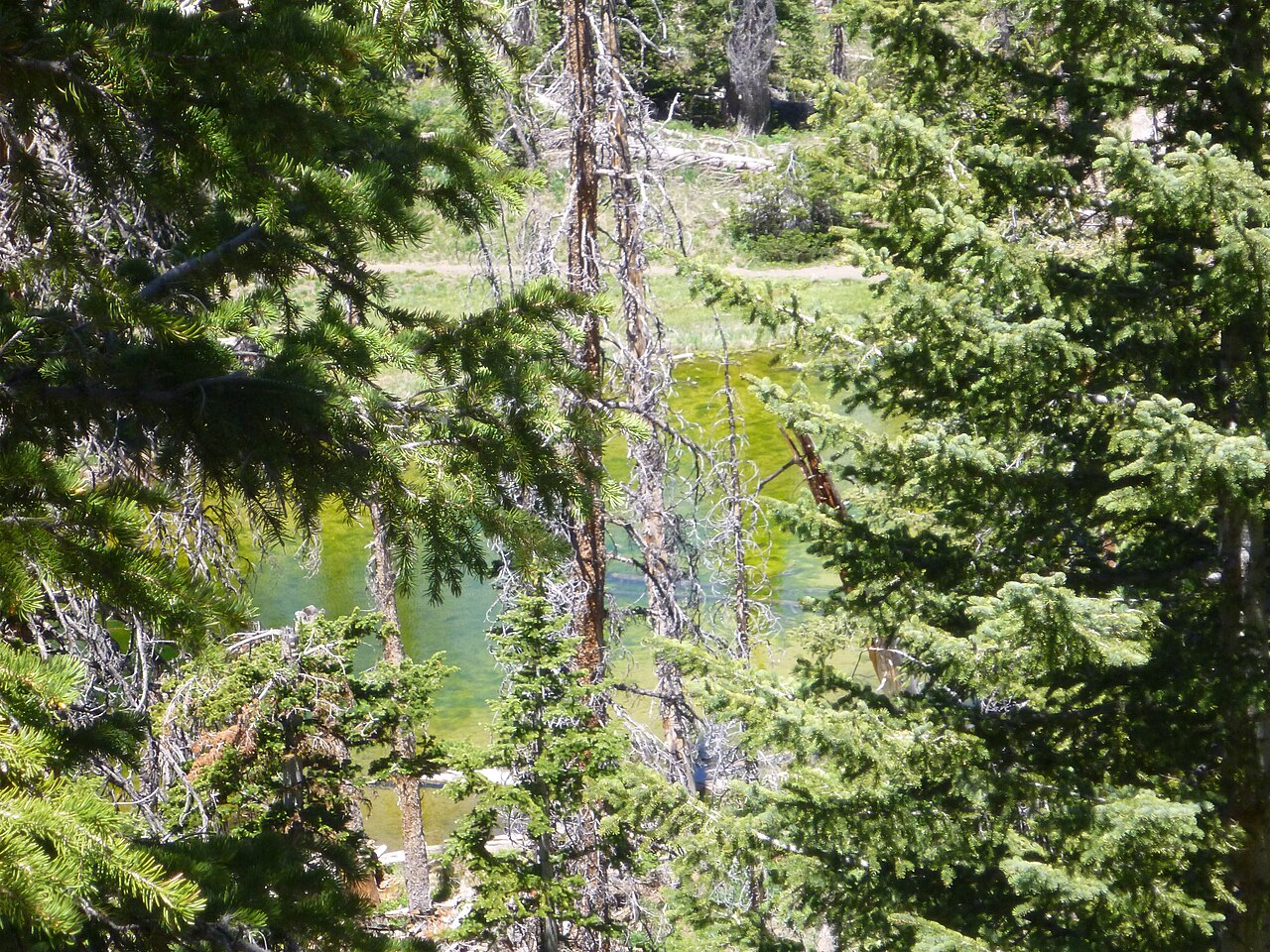
Last lightThe computed sunset for that date is 8:47 PM. Through the spruce at the rim, the last sliver goes and the temperature starts to fall. Twenty more minutes of color, then the first stars.
Our photos, Sunset View and the rim near Point Supreme, 1 June 2026. Camera clock times, Mountain Daylight Time.
Horas del atardecer y noches oscuras
Sunset moves by more than an hour and a half across the road season, and the moon decides whether you see the Milky Way. Both are computed here for the rim; no other Cedar Breaks guide gives you the parking time and the dark-moon tour nights in one place.
Sunset at Cedar Breaks, 2026
Date
Be parked by
Golden light from
Sunset
Fully dark
Mid May
7:49 PM
7:56 PM
8:34 PM
10:09 PM
Early June
8:02 PM
8:08 PM
8:47 PM
10:22 PM
Mid June
8:09 PM
8:15 PM
8:54 PM
10:29 PM
Early July
8:11 PM
8:18 PM
8:56 PM
10:31 PM
Mid July
8:07 PM
8:14 PM
8:52 PM
10:27 PM
Early August
7:55 PM
8:03 PM
8:40 PM
10:15 PM
Mid August
7:40 PM
7:49 PM
8:25 PM
10:00 PM
Early September
7:16 PM
7:27 PM
8:01 PM
9:36 PM
Mid September
6:55 PM
7:06 PM
7:40 PM
9:15 PM
Early October
6:30 PM
6:41 PM
7:15 PM
8:50 PM
Mid October
6:10 PM
6:19 PM
6:55 PM
8:30 PM
Times are Mountain time, computed for the rim's latitude and longitude. "Be parked by" is 45 minutes before sunset, which is when the Sunset View lot fills on summer weekends. "Fully dark" is the end of astronomical twilight, when the Milky Way shows its full width. Highway 148 closes with snow, usually in mid November, so the October rows only apply while the road is open.
Night Sky Tour dates with a dark moon, 2026
Rangers run free Night Sky Tours at Point Supreme every Friday and Saturday, June through September, from 8:30 p.m. to 10:30 p.m.. A bright moon washes out the Milky Way, so these are the tour nights when the moon is a quarter lit or less:
Fri, Jun 12 Waning crescent, 5% lit
Sat, Jun 13 Waning crescent, 1% lit
Fri, Jun 19 Waxing crescent, 25% lit
Fri, Jul 10 Waning crescent, 14% lit
Sat, Jul 11 Waning crescent, 8% lit
Fri, Jul 17 Waxing crescent, 12% lit
Sat, Jul 18 Waxing crescent, 20% lit
Sat, Aug 8 Waning crescent, 18% lit
Fri, Aug 14 Waxing crescent, 4% lit
Sat, Aug 15 Waxing crescent, 9% lit
Fri, Sep 11 New moon, 0% lit
Sat, Sep 12 Waxing crescent, 2% lit
Moon phase is computed from the mean lunar month and is accurate to a few hours. Programs depend on weather and staffing; confirm on the NPS Night Sky Tours page before you drive up. You do not need a program to stargaze: the road stays open all night.
The sunset
Where to watch: Sunset View Overlook, a mile north of the visitor center on Highway 148. It sits on the western rim with an open horizon and the amphitheater directly below. Point Supreme, by the visitor center, is the larger lot and the backup; the angle is a little more southerly and just as good on most evenings.
When to arrive: be parked 45 minutes before sunset. The Sunset View lot holds a couple of dozen cars, and on July and August weekends it fills, with latecomers on the shoulder walking in. The table below gives the "be parked by" time for every part of the season. Weeknights are quieter but the light is the same.
What makes it different: most Utah viewpoints face east and are sunrise places. Cedar Breaks faces west, so you watch the sun set into the amphitheater. The rock does its best work in the hour before sunset, going from cream to gold to orange as the light lowers, and then it drops into shadow the moment the sun touches the ridge. From that point the show is the sky, not the stone, and the best color comes 10 to 20 minutes after the sun is gone.
After sunset: stay. The sky turns pink and then purple, the amphitheater takes on a blue twilight glow that photographs well with a tripod, and the first planets appear. The temperature falls fast once the sun is down; this is when the jacket comes out.
Stargazing at the Dark Sky Park
Cedar Breaks earned its International Dark Sky Park designation in 2017 because the sky here is genuinely dark: 10,000 feet up, far from any city, on a plateau with no light pollution in any direction. On a clear, moonless summer night the Milky Way is a bright band across the entire sky, satellites cross it every few minutes, and the August Perseids fall into it.
The rangers run free Night Sky Tours every Friday and Saturday, June through September, from 8:30 p.m. to 10:30 p.m., at Point Supreme Overlook. A short talk, then telescopes on planets, star clusters and nebulae. No reservation; the $25 vehicle entry covers it. The park also hosts a Southwest Astronomy Festival in September and, in a good winter, occasional snowshoe star walks. Dates are on the NPS Night Sky Tours page and in the live strip at the top of this page.
You do not need a program. The road through the monument stays open all night in season, so you can park at any overlook and look up. Give your eyes 20 to 40 minutes with no white light, including your phone. A red-light headlamp is the single most useful thing you can bring. Point Supreme has the most room to spread out; North View is the quietest.
Dónde ubicarse
Sunset View is the small lot a mile north of the visitor center; Point Supreme, where the tours meet, is the big one by the visitor center; North View, at the far end, is where you go to be alone with the sky. All three are on Highway 148 with paved parking.
The drive from the inn
Highway 148 through the monument
Overlook
Trail point
Visitor center
Campground
Overlooks along Highway 148. Tap a pin for its note; the dashed line is the road through the monument.
What to bring
Winter clothes, in July. Rim temperatures fall to the 30s and 40s on summer nights and the wind makes it feel colder. Coat, hat, gloves, long pants, closed shoes. The park says it plainly: dress for incredibly cold summer nights.
A red-light headlamp. White light resets everyone's night vision. Red does not. Cover a normal flashlight with red tape if you have to.
Something to sit or lie on. The overlooks are rock and gravel. A camp chair or a blanket makes the difference between twenty minutes and two hours.
A tripod if you want the Milky Way. Phone night modes at this elevation capture more than you would expect, and a tripod is what makes them work.
A thermos. Hot coffee or cocoa. You will stay longer.
Binoculars. Ordinary 8x or 10x binoculars show the Andromeda galaxy and the Milky Way star clouds from this sky, no telescope needed.
Tips from Duck Creek
Make it a two-stop evening. Sunset at Sunset View, then drive the mile back to Point Supreme for the Night Sky Tour. Bigger lot, restrooms, and the telescopes.
Pick a dark-moon night. A full moon lights the amphitheater beautifully but washes out the Milky Way. The list below marks the tour nights when the moon is a quarter lit or less.
Check the sky at the rim, not the valley. Afternoon storms over the plateau usually clear by dusk in July and August, but not always. If it is raining at 5 p.m., our weather page and the Highway 14 cameras will tell you whether to bother.
Eat first. There is no food in the monument. Dinner in the village, then drive up; you are back by eleven.
Do the flowers or a trail in the morning and come back for the evening. One entry fee covers seven days, and the meadows and the Alpine Pond loop are better before noon anyway.
Winter counts too. The road closes, but the sky does not. On a calm winter night the snowmobile route in from the Highway 14 lot puts you under the darkest sky of the year; see the winter guide.
Stay planning
A sunset and stargazing evening at Cedar Breaks is the natural end to a park day at Bryce Canyon or Zion. Use Plan Your Days to build the itinerary and compare our rooms and cabins. The drive home after the telescopes is 25 minutes on a road you will have almost to yourself; our stargazing stays page has the details.
Reviewed September 2026
Why trust this guide
We watch sunsets and stars from Cedar Breaks all season and the photographs on this page are ours, with the camera clock times left on. Sunset and twilight times are computed with the standard NOAA solar method for the rim; the Night Sky Tour schedule and the Dark Sky designation come from the National Park Service and DarkSky International, checked in September 2026. Programs change with weather and staffing, so confirm before you drive.
About 8:56 PM at the solstice in late June, 8:52 PM in mid July, 7:40 PM in mid September and 7:02 PM in early October, Mountain time. The table on this page has the full season, with the time to be parked (45 minutes earlier) and when the sky is fully dark (about 95 minutes later).
Where is the best place to watch the sunset at Cedar Breaks?
Sunset View Overlook, a mile north of the visitor center. The amphitheater faces west, so the setting sun lights the formations and then drops behind the western ranges in front of you. Point Supreme is the larger backup lot. Arrive 45 minutes early on summer weekends.
Is Cedar Breaks an International Dark Sky Park?
Yes, designated in 2017 by DarkSky International (then the International Dark-Sky Association). The monument sits above 10,000 feet with no light pollution in any direction, which makes it one of the best stargazing sites in the western United States.
When are the Night Sky Tours at Cedar Breaks?
Every Friday and Saturday evening, June through September, 8:30 p.m. to about 10:30 p.m., at Point Supreme Overlook. A ranger talk, then telescopes. Free with the $25 vehicle entry, no reservation. Weather cancels; check the NPS calendar the day of.
How cold does it get at Cedar Breaks at night?
The park puts summer nights in the 30s and 40s Fahrenheit, and wind on the rim makes it feel colder. Dress as you would for a winter evening: coat, hat, gloves. The temperature drops sharply in the half hour after sunset.
Can you stargaze at Cedar Breaks without a ranger program?
Yes. Highway 148 through the monument is open all night during the season, so you can park at any overlook after dark. Bring a red-light headlamp, give your eyes 20 to 40 minutes to adjust, and pick a night near the new moon for the Milky Way.
Can I see the sunset and the stars in one visit?
Yes, and that is the plan we recommend: sunset at Sunset View, 15 minutes of twilight, then the mile back to Point Supreme for the Night Sky Tour. The whole evening takes two to three hours and ends 25 minutes from Duck Creek Village Inn.