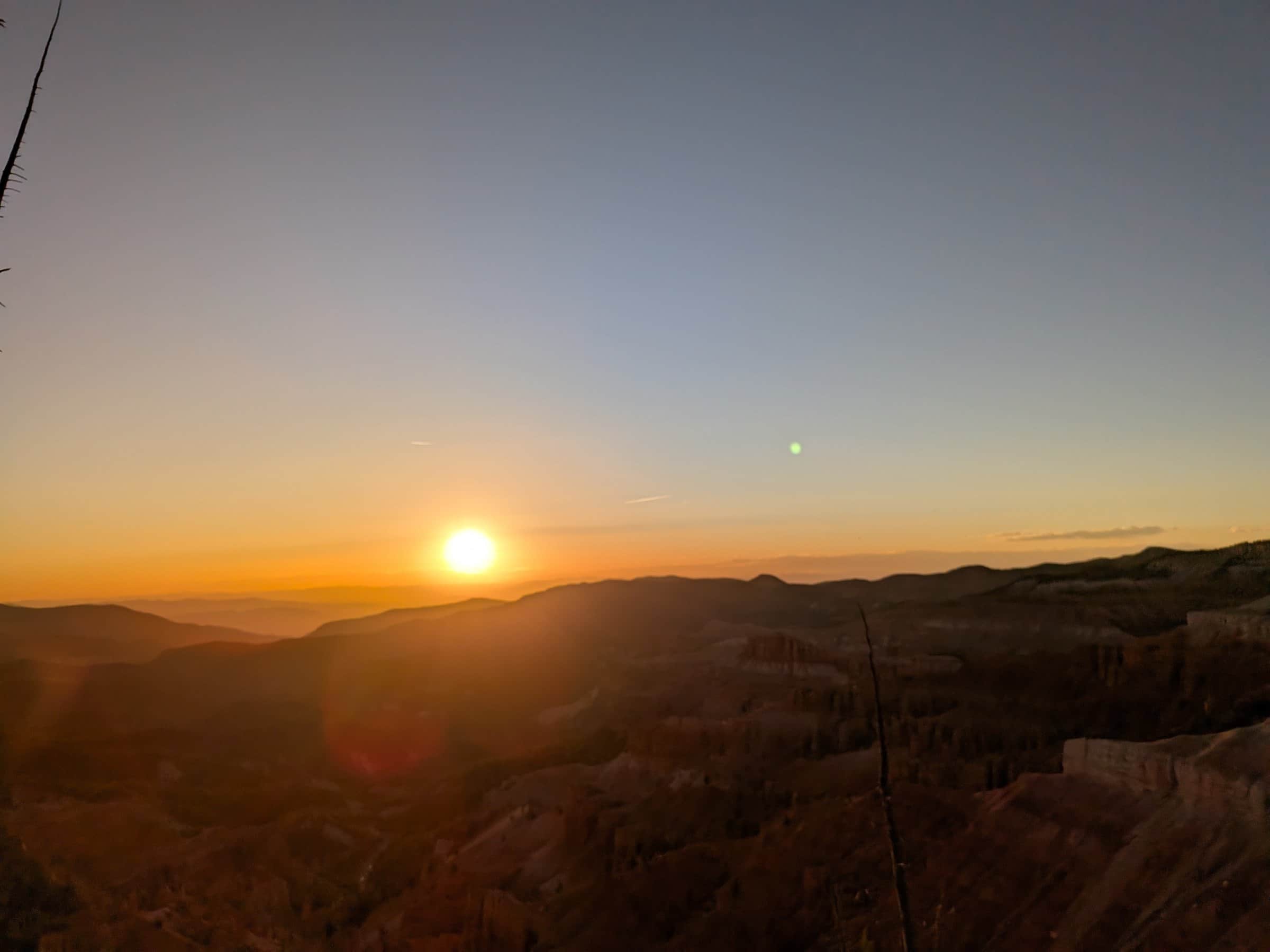
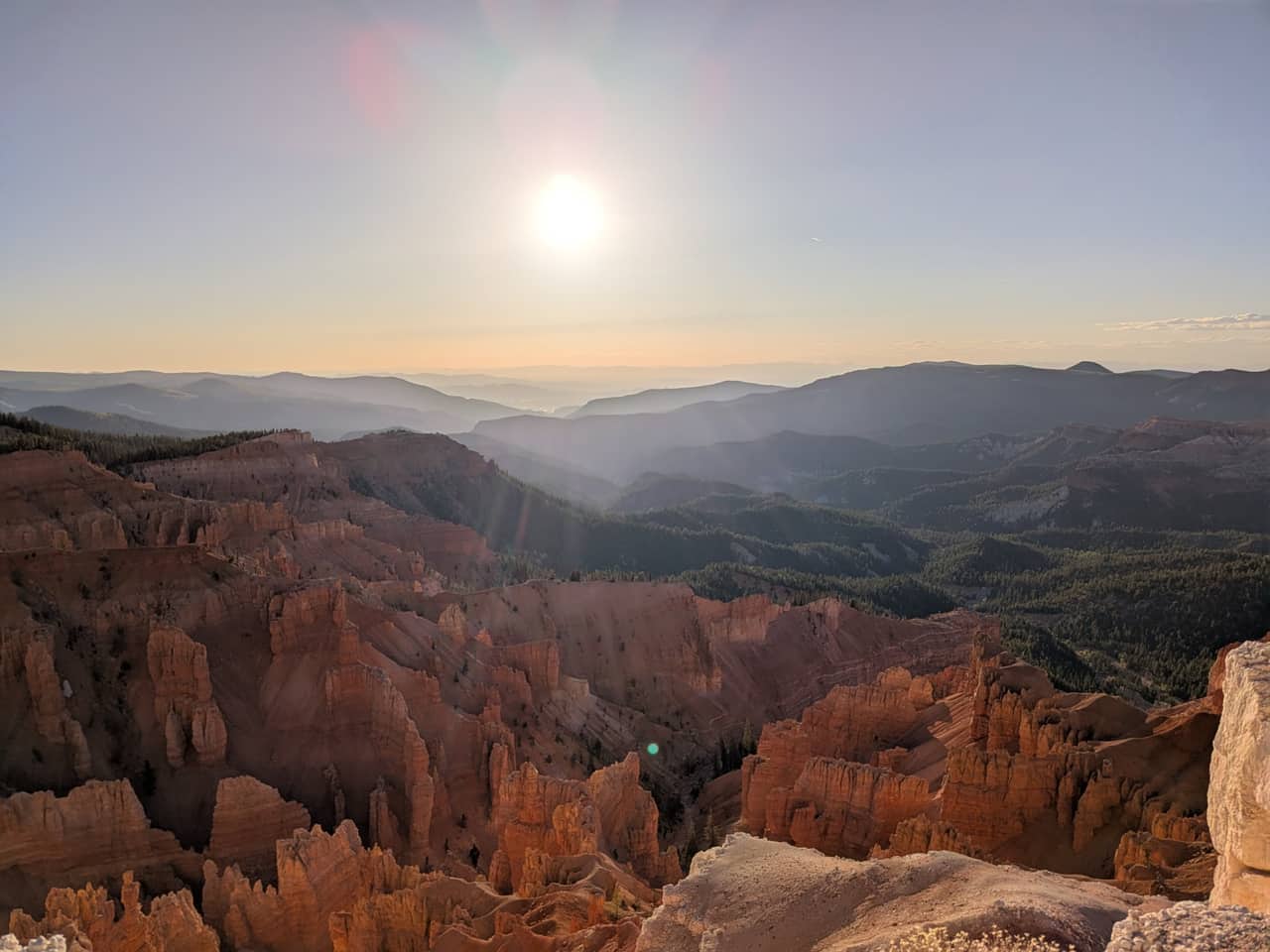
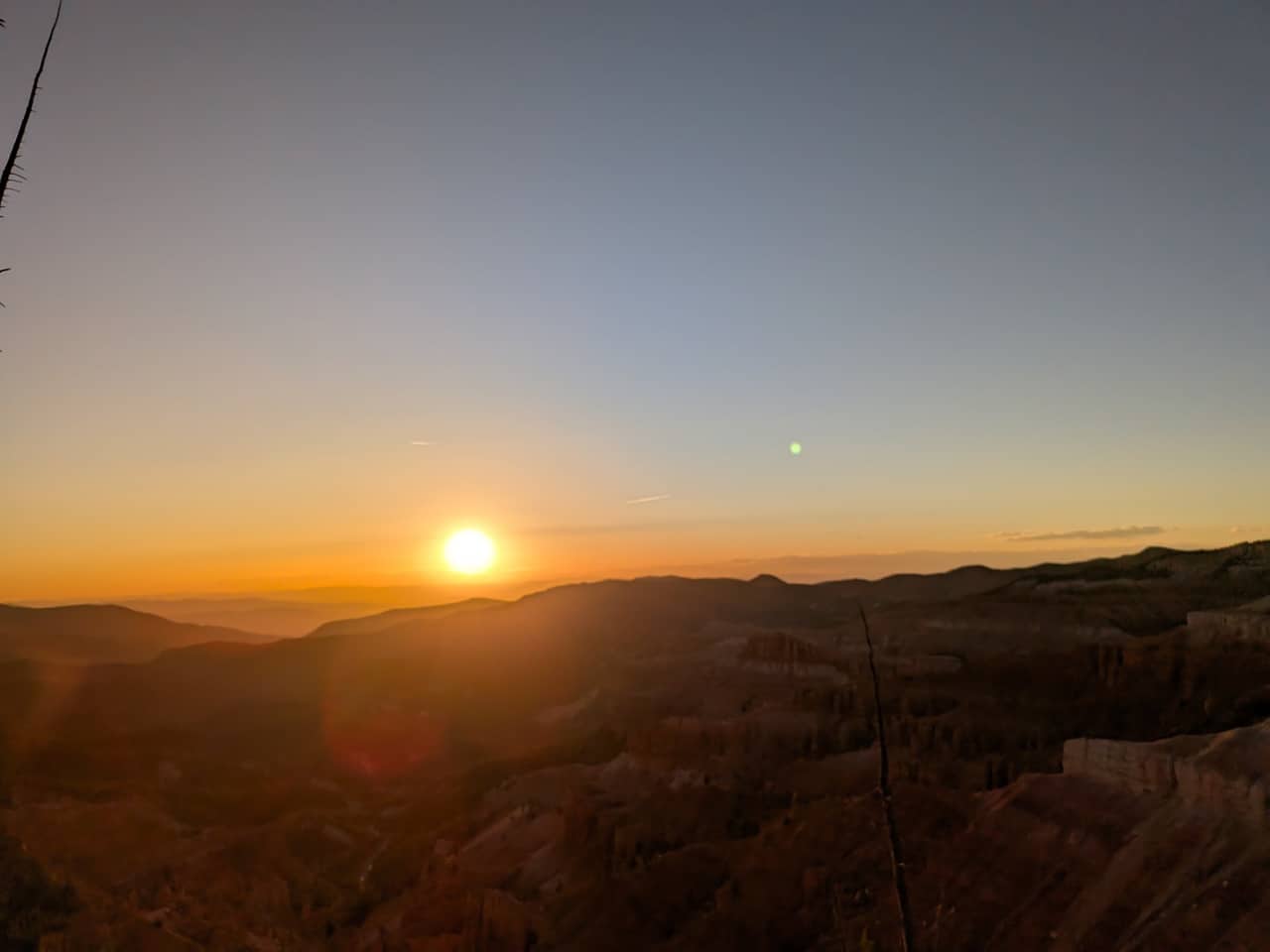
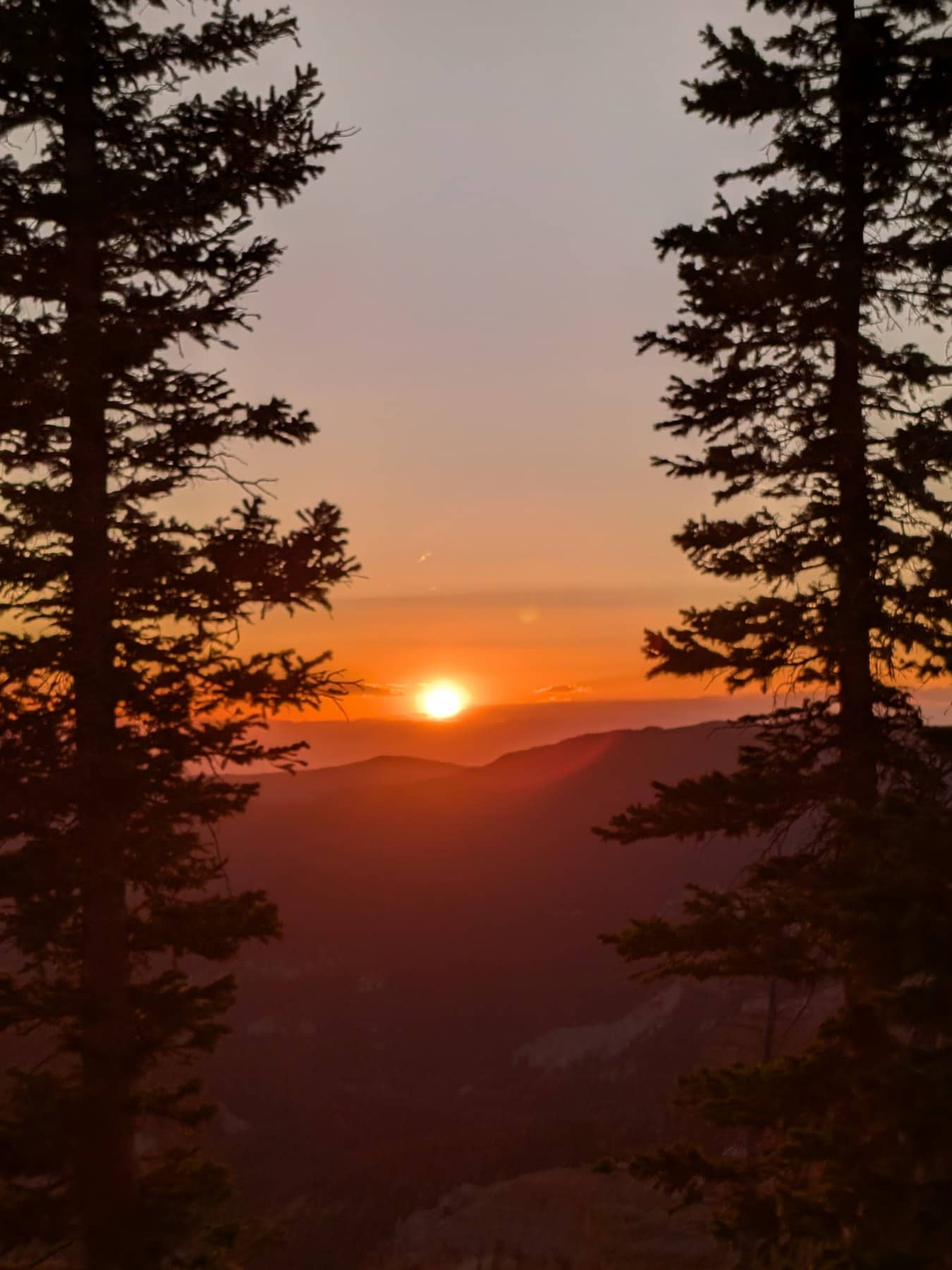
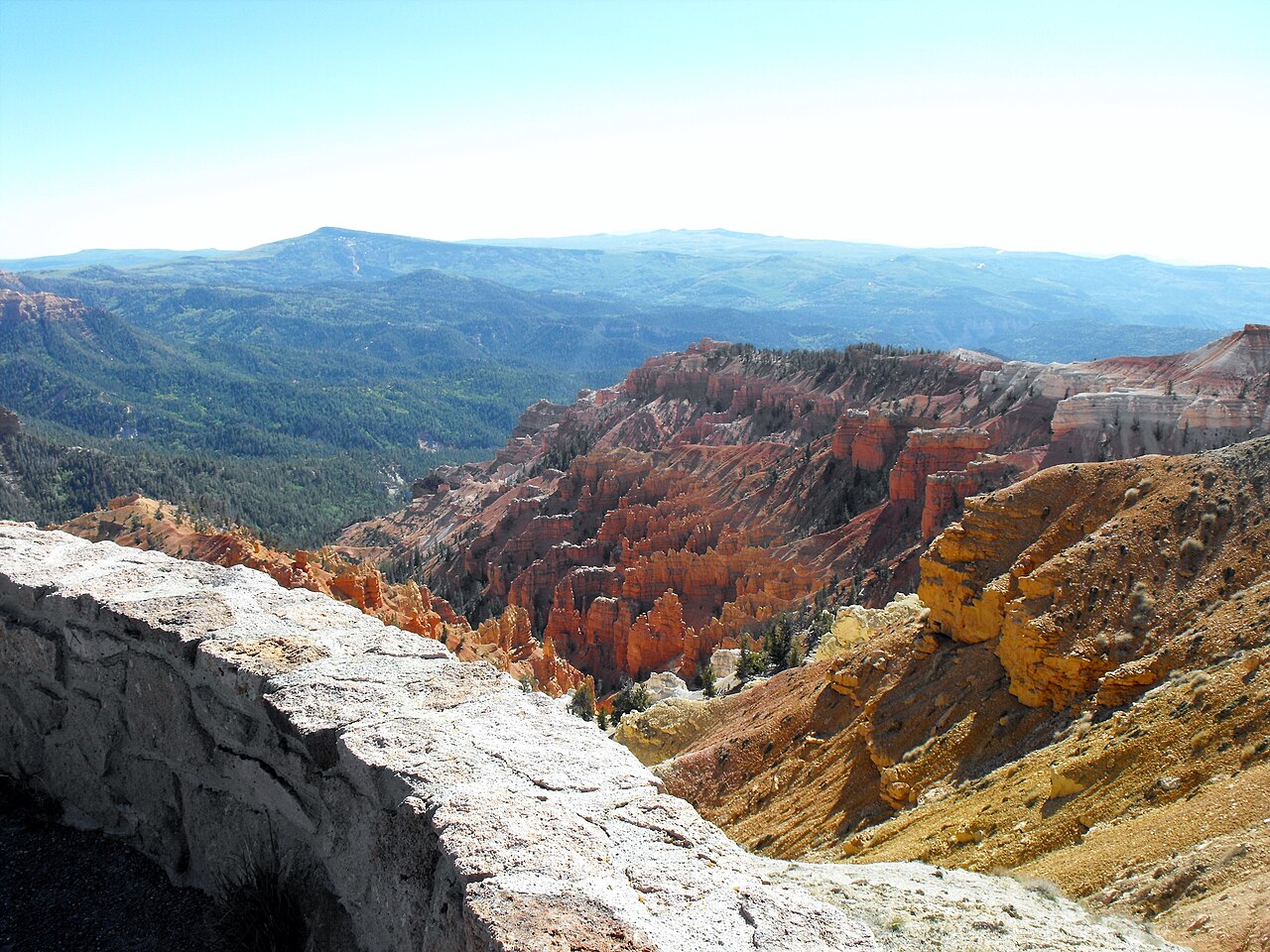
Sunset over the mountains viewed from Cedar Breaks Sunset View overlook with silhouetted trees in the foreground

Sunset & Stargazing at Cedar Breaks

One of the best sunsets in southern Utah and an International Dark Sky Park — 20 minutes from your cabin at Duck Creek Village Inn

If there is one thing at Cedar Breaks that people remember most, it is the sunset. The amphitheater faces west, which means the setting sun lights up the rock formations directly — and at 10,000 feet, with nothing between you and the horizon, the colors are extraordinary. Gold, orange, deep red, then purple as the light fades. The whole show takes about 30 minutes and it changes every night.

After the sun drops, the second act begins. Cedar Breaks is a certified International Dark Sky Park, which means the night sky here is genuinely dark — no city glow, no light pollution, just thousands of stars, the Milky Way, and on a clear summer night, some of the best stargazing in the western United States. The NPS runs ranger-led star parties on select summer evenings, but you do not need a program to enjoy it. Just stay after sunset, let your eyes adjust, and look up.

The whole experience — sunset, twilight, first stars — takes about two hours from arrival to departure. You are 20 minutes from the inn, which means you can watch the sunset at 10,000 feet and be back in a warm cabin before 10 PM. That is a hard combination to beat anywhere in southern Utah.

The sunset

Where to watch: Sunset View overlook. It is named for exactly this reason. The viewpoint sits on the western rim of the amphitheater with an unobstructed view toward the horizon. The rock formations below catch the warm light and seem to glow from within as the sun gets low.

When to arrive: Plan to be at the parking lot 30–45 minutes before sunset. On summer weekends, the lot fills up — it is smaller than Point Supreme — and latecomers end up parking on the road shoulder and walking in. Weeknight sunsets are less crowded but still worth arriving early for a good spot along the railing.

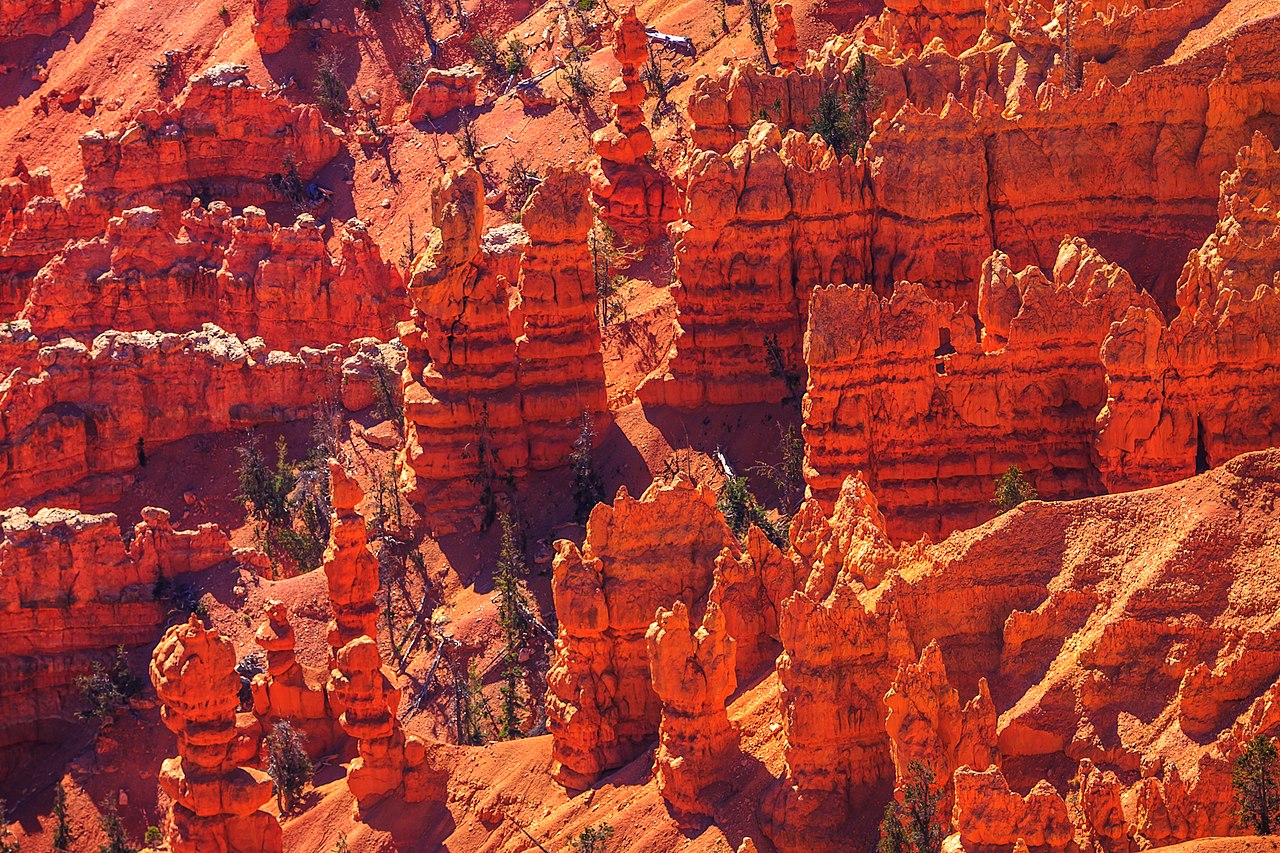
What makes it special: Most Utah overlooks face east. Cedar Breaks faces west. That means you are watching the sun set directly into the amphitheater — the light does not just illuminate the rock, it transforms it. The hoodoos shift from white to cream to gold to deep orange to shadow over the course of half an hour. At 10,000 feet, the air is thin and clear, which makes the colors more saturated than at lower elevations.

After sunset: Do not leave immediately. The 15–20 minutes after the sun drops below the horizon are often the most beautiful — the sky turns pink and purple, and the amphitheater takes on a twilight glow that photographs beautifully. This is also when the first stars appear.

Stargazing at the Dark Sky Park

Cedar Breaks earned its International Dark Sky Park designation because the skies here are genuinely exceptional. The monument sits at over 10,000 feet, far from any city, on a high plateau with no light pollution in any direction. On a clear, moonless summer night, you can see the Milky Way as a bright band stretching across the entire sky. Shooting stars, satellites, and the occasional planet are all visible to the naked eye.

Ranger-led star parties

The NPS hosts star parties and astronomy programs on select summer nights, typically June through September. Programs usually start about 30 minutes after sunset and include ranger talks, telescope viewing, and laser-guided constellation tours. These events are free with monument admission and do not require reservations, but they can draw a crowd — arrive early for parking. Check the NPS park calendar for specific dates.

On your own

You do not need a ranger program to stargaze. The monument road stays open after dark during the summer season, so you can drive to any overlook, park, and watch the sky. Point Supreme and Sunset View both work well. Give your eyes 15–20 minutes to fully adjust to the dark — avoid looking at your phone screen during this time. A red-light headlamp is essential for navigating back to your car without ruining your night vision.

Best conditions

  • Moon phase matters. The darkest skies happen around the new moon. A full moon washes out fainter stars and the Milky Way. Plan your stargazing night accordingly.
  • Clear skies. Summer monsoon clouds often clear by late evening, but check the forecast. A clear night at 10,000 feet is incomparable.
  • June through September is the core window. The Milky Way core is best positioned from late June through August. September offers darker evenings as days get shorter.

What to bring

  • Warm jacket, hat, and gloves. This is not optional. Temperatures at the rim drop to 35–45°F on summer nights. Wind makes it feel colder. Dress as if you are going out on a winter evening.
  • Red-light headlamp. White light ruins night vision for everyone around you. A red-light headlamp lets you see the trail back to your car without affecting your eyes or other visitors.
  • Camp chair or blanket. Stargazing is better sitting or lying down. Bring something to sit on — the ground at the overlooks is rocky.
  • Tripod. If you want to photograph the Milky Way or do long exposures, a tripod is essential. Phone cameras in night mode can capture surprising detail at this elevation.
  • Thermos. Hot coffee or cocoa makes the experience more comfortable and extends how long you want to stay.

Tips from Duck Creek

  • Make it a two-part evening. Drive up for sunset at Sunset View, walk back to the car during twilight, then drive to Point Supreme (larger lot, easier access) for stargazing. You get both experiences in one trip.
  • Parking fills at sunset. Sunset View has a small lot. Arrive early. If it is full, Point Supreme works as a backup sunset spot — the colors are slightly different but still excellent.
  • 20 minutes home. This is the key advantage of staying at Duck Creek Village Inn. You can stay until 10 or 11 PM, get spectacular stargazing, and still be back in a warm cabin within 20 minutes. No one else in the area has that combination.
  • Check the weather. A clear sky forecast at 10,000 feet is different from the forecast in the valley. Mountain weather can change fast, and afternoon clouds do not always mean evening clouds. Check conditions and be flexible.
  • Combine with a morning hike. A great Cedar Breaks day: Alpine Pond Trail in the morning, rest at the inn in the afternoon, then sunset and stars in the evening. Two visits to the monument, one entrance fee.

Stay planning

A sunset and stargazing evening at Cedar Breaks is the perfect complement to a bigger park day at Bryce Canyon or Zion. Use Plan Your Days to build your itinerary. Compare our rooms and cabins to find the right fit — and remember, the drive home after stargazing is only 20 minutes. No other accommodation in the area puts you this close to a Dark Sky Park.

Why trust this guide

We watch sunsets and stars from Cedar Breaks regularly and write from the perspective of guests staying at Duck Creek Village Inn. Star party schedules and road access change seasonally — check the NPS resources before you go.

Sunset & stargazing questions

Common questions from trip planners.

Where is the best place to watch the sunset at Cedar Breaks?

Sunset View overlook is the best sunset spot. The amphitheater faces west, so the setting sun lights up the rock formations in deep gold and orange. Arrive 30–45 minutes before sunset on summer weekends — the parking lot is small and fills up.

Is Cedar Breaks an International Dark Sky Park?

Yes. Cedar Breaks was designated an International Dark Sky Park by the International Dark-Sky Association. The monument sits at over 10,000 feet with minimal light pollution, making it one of the best stargazing locations in the western United States.

When are the star parties at Cedar Breaks?

The NPS hosts ranger-led star parties and astronomy programs on select summer nights, typically June through September. Programs usually begin after sunset and include telescope viewing. Check the NPS park calendar for specific dates and times.

How cold does it get at Cedar Breaks at night?

Temperatures at the rim can drop to 35–45°F on summer nights, even when daytime temperatures were in the 60s or 70s. Bring a warm jacket, hat, and gloves if you plan to stay for stargazing. Wind makes it feel even colder.

Can you stargaze at Cedar Breaks without a guided program?

Yes. The monument is open for stargazing anytime the road is accessible. You do not need to attend a ranger program — just drive to an overlook after dark and look up. Bring a red-light headlamp to preserve your night vision and warm layers for the cold.

Stay Here, Watch the Stars Tonight

Book your room or cabin at Duck Creek Village Inn — 20 minutes from one of the best Dark Sky Parks in the country with a warm cabin waiting when you get back.