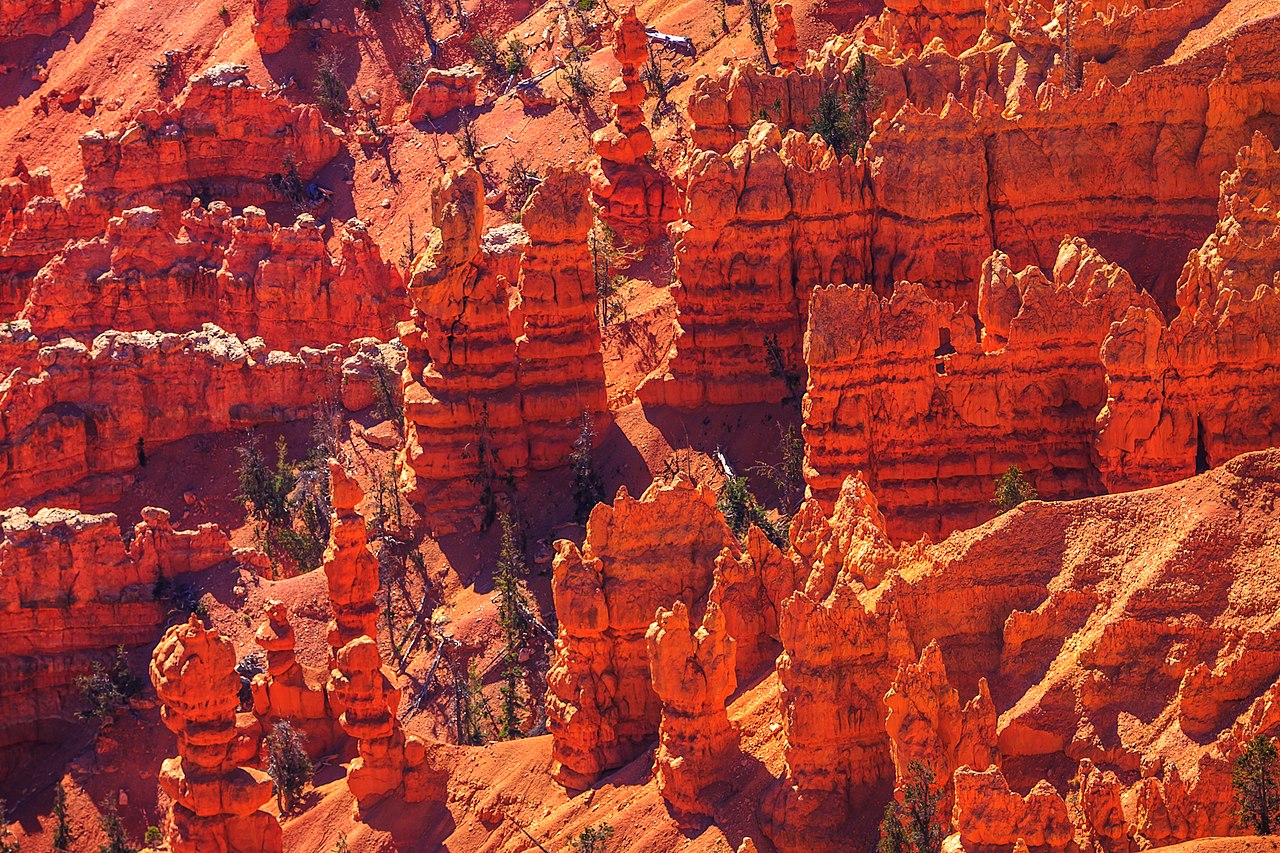
Best Hikes
All four Cedar Breaks trails compared, from the flat meadow loop to the rim walk through 1,600-year-old bristlecone pines
View guide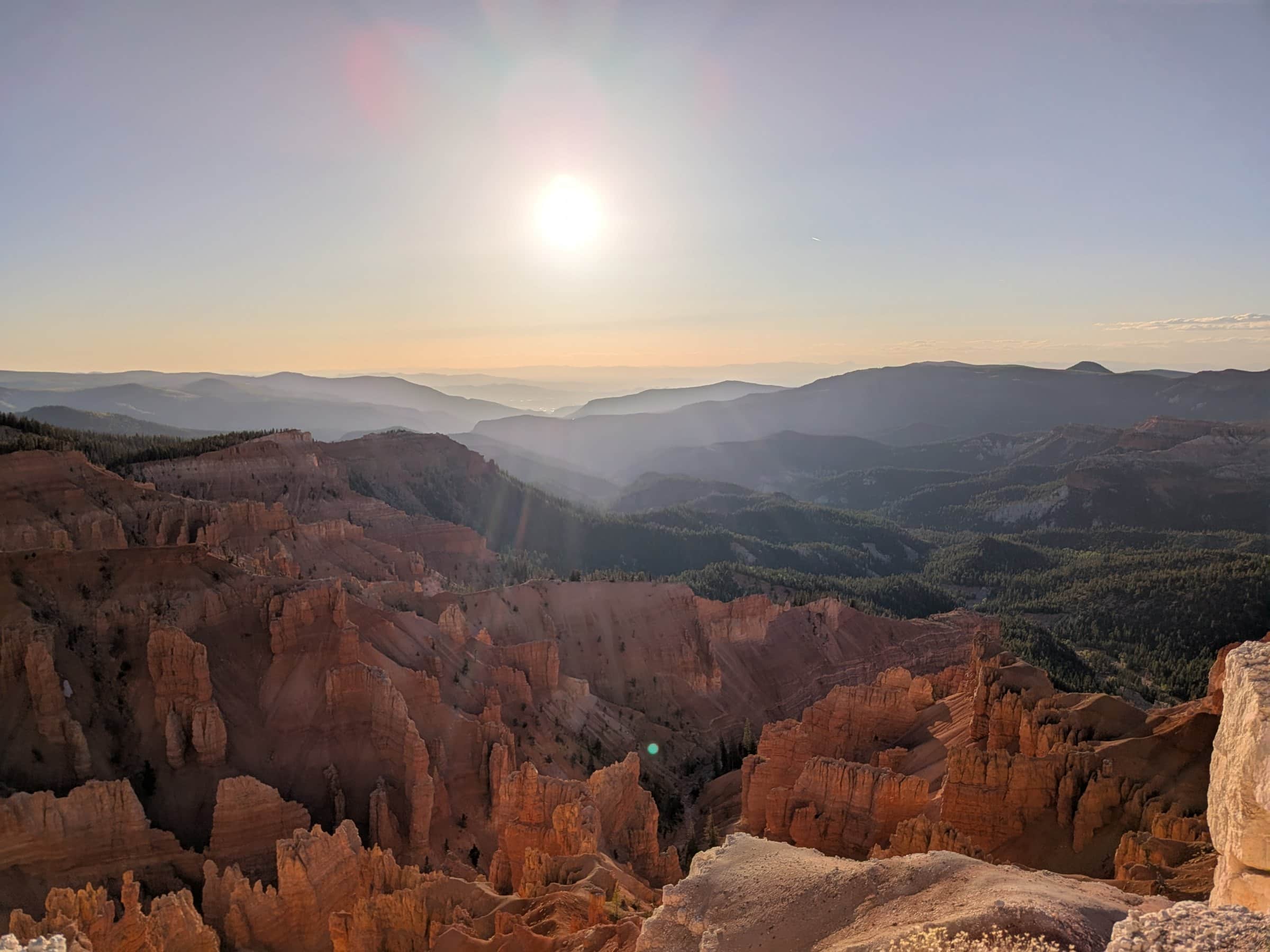
Duck Creek Guide
A 2,000-foot amphitheater at 10,000 feet, 16 miles from the inn. Overlooks, two short trails, July wildflowers, the best sunset in southern Utah, and a Dark Sky Park after it.
At a glance
Cedar Breaks is the small national monument on the western edge of the Markagunt Plateau, 16 miles and about 25 minutes up the road from the inn. The rim sits at 10,350 feet and drops more than 2,000 feet into a three-mile-wide amphitheater of red, orange and cream limestone, the same Claron Formation as Bryce Canyon, eroded into fins and hoodoos and still coming apart at about two inches every five years. It is 6,155 acres, it was set aside in 1933, and it drew 688,644 visitors in 2022, a fraction of what the national parks see.
What it lacks in size it makes up for in timing. The drive is short enough to do twice in a day. The season is short too: Highway 148 through the monument opens in mid to late May and closes with the snow in November, the meadows bloom for about six weeks starting in late June, and the ranger-led Night Sky Tours run Friday and Saturday evenings from June through September. Almost every good Cedar Breaks day is built around one of those windows.
This guide covers the drive, the fees and the 2026 dates, then hands off to the deeper pages: the overlooks and the new visitor center, the trails, the Alpine Pond loop, the wildflowers, and sunset and stargazing with sunset times by month. If you only read one thing, read the sunset page and go up for it.
One page for each part of the visit, so you can plan around what you care about.
All four Cedar Breaks trails compared, from the flat meadow loop to the rim walk through 1,600-year-old bristlecone pines
View guide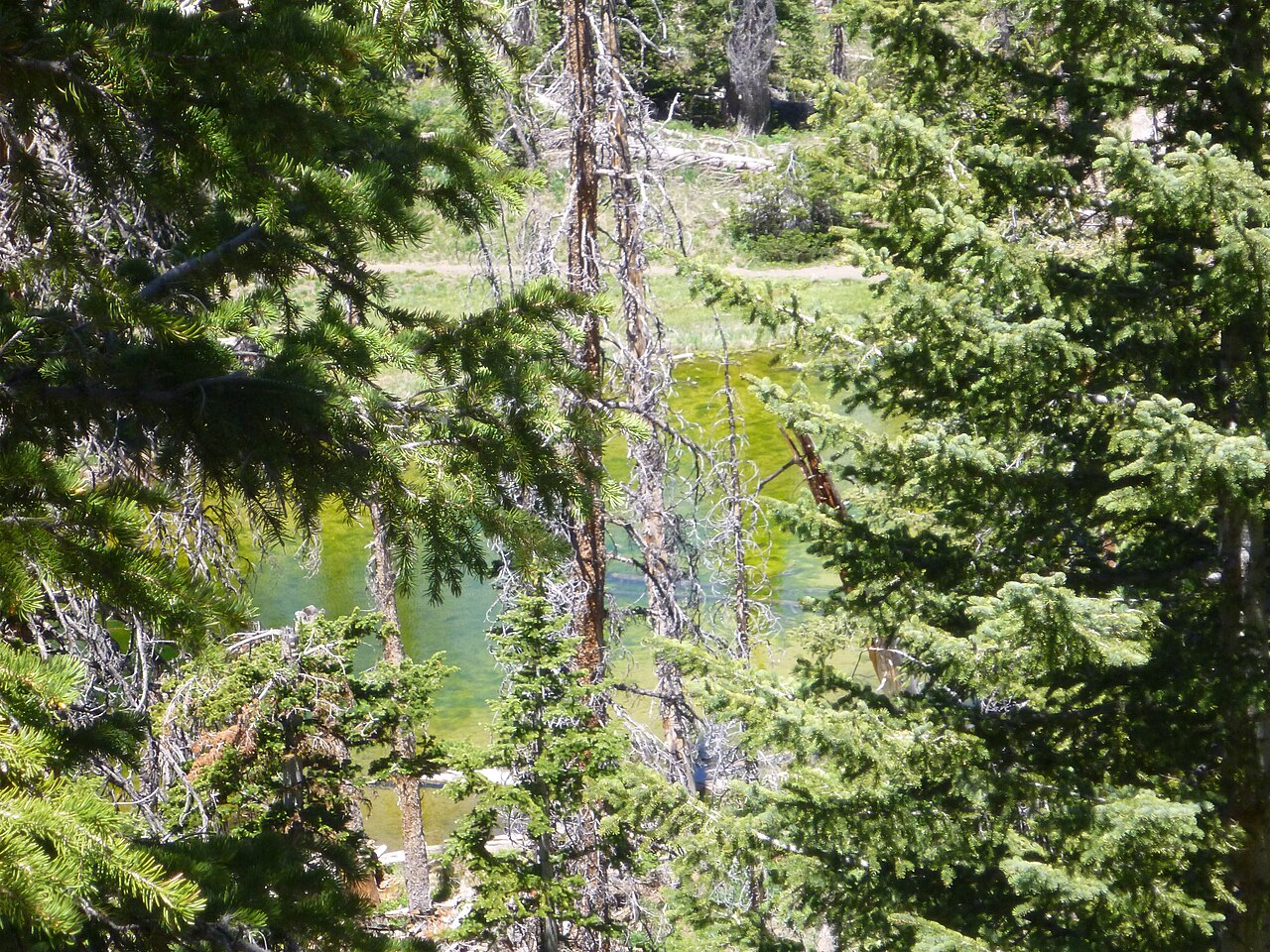
The signature Cedar Breaks walk: wildflower meadows, a spring-fed pond, and bristlecone pines in two easy miles from Chessmen Ridge
View guide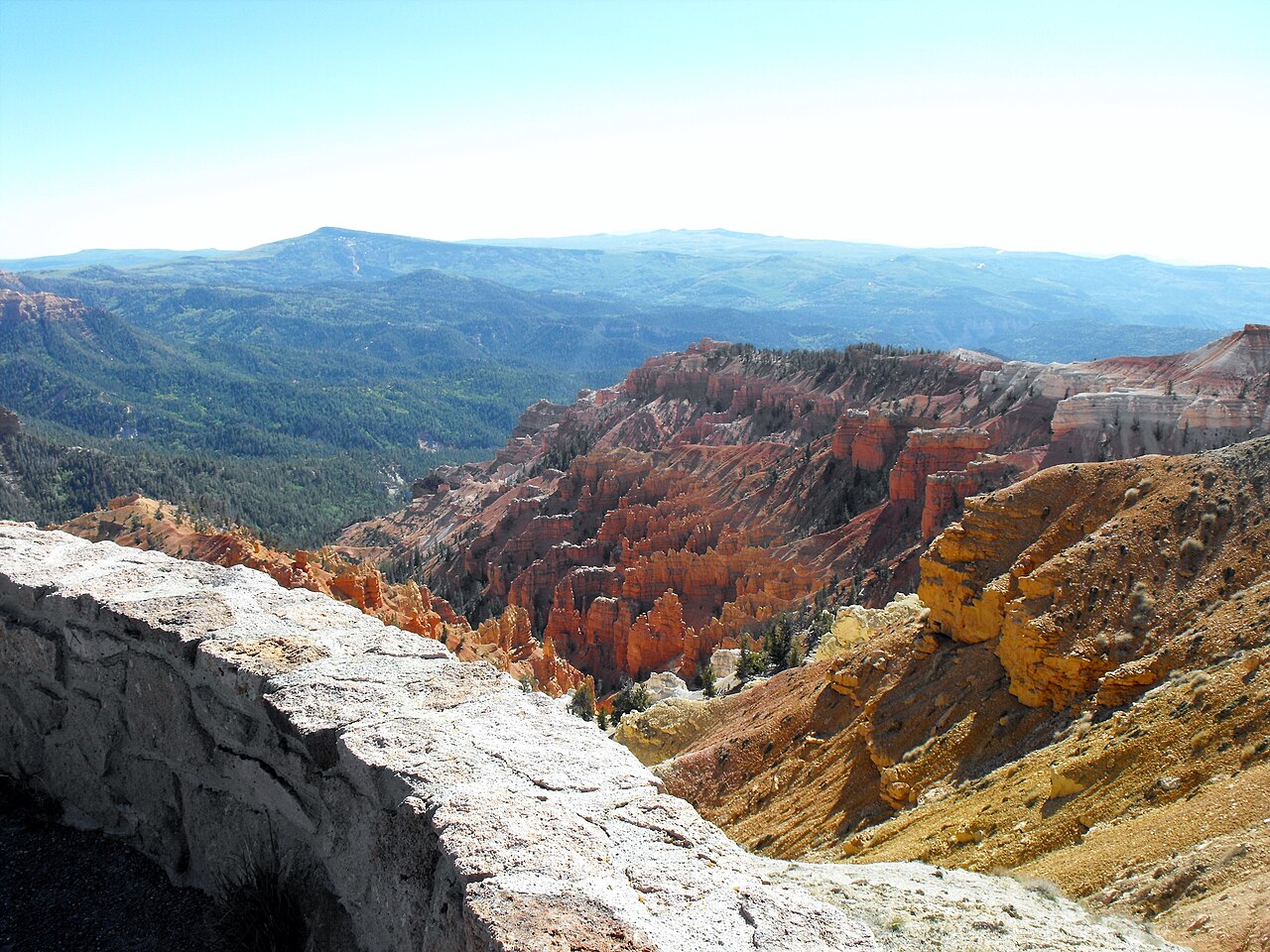
Point Supreme, Sunset View, Chessmen Ridge, and North View in driving order, plus the new visitor center and the campground
View guide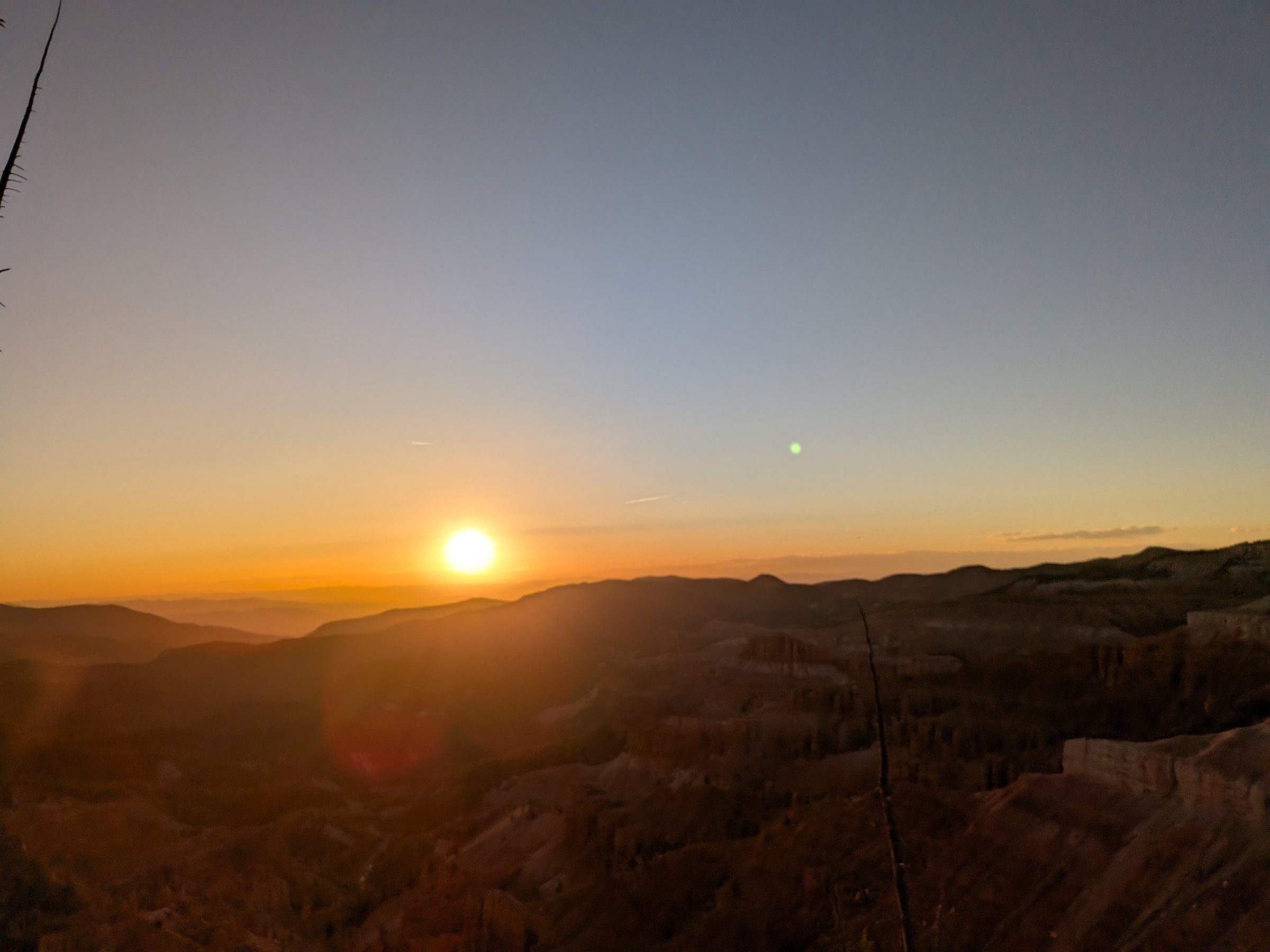
The best sunset spot in southern Utah and an International Dark Sky Park, with sunset times by month and how to plan an evening at Cedar Breaks
View guide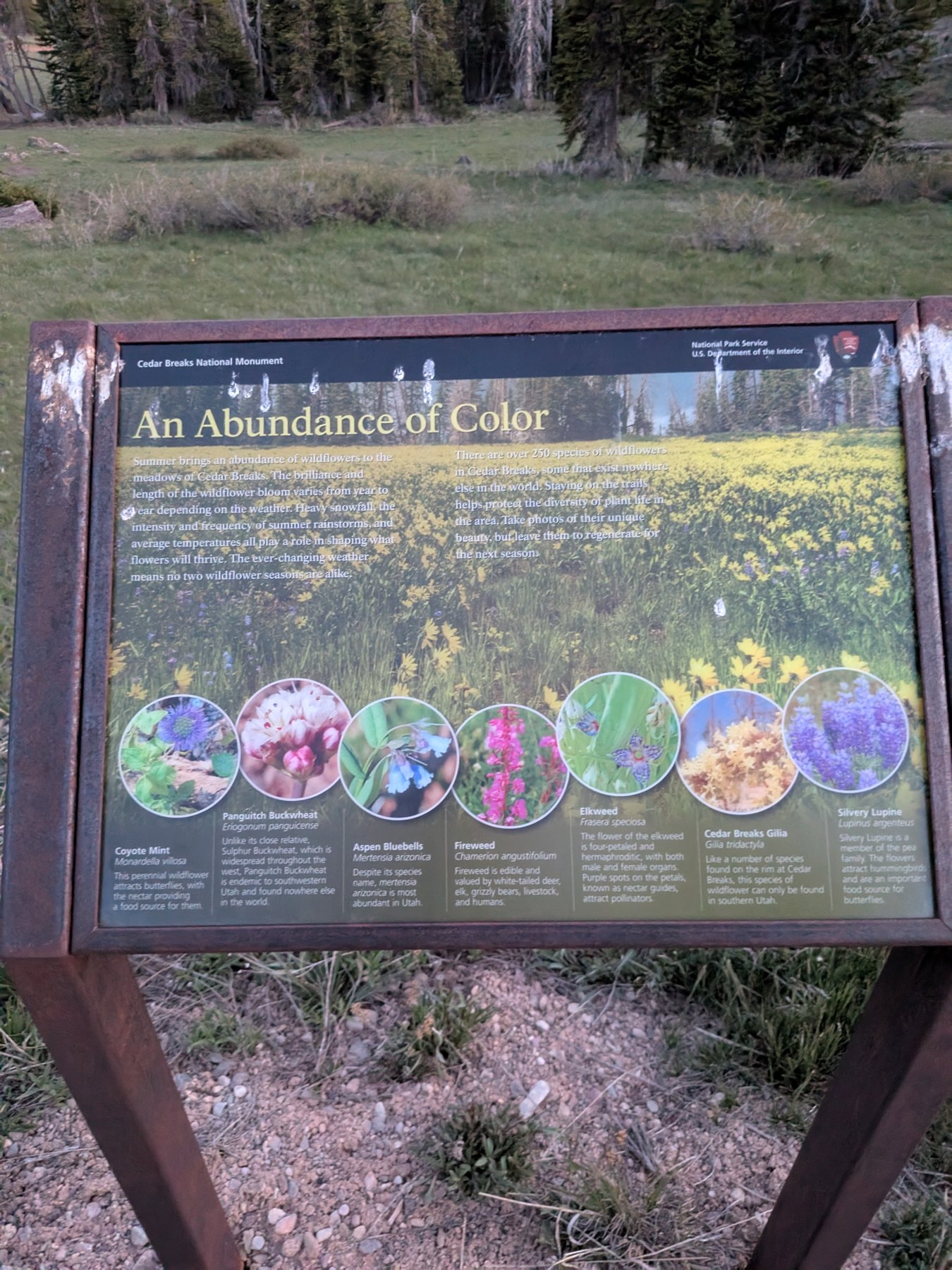
Over 250 species at 10,000 feet: a bloom calendar, an illustrated field guide to 20 flowers, the two endemics, and the July Wildflower Festival
View guide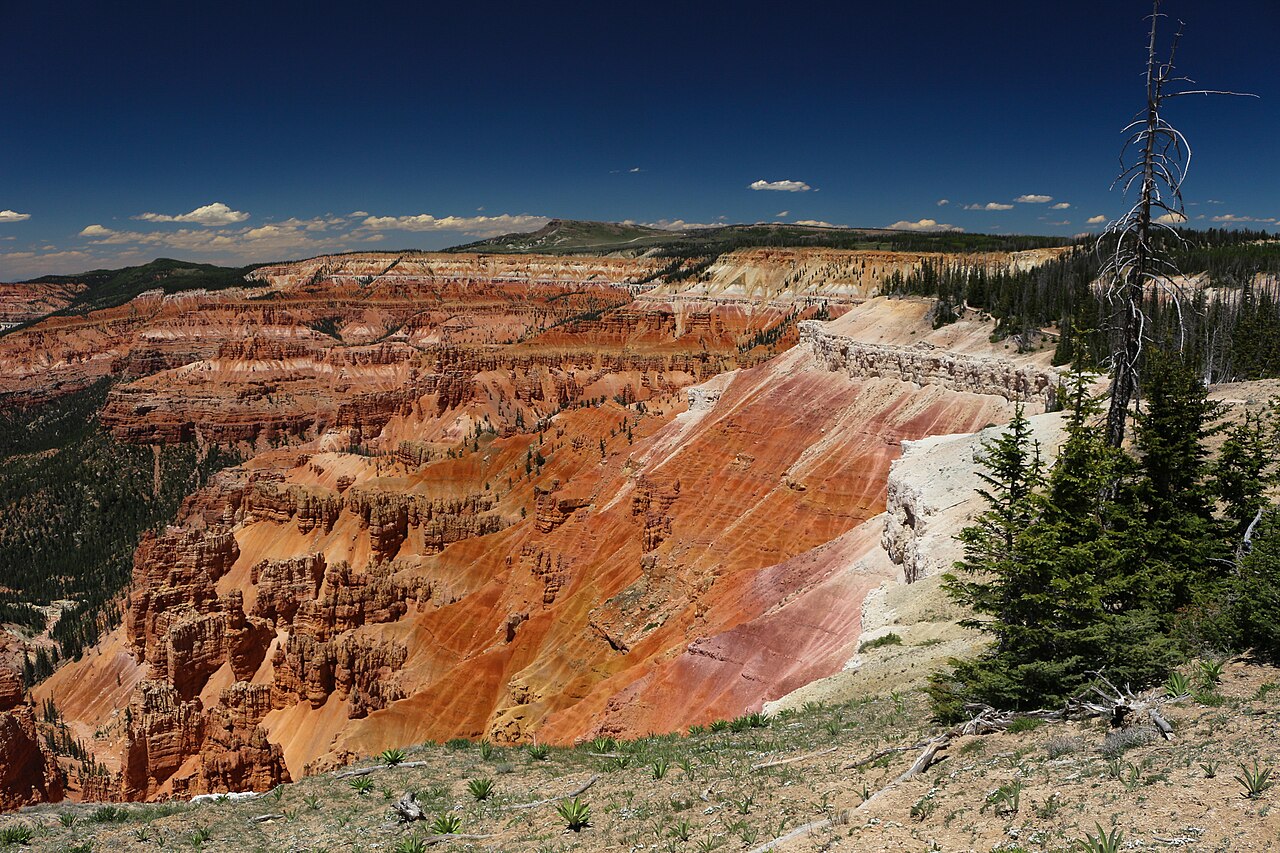
Is the road open? Live alerts, hours, and dark-sky programs, straight from the National Park Service
View guideLeave the inn heading west on Highway 14. The road climbs steadily through spruce and aspen, passes the Navajo Lake overlook at mile 8 (worth the pullout), and reaches the Highway 148 junction at mile 12, just under 9,900 feet. Turn right. Highway 148 climbs the last 500 feet through open meadows to the entrance station and the Point Supreme visitor center at mile 15.5. Call it 15.5 miles and 25 minutes; the overlooks continue another 4.6 miles north to the Highway 143 entrance and Brian Head.
In winter the plowing stops at the junction. The lot there is the trailhead for the snowmobile route along the closed highway and for skis and snowshoes, 3.5 miles from Point Supreme. Check Highway 14 road conditions before any shoulder-season trip; our conditions page has the live NPS road status.
The real route from the inn, traced from road geometry: Highway 14 west (solid green) and Highway 148 north through the monument (dashed). Tap any pin for its note and the page that covers it.
Depth, width, erosion rate and the bristlecone ages are from the National Park Service; the plant count is the NPS Northern Colorado Plateau Network inventory; establishment, acreage and visitation (688,644 in 2022) from NPS records. The colors are iron oxides rusting the limestone of an ancient lake bed, 50 to 60 million years old, that the Hurricane Fault has been lifting for the last 10 million years.
Most visitors to southern Utah drive past Cedar Breaks on the way to Bryce or Zion and never stop, which is their loss and your gain. From the inn it is the closest of the three parks, there is no shuttle, the lots are manageable on all but the busiest summer evenings, and a $25 pass is good for a week of return trips.
It also fills a different role. Cedar Breaks is the half day you take when you do not want another full-park commitment: up after breakfast, the Alpine Pond loop, a lap of the overlooks, and back at the inn for lunch. Or it is the evening: sunset at Sunset View and a Night Sky Tour at Point Supreme, then a 25-minute drive to a warm bed. Nobody else in the region has that combination.
The elevation helps too. The inn sits at 8,455 feet, so the 1,900-foot climb to the rim is gentle compared with the jump from St. George or Las Vegas, and you are already half acclimated when you step out of the car. The rim is still 10 to 20 degrees cooler than the parks around it, and windier, so the jacket you did not need at the inn comes along anyway.
Three photos from one evening on the rim, 1 June 2026, with the camera's clock on each. The amphitheater faces west, so the light works differently from Bryce: the rock glows an hour before sunset and goes dark as the sun reaches the ridge, and then the sky takes over.
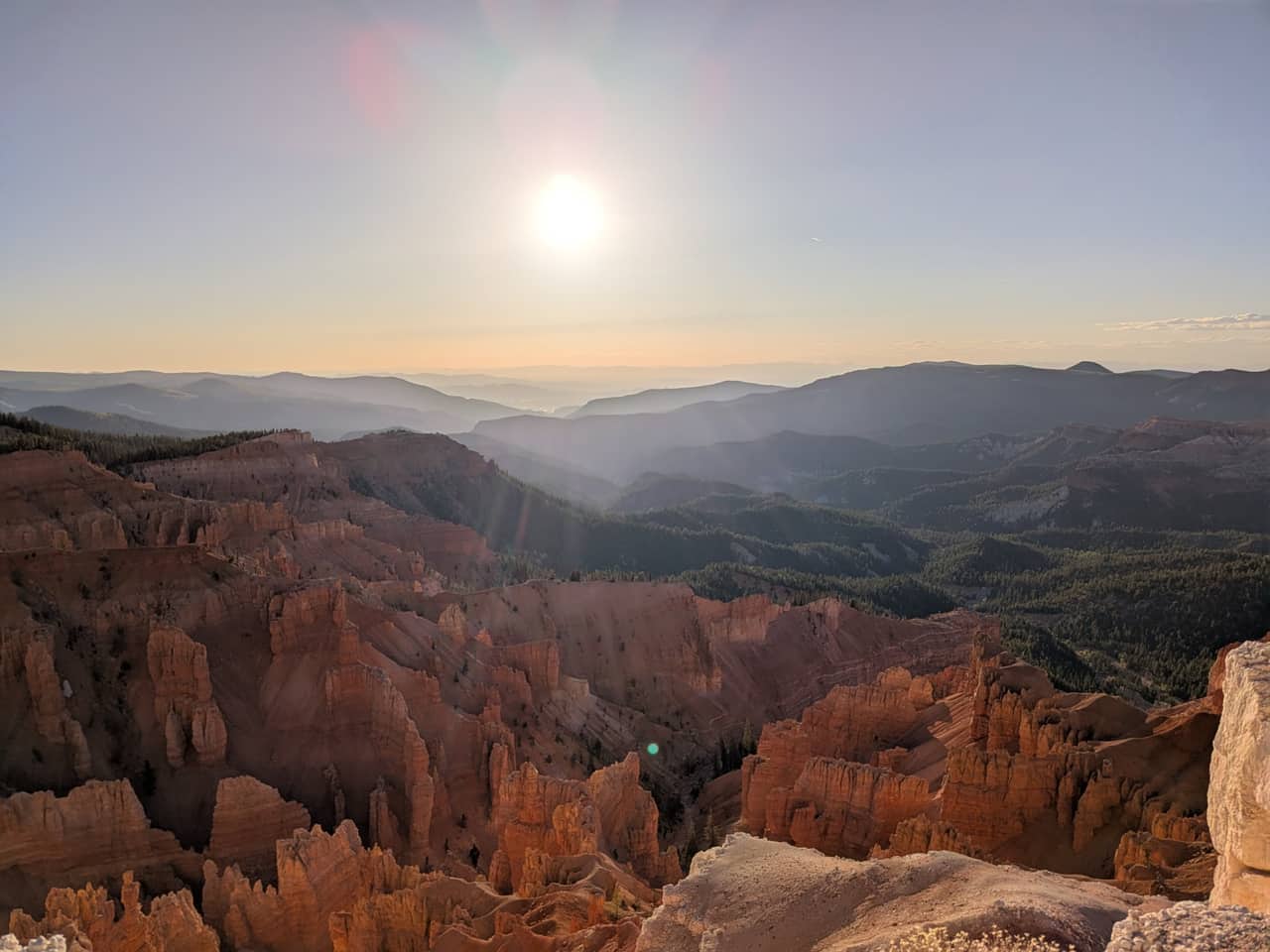
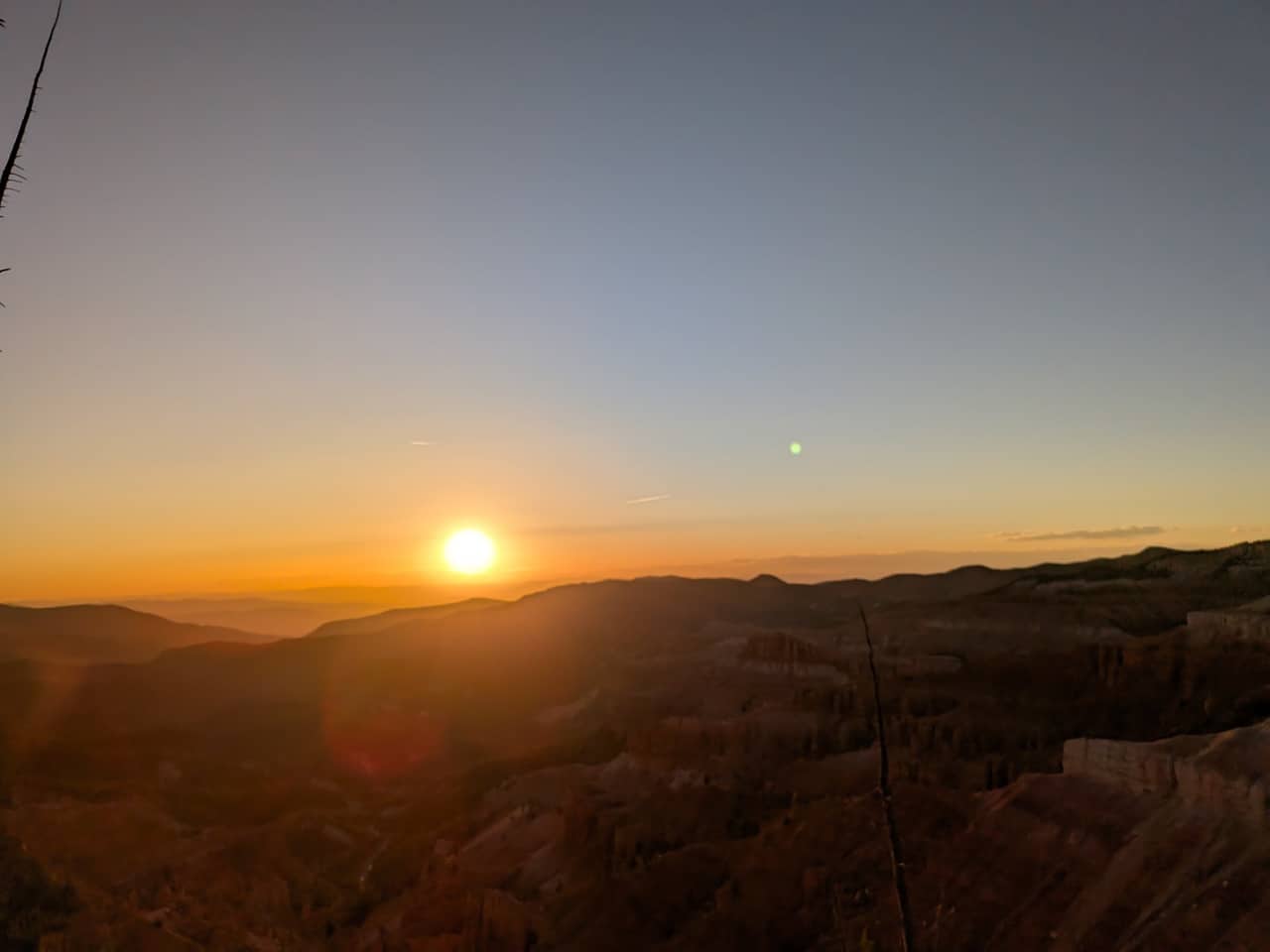
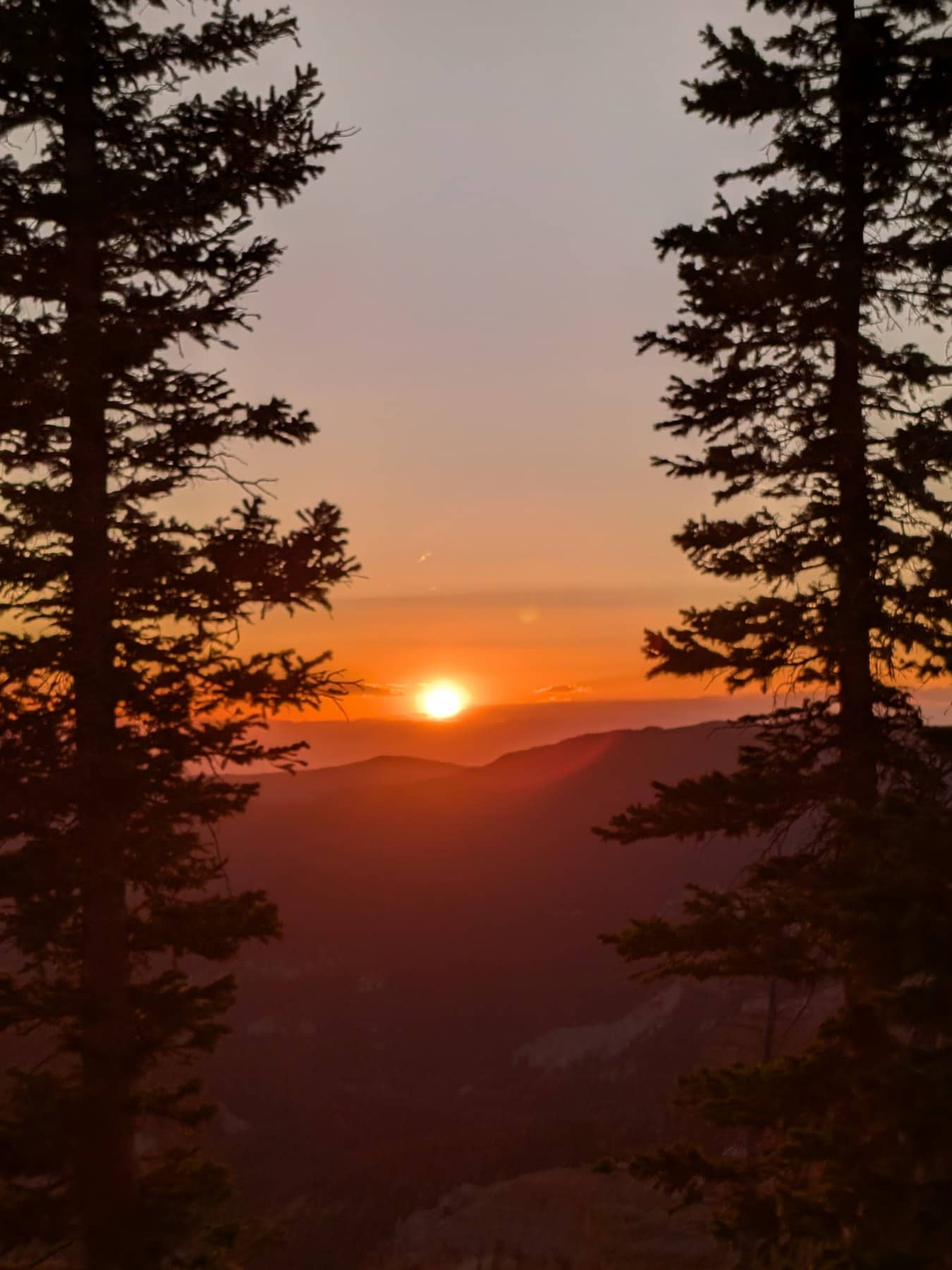
Our photos, Sunset View and the rim near Point Supreme, 1 June 2026. Camera clock times, Mountain Daylight Time.
Over 250 species bloom on the rim between late May and September, and two of them, Cedar Breaks gilia and Panguitch buckwheat, grow nowhere else. The meadows turn blue with lupine and flax in late June, peak in the first half of July when the park holds its Wildflower Festival (July 3 to 11 in 2026), and go gold with sunflowers in August. Our wildflower guide has a week-by-week bloom calendar and an illustrated field guide to twenty flowers.
The rim is 1,900 feet above the inn and nearly 4,500 feet above Cedar City, and it shows. The park says summer highs run 60 to 70°F with nights in the 30s and 40s, and that snow, sleet and hail can fall in any month. The table is an estimate for 10,350 feet from NOAA 1991 to 2020 normals at the Brian Head station (9,770 ft), adjusted 2°F for the extra elevation. A planning guide, not a forecast; the weather page has the current outlook.
Estimated typical highs and lows at Point Supreme, °F
| Month | Jan | Feb | Mar | Apr | May | Jun | Jul | Aug | Sep | Oct | Nov | Dec |
|---|---|---|---|---|---|---|---|---|---|---|---|---|
| High | 28° | 30° | 37° | 42° | 53° | 65° | 69° | 67° | 59° | 46° | 36° | 26° |
| Low | 8° | 10° | 15° | 16° | 25° | 34° | 40° | 41° | 33° | 22° | 15° | 8° |
July averages about 69° by day and 40° at night; September 59° and 33°. Greyed months are inside the usual road closure. Afternoon thunderstorms build over the plateau most days from mid July into early September, and the rim is the most exposed ground in the monument, so do the walks in the morning and be near the car by early afternoon.
Summer (June to August) is the season. The road is open, the visitor center is staffed, ranger programs start June 1, the wildflowers peak in early to mid July, and the Night Sky Tours run every Friday and Saturday. Afternoon thunderstorms build most days from mid July; do the exposed walks in the morning.
Early fall (September to mid October) brings thin crowds, cold clear nights for stargazing, and the aspen turning below the rim in the last ten days of September. The campground closes September 18 and the visitor center in mid October, but the road usually stays open until the first sustained snow, typically mid November.
Late spring (mid May to mid June) is when the road opens, May 15 in 2026. Snow lingers in the shade, the trails are muddy, and the first flowers are just showing. Quiet, and the amphitheater with snow on the fins is worth the drive.
Winter is non-motorized or snowmobile only. The plowing stops at the Highway 14 lot, 3.5 miles from Point Supreme, and the marked snowmobile route follows the closed highway. The NPS runs guided snowshoe walks on select weekends; check the park calendar and our winter guide.
Cedar Breaks is the easiest outing to build a stay around. Use Plan Your Days to pair a Cedar Breaks morning or evening with a Navajo Lake afternoon, or our Cedar Breaks and Navajo Lake itinerary to do both in one day. Compare rooms and cabins, and remember that Bryce Canyon and Zion are each about an hour away, so a three-park week works from this base. The stay near Cedar Breaks page compares the options.
Reviewed September 2026
We run the inn 16 miles down the mountain and go up to Cedar Breaks all season. The drive distance and elevation profile were traced from real road geometry; fees, season dates, hours and program schedules come from the National Park Service, checked in September 2026; the weather table is computed from NOAA climate normals; the sunset photos are ours. Conditions change with the snowpack, so cross-check the NPS pages before you drive.
The questions trip planners usually ask next.
About 16 miles and 25 minutes. Drive west on Highway 14 for 12 miles, past the Navajo Lake overlook, then turn north on Highway 148 for 3 more miles to the Point Supreme visitor center. The route climbs 1,900 feet, most of it in the last four miles.
$25 per private vehicle, good for seven days. Motorcycles are $20, walk-ins and cyclists $15 each (15 and under free), and a Cedar Breaks annual pass is $45. America the Beautiful passes are accepted. The entrance station is cashless.
The monument never closes, but Highway 148 through it is a seasonal road. In 2026 it opened May 15; it usually closes with sustained snow in mid November. The visitor center, park store and museum run 9 a.m. to 5 p.m. daily from late May to mid October. In winter you can reach the rim by snowmobile, ski or snowshoe from the Highway 14 parking area.
Yes. It is 1,500 feet higher, the amphitheater faces west into the sunset instead of east into the sunrise, the crowds are a fraction of Bryce, and it is 25 minutes from the inn instead of an hour. Treat it as a half day or an evening rather than a substitute for Bryce.
The Alpine Pond Trail, a 2-mile loop from Chessmen Ridge Overlook through wildflower meadows and bristlecone pines to a spring-fed pond. For more, the South Rim Trail from Point Supreme runs past 1,600-year-old bristlecones to Spectra Point (1 mile) and Ramparts Overlook (2 miles). The paved Sunset Trail and half-mile Campground Trail are the easy options.
Late June through September for open roads, ranger programs and dark-sky tours. Early to mid July for wildflowers, when the park holds its Wildflower Festival. Any clear summer evening for sunset and stars; the sunset page lists sunset times by month.
Yes, and it is the reason to come. Sunset View Overlook faces west over the amphitheater. Be parked 45 minutes early on summer weekends because the lot is small, and stay 20 minutes after the sun goes for the color. Then drive a mile south to Point Supreme for the Night Sky Tour.
About 3.5 hours: I-15 north to Cedar City, then Highway 14 east and Highway 148 north. Staying in Duck Creek Village puts the monument 25 minutes from your door instead of a full day from the Strip.
Rooms with breakfast or cabins with a kitchen at Duck Creek Village Inn. Overlooks by day, wildflowers in July, and a Dark Sky Park after dinner.