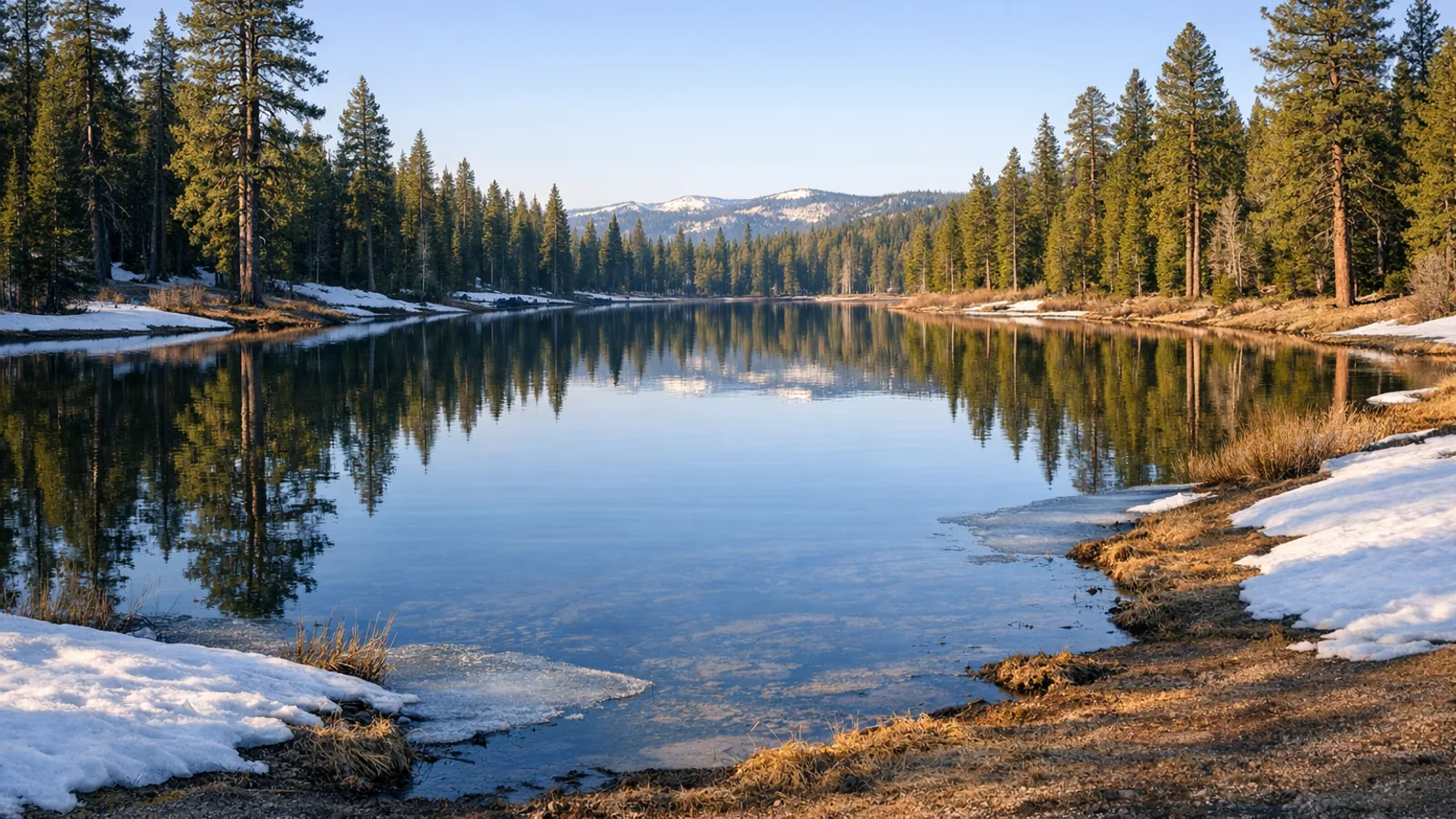
Spring in Duck Creek brings cold mornings, flowing water, lighter traffic, and a mix of dry trails and leftover snow. This guide helps you plan the shoulder season without guessing.
Spring in Duck Creek feels like a reset. Snow hangs on in the trees, water starts moving again, and the village slows down in the best way. You can wake up to frost, spend midday in sun, and still need a jacket at dinner.
Duck Creek sits at 8,400 feet, so spring does not move on desert time. That is the point. You get cool air, lighter traffic, and a shoulder season that rewards people who plan with a little care.
What spring looks like on the mountain
Expect a mix of dry pavement, wet ground, and leftover snow. One shady pullout can look like March while the next meadow looks ready for June. Pack layers, waterproof shoes, and give yourself room to change plans.
This is a good season for people who want a calmer version of the Duck Creek guide. You can take short walks, watch water move again, and keep one bigger outing in your pocket when the roads and trails line up.
What opens first and what takes longer
Start with the Seasonal Activity Calendar and check road conditions before you drive up. Spring weather can shift fast on Highway 14, and the high country keeps snow long after lower towns feel warm.
Cedar Breaks gives you the clearest example. Snow can stay on the rim into late spring, so the first open pullout does not mean full summer access. Even when the monument starts reopening, mud and lingering snow can stay on the trails. That makes the Cedar Breaks guide more useful in spring than a simple map pin.
Cascade Falls is another strong spring target, but it has its own timing. The trail pays off once the snowpack loosens its grip. Water from Navajo Lake runs through lava tubes and pours from the cliff at the end of the trail, which gives late spring one of the best short hikes on the mountain.
Best spring stops near Duck Creek
Duck Creek works well in spring when you build the day around a few dependable stops instead of chasing a packed list.
Duck Creek Pond and Aspen Mirror Pond give you easy water views close to the village. They fit the season because you can keep the outing light and still feel like you got outside.
When access is clear, Navajo Lake makes a good next step. The lake adds more shoreline and a better half-day shape without turning the trip into a long drive. If spring access reaches Cascade Falls, pairing the lake with that trail gives you one of the best late-spring days near town.
How to plan a good spring stay
Give spring a little margin. Book for the setting, not for a rigid checklist. Check conditions the day before you drive. Bring one warm layer more than you think you need. Keep one indoor backup for the coldest morning, then use the clear part of the day for your longer stop.
Spring also rewards simple lodging choices. You do not need a packed itinerary to enjoy Duck Creek this time of year. If you want an easy shoulder-season basecamp close to the village center, see rooms and keep the trip light.
Why spring works so well here
Summer in Duck Creek brings more energy. Fall brings color. Spring gives you space.
You hear more water. You get softer traffic. You can pull into a turnout, walk a short trail, and still make it back in time for a slow dinner. For a lot of guests, that is the version of Duck Creek that sticks.