Most people approach Zion from the south, through Springdale. That means bumper-to-bumper traffic on UT-9, circling for parking, and a shuttle line that can eat your morning before you ever set foot on a trail. When you stay at Duck Creek Village Inn, you come in from the other side - through the east entrance on the Zion-Mt Carmel Highway - and the difference is dramatic.
The drive from Duck Creek
Take UT-14 west to US-89 south, then turn onto UT-9 toward the park. The whole drive takes about an hour, and the final stretch - the 13 miles of UT-9 from Mt. Carmel Junction to the East Entrance fee booths - is one of the most scenic drives in Southern Utah. Once you pass the booths, in-park speed limits stay under 30 MPH, which is exactly the pace the scenery deserves.
The Zion-Mount Carmel Tunnel
The Zion-Mount Carmel Tunnel is a 1.1-mile passage blasted through the sandstone cliff between 1927 and 1930 - a roughly $1.9 million project that finally connected Zion to Bryce Canyon and the Grand Canyon by road. Completed in 1930, it sits on the National Register of Historic Places and is recognized as a Historic Civil Engineering Landmark, and it still feels like 1930 inside: narrow, dim, and unlike anything else you will drive in a national park.
Watch for the gallery windows - openings cut through the canyon-side wall of the bore. Crews originally used them to dump construction debris into the canyon and to ventilate the tunnel; today they flash brief, startling glimpses of red rock as you pass. There is no stopping inside, so let the views come to you.
If you are in a car, SUV, pickup, or van, you drive straight through - no permit, no fee beyond park admission. The rules are different for big rigs, and they changed in 2026.
Canyon Overlook Trail
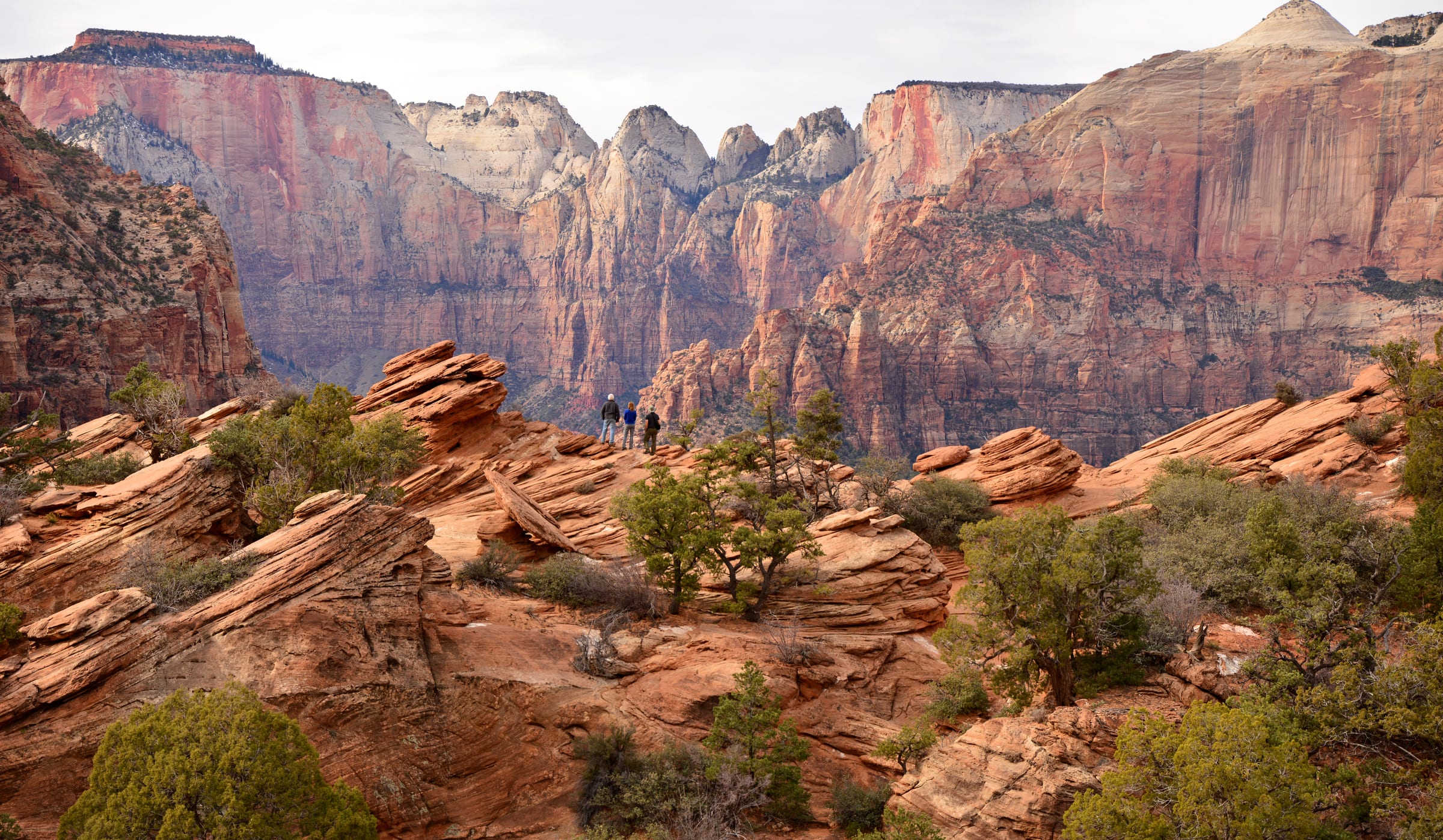
Just east of the tunnel’s east portal, a small parking area marks the start of the Canyon Overlook Trail - one of the best hikes in the park for the effort required. It is 1 mile round trip with about 154 feet of climbing, rated moderate, and most people spend 1-2 hours including time at the viewpoint. The payoff is a full look down lower Zion Canyon toward the Towers of the Virgin - a view most visitors work much harder for.
Two practical notes. Parking is genuinely scarce - the NPS itself tells visitors to be prepared to try multiple times - so coming from Duck Creek, arrive early and take the first open spot. There are pit toilets at the parking area, and accessible restrooms at the Many Pools pullout between the tunnel and the East Entrance.
Checkerboard Mesa and the east side
The east side of Zion has a different feel from the main canyon. Instead of towering vertical walls and a narrow river corridor, you get open slickrock, cross-bedded sandstone formations, and a landscape that feels more like the high desert. Checkerboard Mesa is the signature landmark - a huge Navajo sandstone dome scored into a grid by horizontal cross-bedding and vertical fractures. A signed roadside pullout just inside the East Entrance is the place to photograph it; there is no trail to the summit and no facilities, so treat it as a stop, not a hike.
If you want a real east-side hike beyond Canyon Overlook, the East Rim Trailhead sits about 100 feet west of the East Entrance fee booths and runs 10.6 miles to Observation Point. One important caveat: a major rockfall has cut the East Rim Trail’s connection to Zion Canyon, so treat it as an out-and-back from the east rather than a through-route, and check current conditions with the NPS first. The park is also building the Zion Discovery Center near the east entrance - one to watch for a future trip, but it is not open yet.
East entrance vs. Springdale
East entrance: about an hour from the inn, light traffic at the fee booths, the scenic Zion-Mount Carmel Highway, Checkerboard Mesa and Canyon Overlook before the main canyon, and a quick no-traffic exit in the evening. No shuttle serves this side - your own car takes you to every east-side stop.
South entrance: about 1.5 hours from the inn, heavy traffic and parking stress in peak season, and during shuttle season (March 7, 2026 - January 2, 2027) private cars cannot drive the Zion Canyon Scenic Drive at all - everyone parks and rides the shuttle. The upside is Springdale’s restaurants and outfitters, but expect slow exit traffic in the afternoon.
How the day flows
Here is what a typical Zion day looks like from Duck Creek:
7:00 AM - Leave the inn.
8:00 AM - Enter through the east entrance; pause at the Checkerboard Mesa pullout if the light is good.
8:15 AM - Hike Canyon Overlook Trail. Budget an hour or more, plus patience for a parking spot.
9:30 AM - Drive through the tunnel, continue to the visitor center, and board the shuttle.
10:00 AM - 2:00 PM - Hike your main trail.
2:00 - 3:00 PM - Lunch in Springdale or from your cooler.
3:00 PM - Drive back east through the tunnel.
4:00 PM - Back at Duck Creek Village Inn.
Practical details
Entrance fee
$35 per vehicle for 7 days; $30 motorcycle, $20 per person on foot or bike; America the Beautiful pass accepted
Large vehicles
Over 35'9" long, 7'10" wide, or 11'4" tall? Banned from the Zion-Mount Carmel Highway since June 7, 2026 - no escort option remains; detour via US-89 with Highway 59 or Highway 20
Reservations
No park-entry reservation or timed entry in 2026; Angels Landing is the exception - it requires a lottery permit
Shuttle
No shuttle on the east side; required for Zion Canyon Scenic Drive during shuttle season (March 7, 2026 - January 2, 2027)
Gas
Fill up before you leave - there are no gas stations inside the park
Stay planning
The east entrance is why Duck Creek Village works so well as a Zion base. You are an hour from the park with none of the Springdale overhead - no expensive gateway-town lodging, no traffic stress, and cool mountain evenings at 8,400 feet after a hot day in the canyon.
August 2026
Why trust this guide
We drive this route regularly and write from the perspective of guests staying at the inn. Road conditions, fees, and vehicle-size rules can change - verify with the NPS before your trip. The tunnel and large-vehicle details on this page were updated in August 2026, after the June 2026 rule change.
Which entrance to Zion is closest to Duck Creek Village?
The east entrance on the Zion-Mount Carmel Highway (UT-9) is the closest - about an hour from Duck Creek Village Inn via UT-14 and US-89, reaching the park 13 miles west of Mt. Carmel Junction. The south entrance at Springdale takes roughly half an hour longer and carries far more traffic.
Can I drive my RV through the Zion east entrance?
Only if it fits. Since June 7, 2026, vehicles over 35'9" long, 7'10" wide (mirrors included), or 11'4" tall are prohibited from the entire Zion-Mount Carmel Highway, and the old paid-escort option no longer exists. Oversized rigs reach Springdale and Zion Canyon by detouring around the park via US-89 and Highway 59.
Do I need a reservation to enter Zion in 2026?
No. Zion has no park-entry reservation or timed-entry system in 2026 - you simply pay the entrance fee at the booth. The exception is Angels Landing, which requires a permit through a seasonal or day-before lottery on recreation.gov.
Can I bike or walk through the Zion-Mount Carmel Tunnel?
No. Bicycles and pedestrians are prohibited in the tunnel at all times, and rangers cannot shuttle cyclists or their bikes through. If you are touring by bike, arrange a ride through the tunnel in a private vehicle before committing to the route.
Is there a shuttle from the east entrance?
No - park shuttles run only in Zion Canyon and Springdale, so you drive yourself to everything on the east side. To ride the canyon shuttle, continue through the tunnel to the Zion Canyon Visitor Center and board there; during shuttle season (March 7, 2026 - January 2, 2027) private cars are not allowed on the Zion Canyon Scenic Drive.
How long is the Zion-Mount Carmel Tunnel?
The tunnel is 1.1 miles long, completed in 1930, and listed on the National Register of Historic Places. Standard cars, SUVs, and pickups drive straight through with no fee beyond park admission.
Stay Here, Enter Zion the Easy Way
Book your room or cabin at Duck Creek Village Inn - an hour from Zion’s east entrance with mountain quiet and zero gateway-town traffic.