
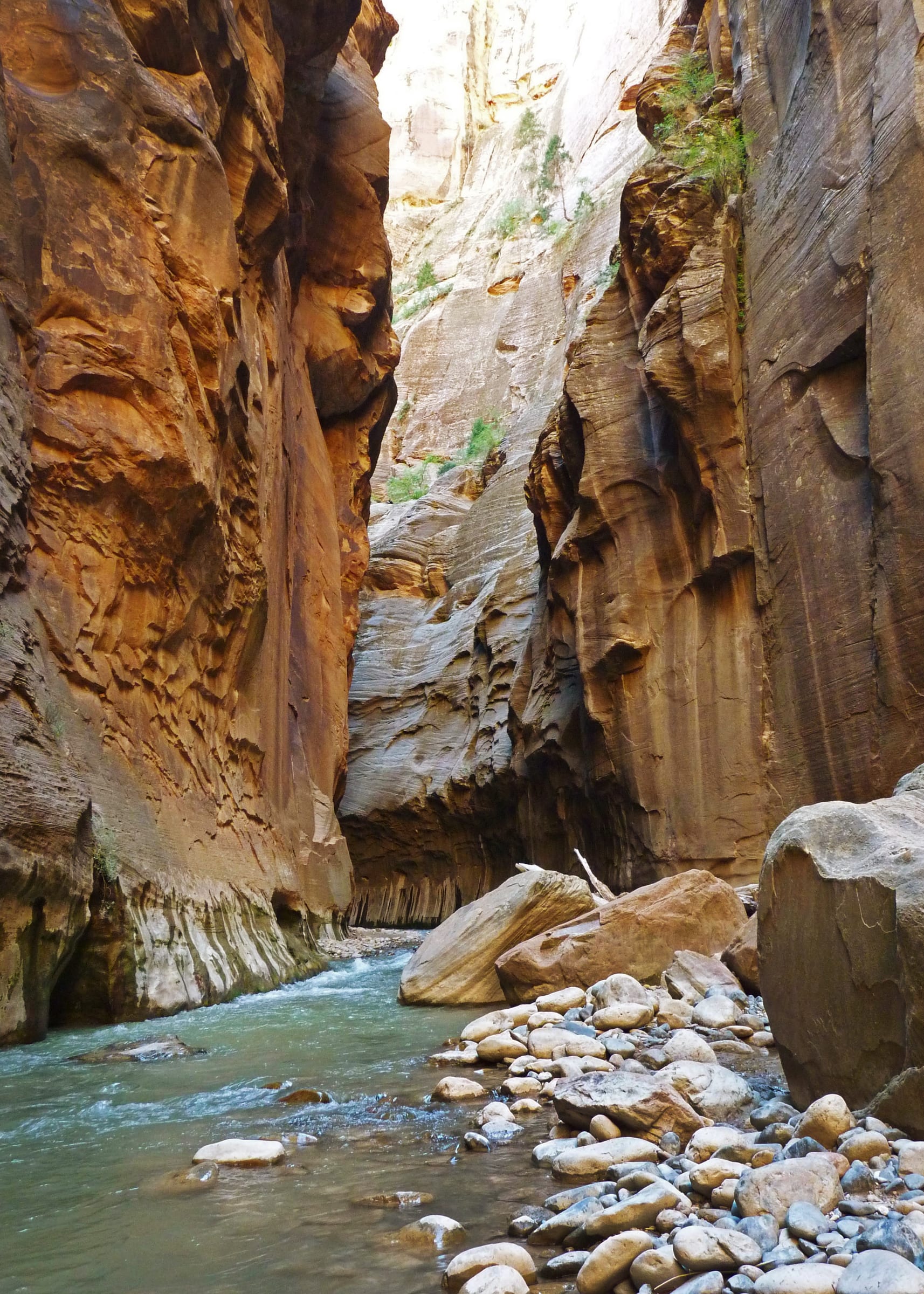
Hikers wading through the Virgin River in the Narrows at Zion National Park

The Narrows

Walk upstream through the Virgin River in one of the most unique slot canyons in the world

The Narrows is not a trail — it is a river. You walk upstream through the Virgin River in a slot canyon with walls up to 1,000 feet tall and passages as narrow as 20 feet. The water is cold, the rocks are slippery, and the light filtering down between the sandstone walls is unlike anything else in the national park system. This is the kind of hike where the experience starts the moment your feet hit the water.

How the hike works

Most people do the bottom-up route from the Temple of Sinawava (the last shuttle stop). Walk the paved Riverside Walk for a mile, then step into the river and start heading upstream. There is no trail — you are picking your way over river boulders, wading through knee-to-waist-deep water, and navigating the current. The canyon gets narrower and more dramatic the farther you go.

You do not need a permit for the bottom-up route as long as you turn around before Big Spring (about 5 miles upstream). Go as far as you like and turn back when you are ready — there is no single destination you have to reach.

How far to go

Quick taste (30–60 minutes in the river)

Wade in past the Riverside Walk trailhead, get your feet wet, feel the canyon walls close in. Good for families with younger kids or anyone who wants the experience without committing to hours in the water.

Wall Street (~2 miles in, 2–3 hours)

The canyon narrows dramatically and the walls tower overhead. This is the sweet spot for most day-trippers — deep enough to feel the scale of the place without turning it into an all-day sufferfest.

Big Spring (~5 miles in, 6–8 hours)

The turnaround point for permit-free hiking. This is a strenuous, full-day adventure through the most spectacular sections of the canyon. Start very early and bring plenty of food and water.

Gear you need

The Narrows is not a hike you can do in running shoes and shorts. The rocks are covered in algae, the water is cold (often 50–60°F even in summer), and the current is strong enough to knock you off balance. Proper gear makes the difference between an incredible experience and a miserable one.

  • Canyoneering shoes or sturdy boots. Felt-soled or rubber-soled shoes designed for wet rock. Several outfitters in Springdale rent these.
  • Neoprene socks. Keep your feet warm in cold water. Included in most rental packages.
  • Walking stick or trekking poles. Essential for balance on slippery river boulders. Rental shops include these; or bring your own trekking poles.
  • Synthetic layers. Cotton gets cold when wet. Wear quick-dry pants and a synthetic or wool top layer. In spring and fall, a dry bag with an extra insulating layer is smart.
  • Dry bag. For your phone, snacks, and anything you need to keep dry. A small waterproof pouch works for the phone alone.

Where to rent: Several shops in Springdale offer full Narrows packages (shoes, socks, poles, dry pants) for roughly $30–$50. Reserve ahead in peak season. Pick up gear on your way into the park and return it on your way out.

Conditions and safety

The Narrows is beautiful but it is not always safe. Flash floods can turn the river into a dangerous torrent with almost no warning — water levels can double or triple in minutes during a storm. The NPS closes the Narrows when:

  • The Virgin River exceeds 150 CFS (cubic feet per second)
  • The National Weather Service issues a flash flood warning
  • Spring snowmelt keeps the river high for extended periods

Always check the USGS river flow gauge before you go. Below 70 CFS is moderate wading; above 70 CFS the current gets challenging; above 150 CFS the Narrows closes. Stop at the Zion Canyon Visitor Center to talk with a ranger about current conditions and flash flood potential.

Even on clear days, be aware that storms miles upstream can send floodwater into the canyon without local rain. If you see the water turning muddy, rising, or hear rumbling, move to high ground immediately.

Tips from Duck Creek

  • Check conditions the night before. Look at the flow gauge and the NPS conditions page. If the river is above 100 CFS or rising, have a backup plan ready.
  • Start early. Leave Duck Creek by 7 AM. The shuttle to the Temple of Sinawava runs frequently, but morning is the best time to be in the water before afternoon thunderstorms build.
  • Morning is better than afternoon. Water levels tend to be lowest in the morning. Afternoon thunderstorms are common in summer, and even distant storms can affect the river.
  • Eat before you go. Pack breakfast for the car or eat at the inn. You want to be on the shuttle, not waiting in line at a Springdale cafe.
  • Pick up rentals in Springdale. Reserve online if possible. Shops open early during peak season. Return gear on your way out of town.
  • Bring a backup plan. If conditions close the Narrows, the Canyon Overlook Trail and the Riverside Walk are excellent alternatives that do not depend on river levels.

When to go

Late June through September is the typical window when conditions are most likely to cooperate — snowmelt has subsided and water temperatures are at their warmest. But flash floods are most common during the July–September monsoon season, so you always need to check conditions.

Spring (April–June) often sees extended closures due to snowmelt. Fall (October–November) offers cooler temperatures and smaller crowds, but the water is cold and days are shorter. Winter is generally too cold for most people without specialized gear.

Stay planning

The Narrows makes a great anchor for a Zion day from Duck Creek Village Inn. Pair it with a rest day near the village - Aspen Mirror Lake, a village dinner, or a morning at Navajo Lake - so you are not stacking strenuous days back to back. Check our rooms and cabins to find the right fit for your trip.

Why trust this guide

We write this from the perspective of guests making a day trip from Duck Creek Village. River conditions and closures change daily - always check the flow gauge and NPS conditions page before you commit.

Narrows hiking questions

Common questions from trip planners.

Do I need a permit to hike the Narrows?

Not for the bottom-up hike from the Temple of Sinawava. You can hike upstream as far as Big Spring without a permit. The 16-mile top-down through-hike from Chamberlain’s Ranch does require a wilderness permit.
What gear do I need for the Narrows?

Closed-toe shoes with good grip (canyoneering shoes or sturdy hiking boots), a walking stick or trekking poles, and synthetic layers. Several outfitters in Springdale rent Narrows-specific packages including neoprene socks, shoes, and dry pants.

When does the Narrows close?

The Narrows closes when the Virgin River exceeds 150 CFS (cubic feet per second) due to snowmelt or storms, or when the National Weather Service issues a flash flood warning. Spring closures for snowmelt are common and can last weeks. Check the USGS flow gauge before you go.

How far should I hike into the Narrows?

That depends on your comfort level and time. A one-hour wade past the Riverside Walk gives you a real taste of the slot canyon. Wall Street, about 2 miles in, is where the canyon narrows dramatically. Big Spring at 5 miles is the turnaround for permit-free hiking and makes a full-day adventure.

Can I hike the Narrows as a day trip from Duck Creek?

Yes, if conditions allow. Leave Duck Creek early, enter through the east entrance, take the shuttle to the Temple of Sinawava, and hike upstream for as long as your schedule allows. Most day-trippers from Duck Creek spend 2–4 hours in the river and are back at the inn by late afternoon.

Stay Here, Wade the Narrows Tomorrow

Book your room or cabin at Duck Creek Village Inn - cool mountain evenings at 8,400 feet after a day in the canyon.