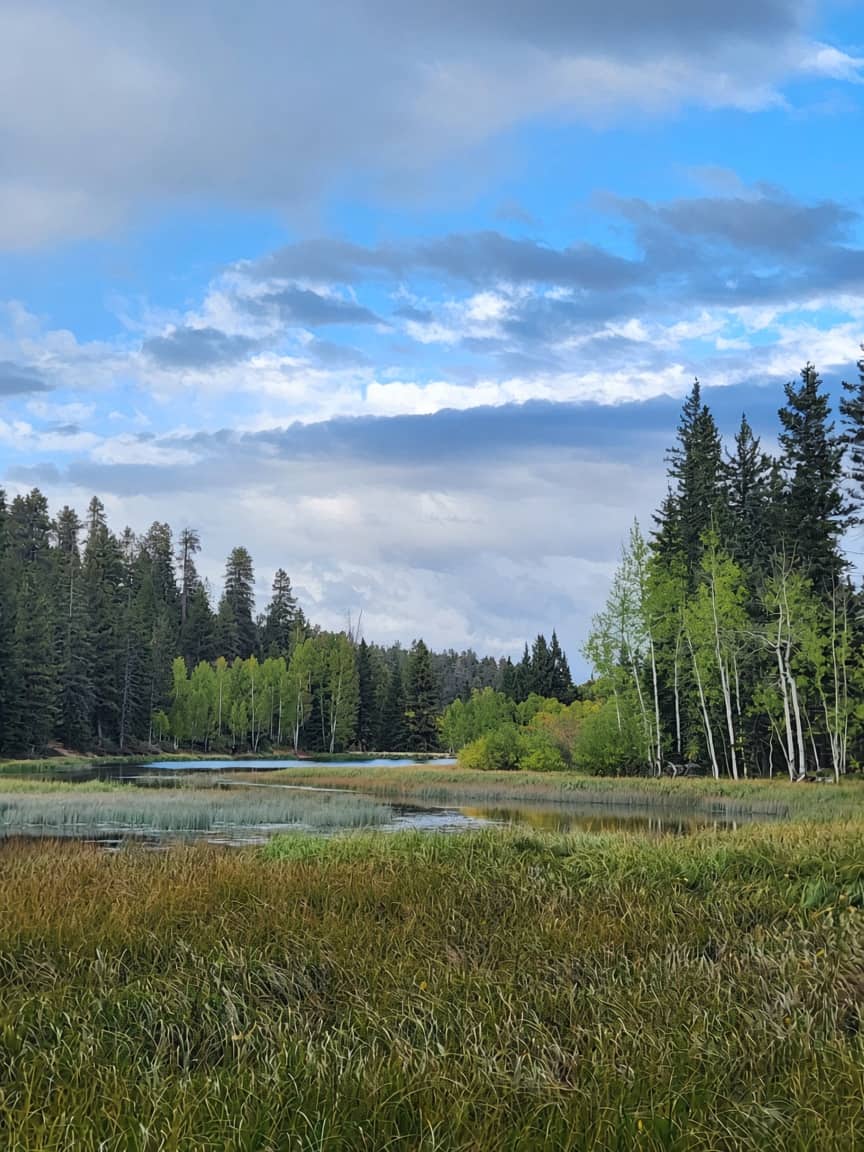
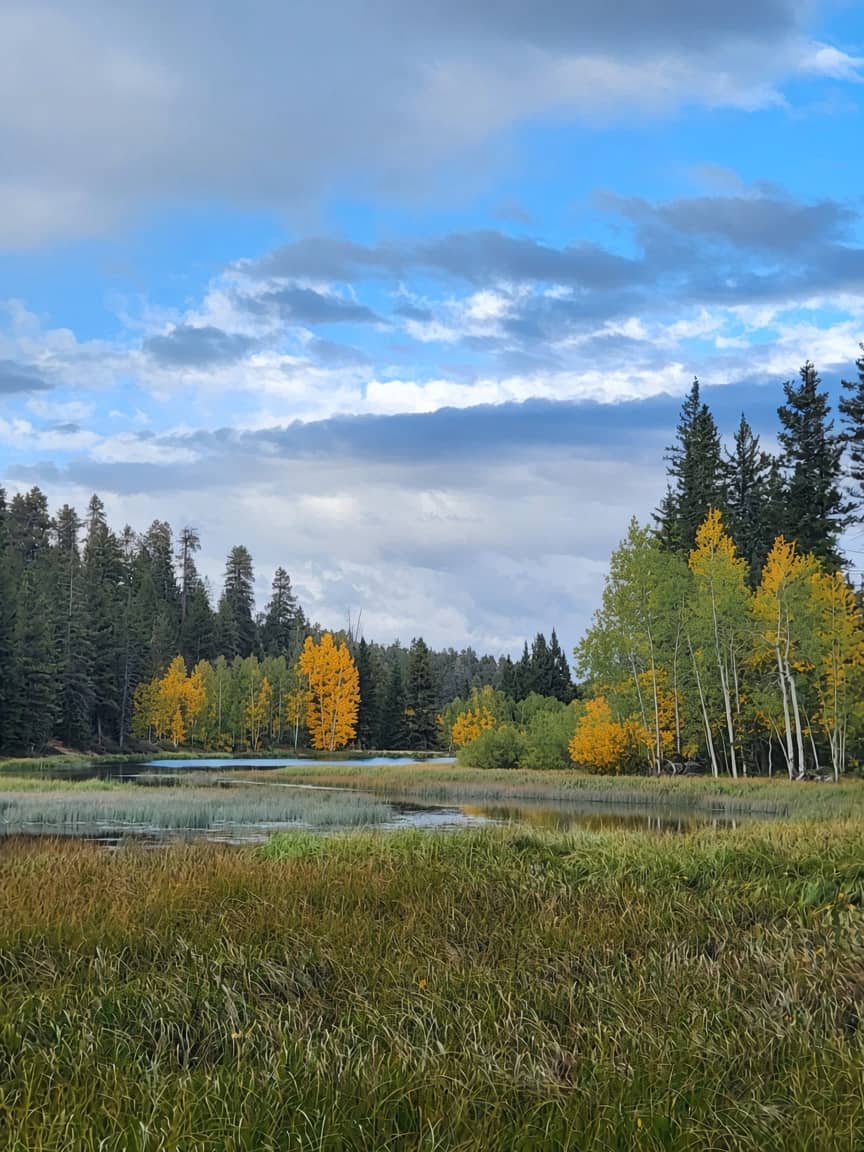
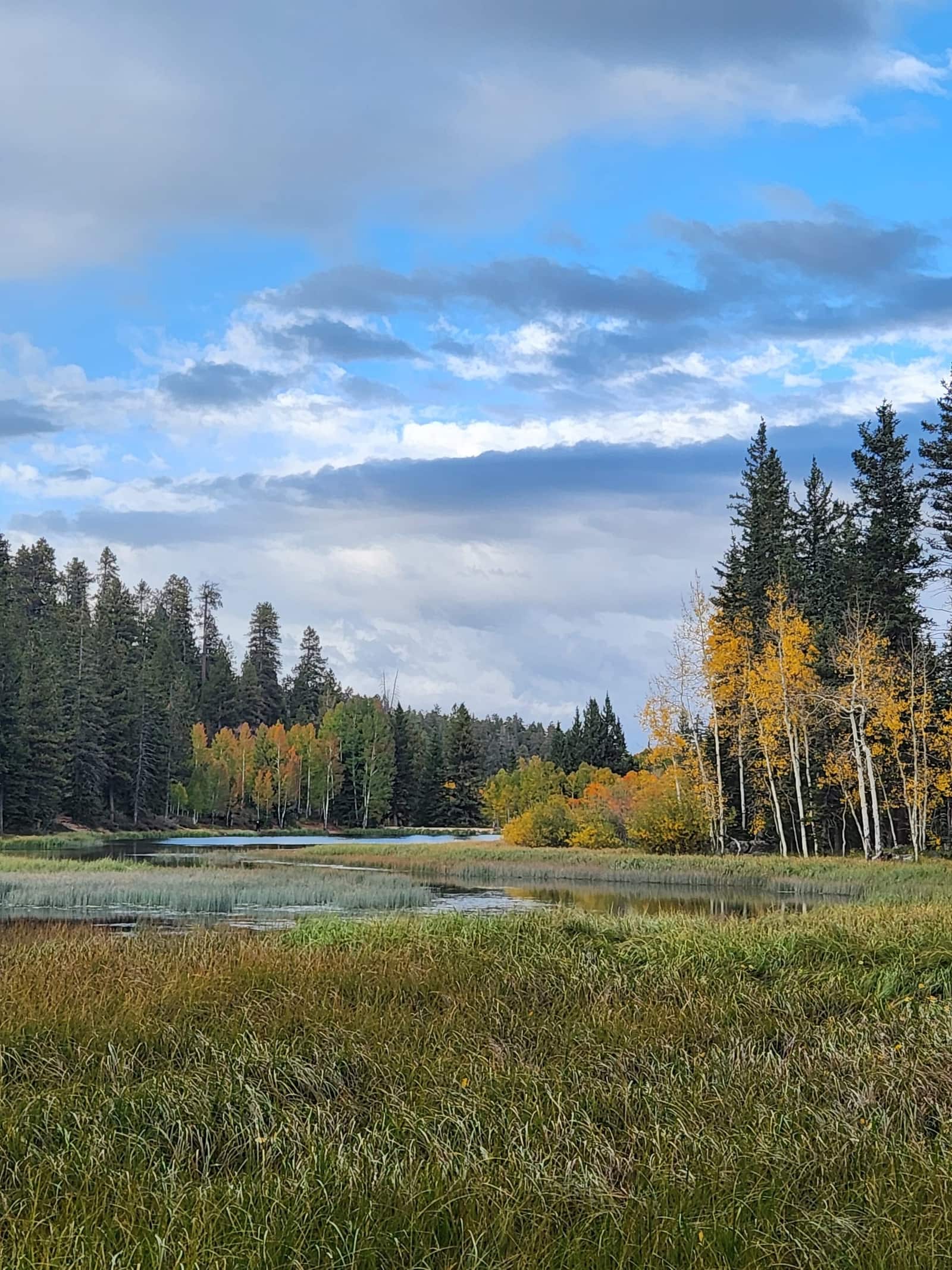
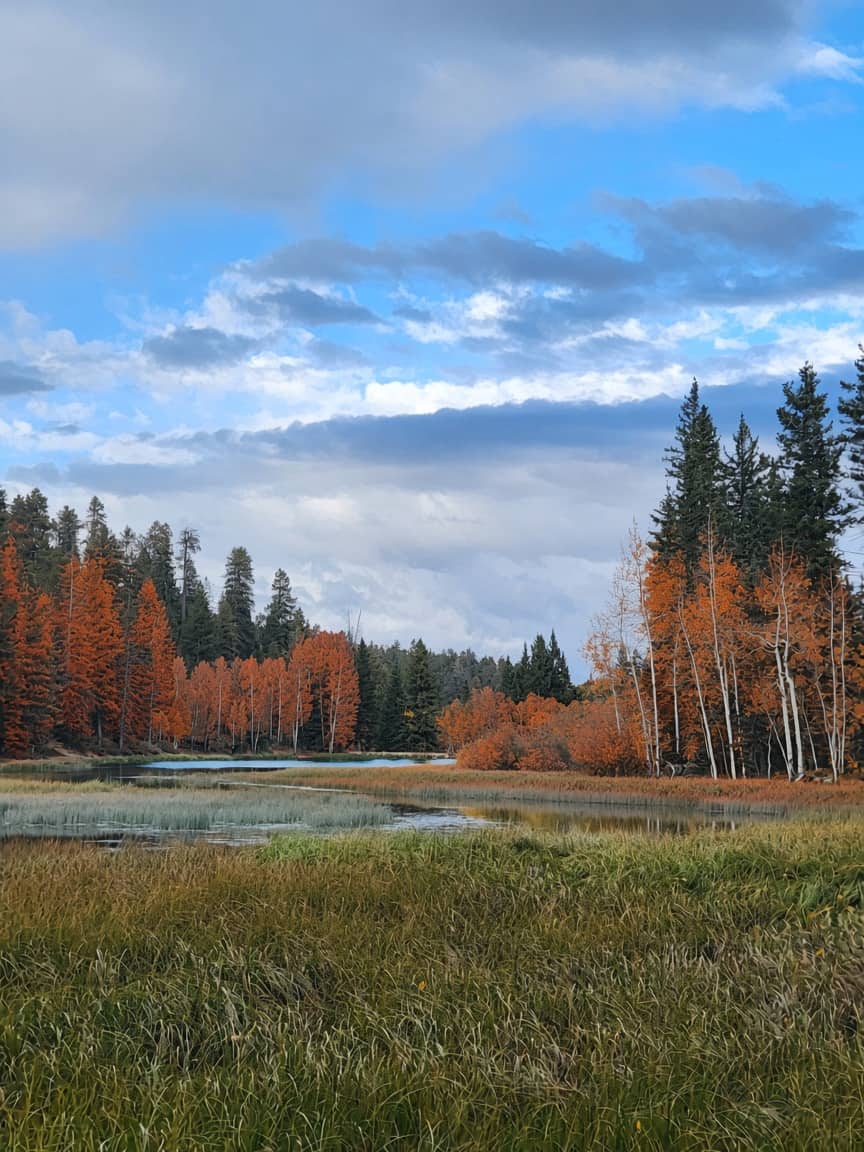
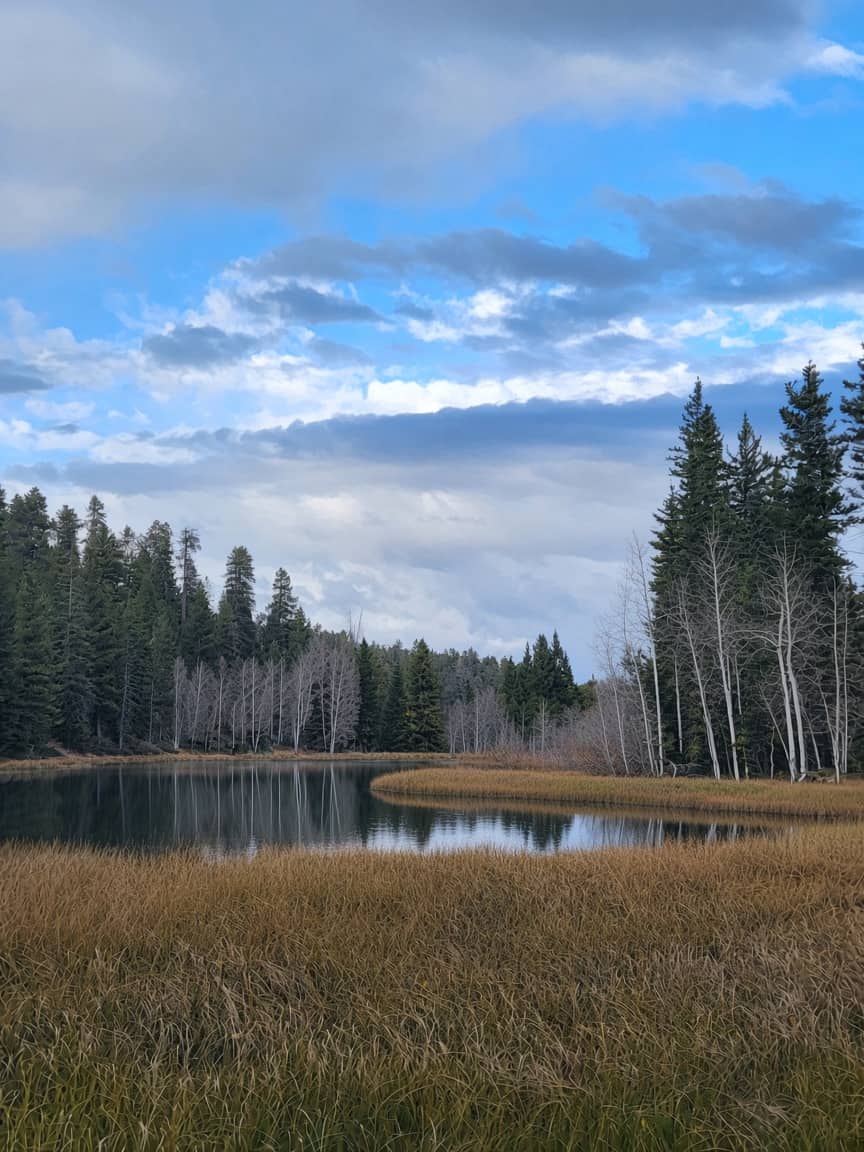
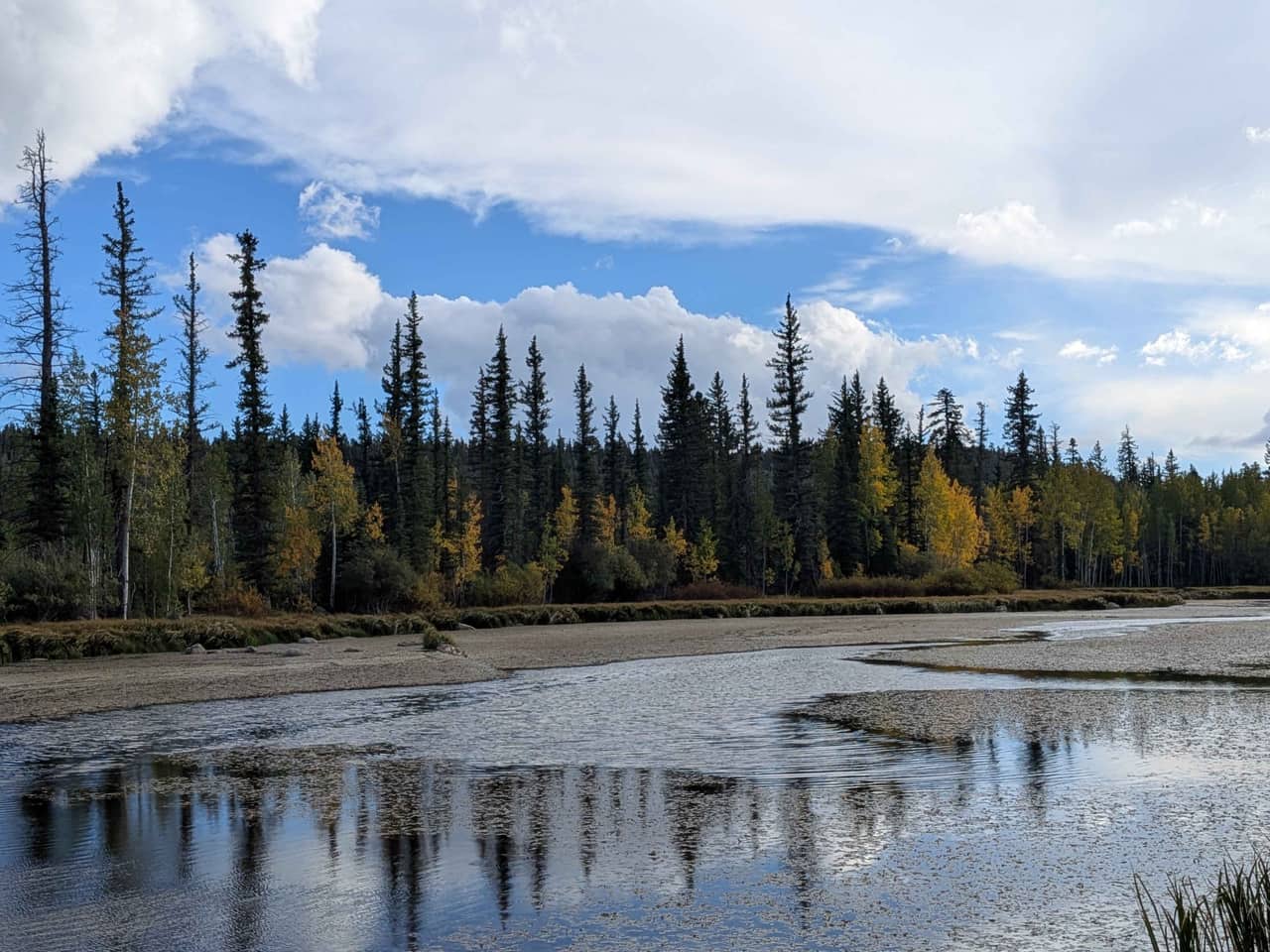
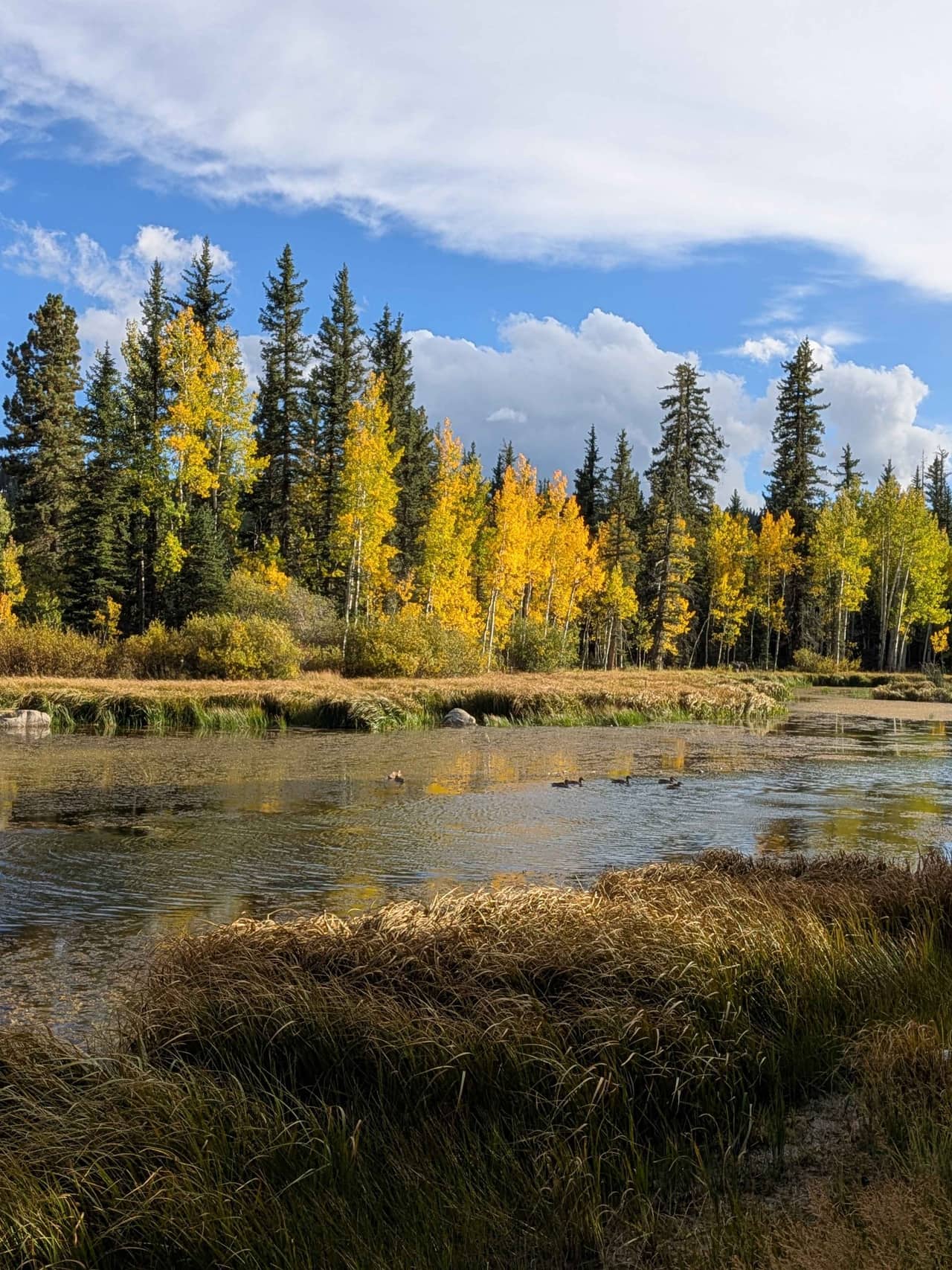
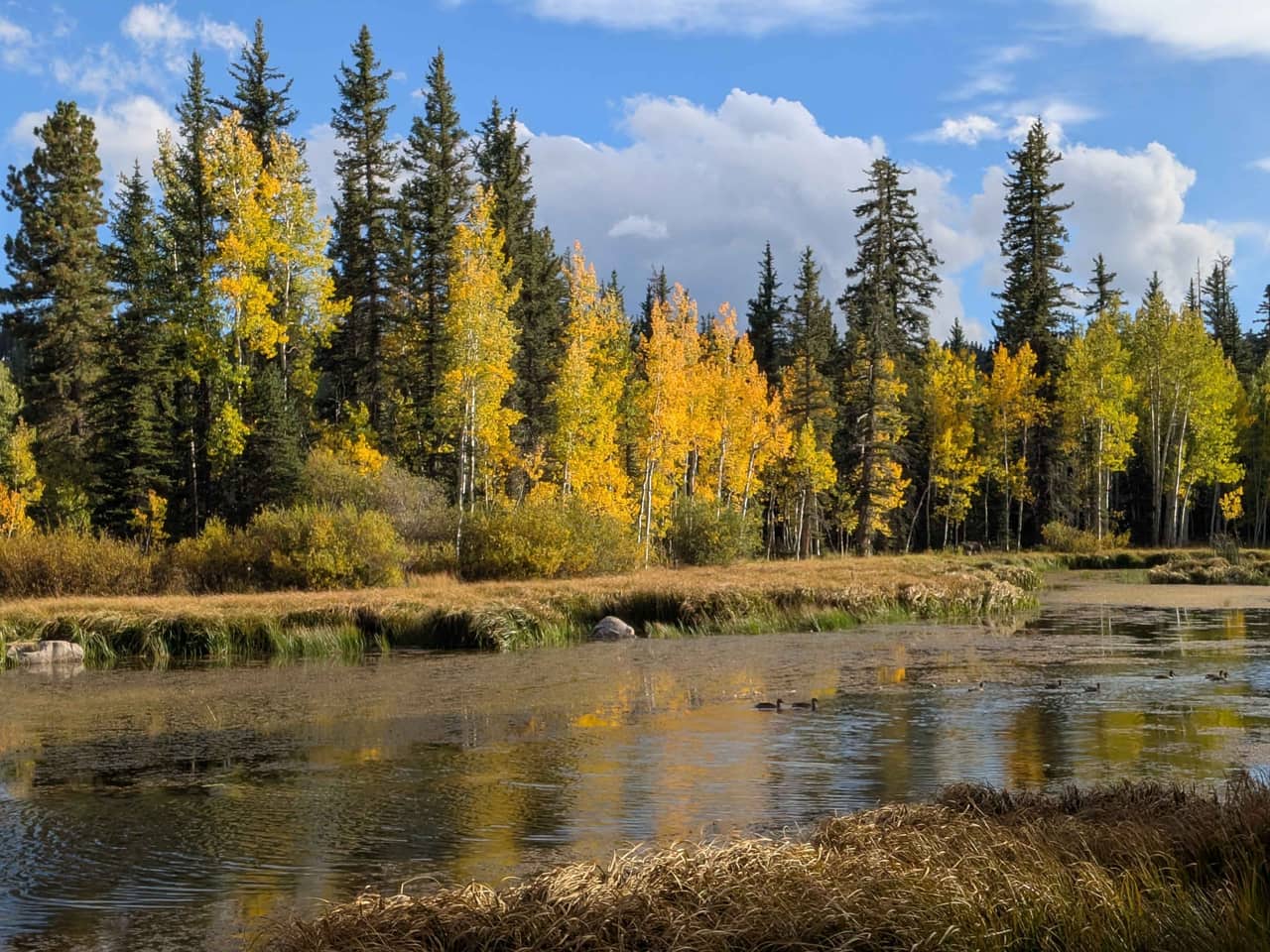
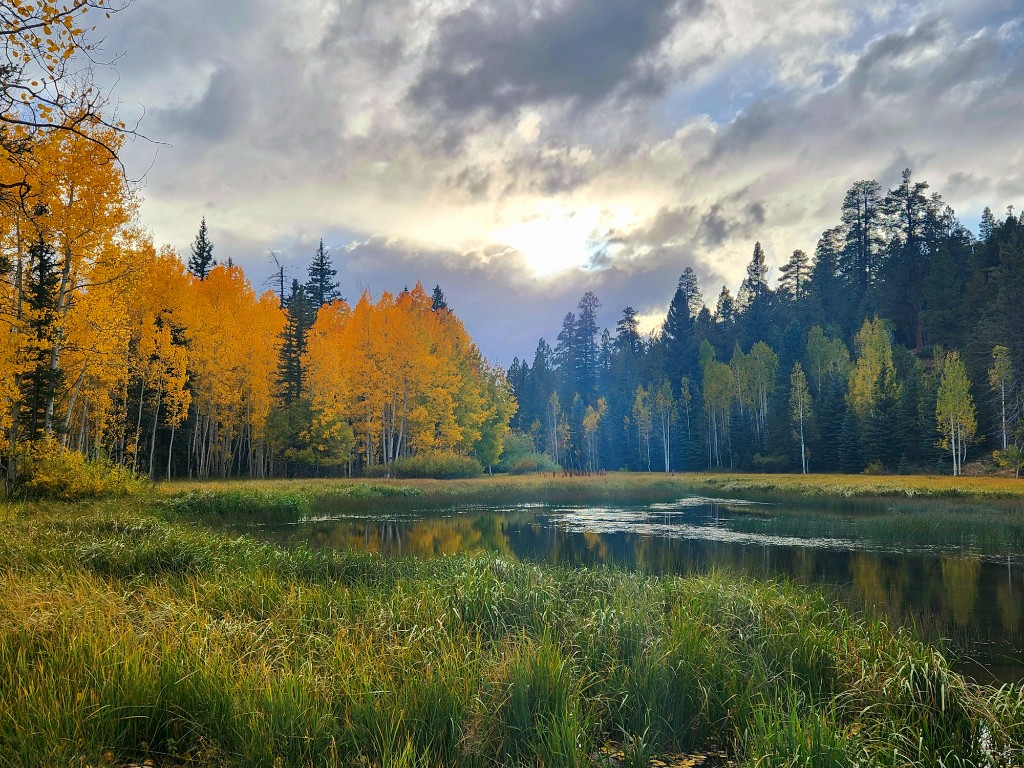
Golden aspen trees reflected in a pond near Duck Creek Village during fall

Fall Colors Near Duck Creek Village

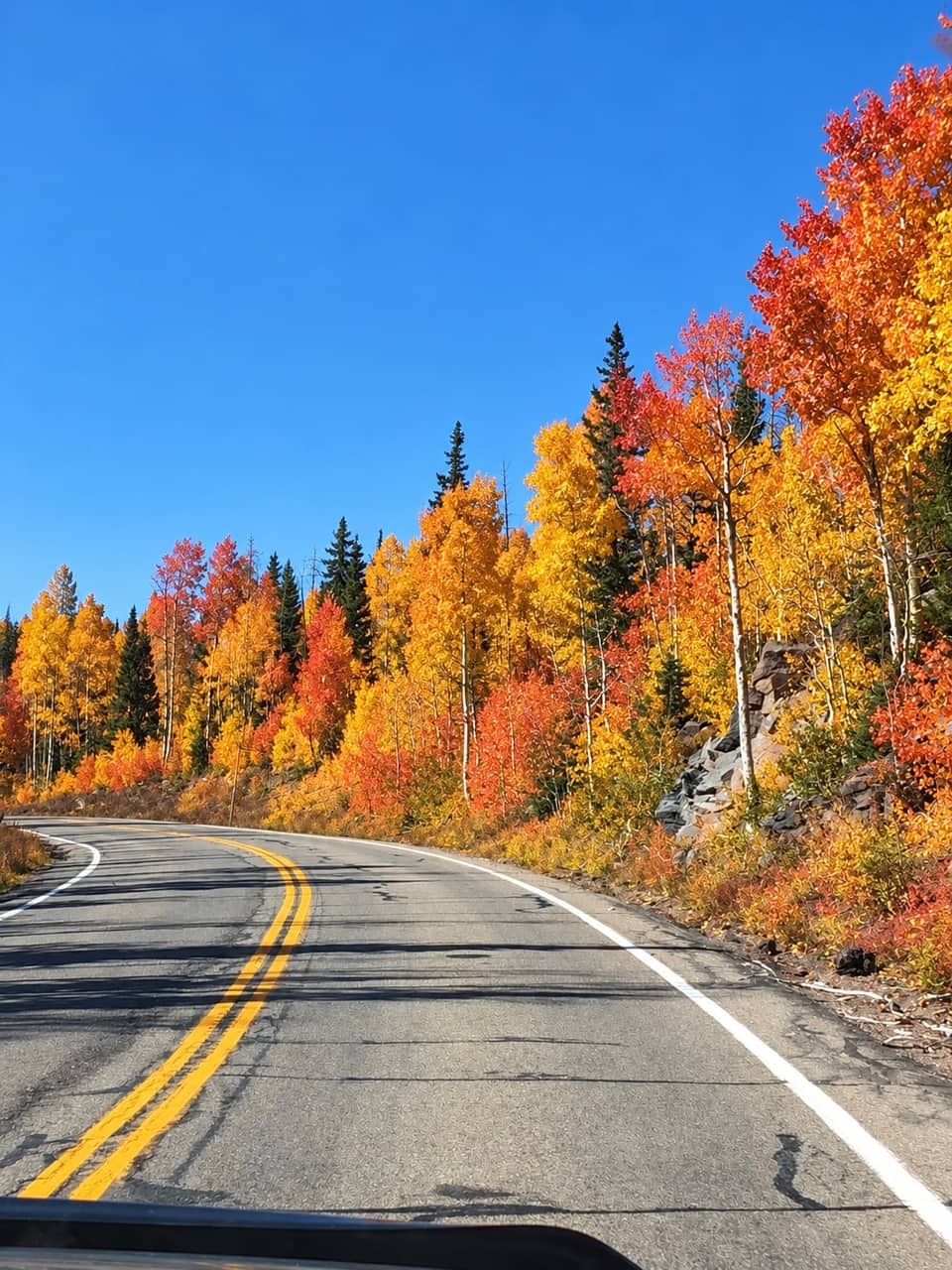
Golden aspens, Scenic Highway 14, and some of the best autumn scenery in Southern Utah

The fall color season around Duck Creek Village is one of the best-kept secrets in Southern Utah. When the aspens turn in September and early October, the mountainsides along Scenic Highway 14 light up in gold, orange, and red against a backdrop of dark evergreens and ancient volcanic rock. The drive alone is worth the trip — but the color extends into the village, the lakes, the meadows, and the overlooks at Cedar Breaks, making this one of the most layered autumn experiences in the state.

When Do the Colors Peak?

Fall aspen colors near Duck Creek Village typically peak from mid-September through early October. The exact timing shifts year to year depending on overnight temperatures, moisture levels, and elevation:

  • Higher elevations (9,000–10,000 ft) — Cedar Breaks and upper Highway 14 turn first, usually starting in mid-September
  • Mid-elevations (8,000–9,000 ft) — Duck Creek Village, Navajo Lake, and Aspen Mirror Lake follow a week or two later
  • Lower elevations (6,000–8,000 ft) — the western end of Highway 14 near Cedar City turns last, sometimes holding color into mid-October

The best strategy is to plan your visit for the last week of September through the first week of October. That window has the highest probability of catching peak color at the mid-elevations where the village sits, while still having strong color above and below.

A cold snap with overnight temperatures in the low 20s can accelerate the change dramatically. An early heavy frost can also knock leaves off quickly, so the peak window is real but unpredictable. Check conditions before you come, and be flexible if you can.

Best Stops for Fall Color

Scenic Highway 14

The 30-mile drive between Cedar City and Duck Creek Village is the main event. The road climbs from red rock canyons into dense aspen and conifer forest, passing through multiple elevation zones and color changes along the way. Pull off at any of the designated viewpoints and overlooks — the entire corridor is photogenic during peak color. Plan extra time on the drive; you will want to stop.

Aspen Mirror Lake

This small alpine lake five minutes from the village becomes one of the most photographed spots in Utah during fall. On calm mornings, the golden aspens reflect perfectly off the still water. The half-mile walk in is flat and easy. Arrive early for the best light and the stillest water — wind picks up by midday and breaks the reflections.

Duck Creek Village Meadows

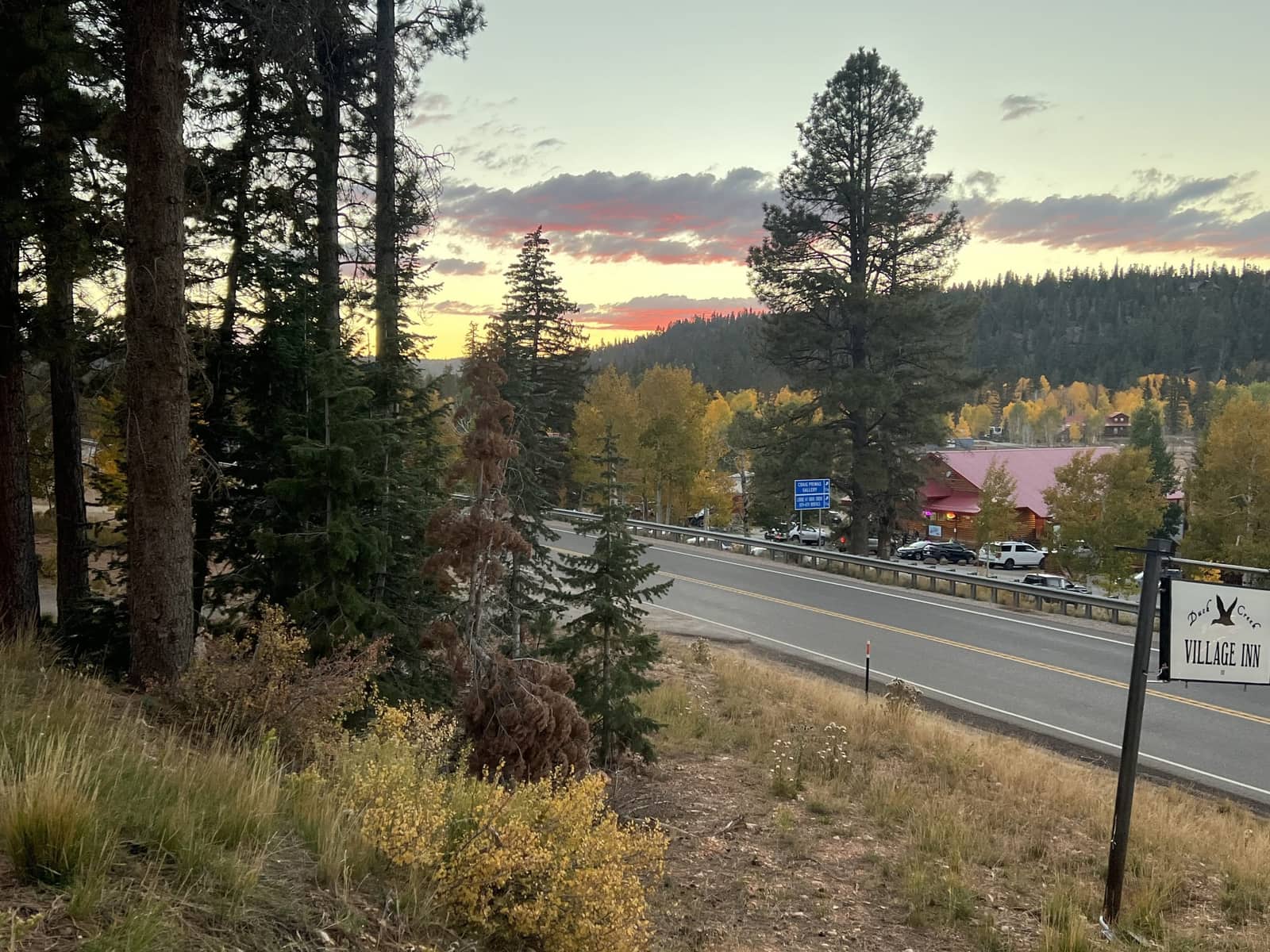
The meadows and forest edges right around the village glow with golden aspen light in the afternoon. You do not need to drive anywhere — a walk from the inn puts you in it. The contrast of golden aspens against dark volcanic rock and green conifers is distinctly Duck Creek.

Navajo Lake Road

The drive from Duck Creek to Navajo Lake passes through dense aspen groves that turn brilliantly in late September. The combination of lake water, fall color, and the volcanic Markagunt Plateau creates a different feel than the Highway 14 corridor. Bring a picnic and make it a half day.

Cedar Breaks National Monument

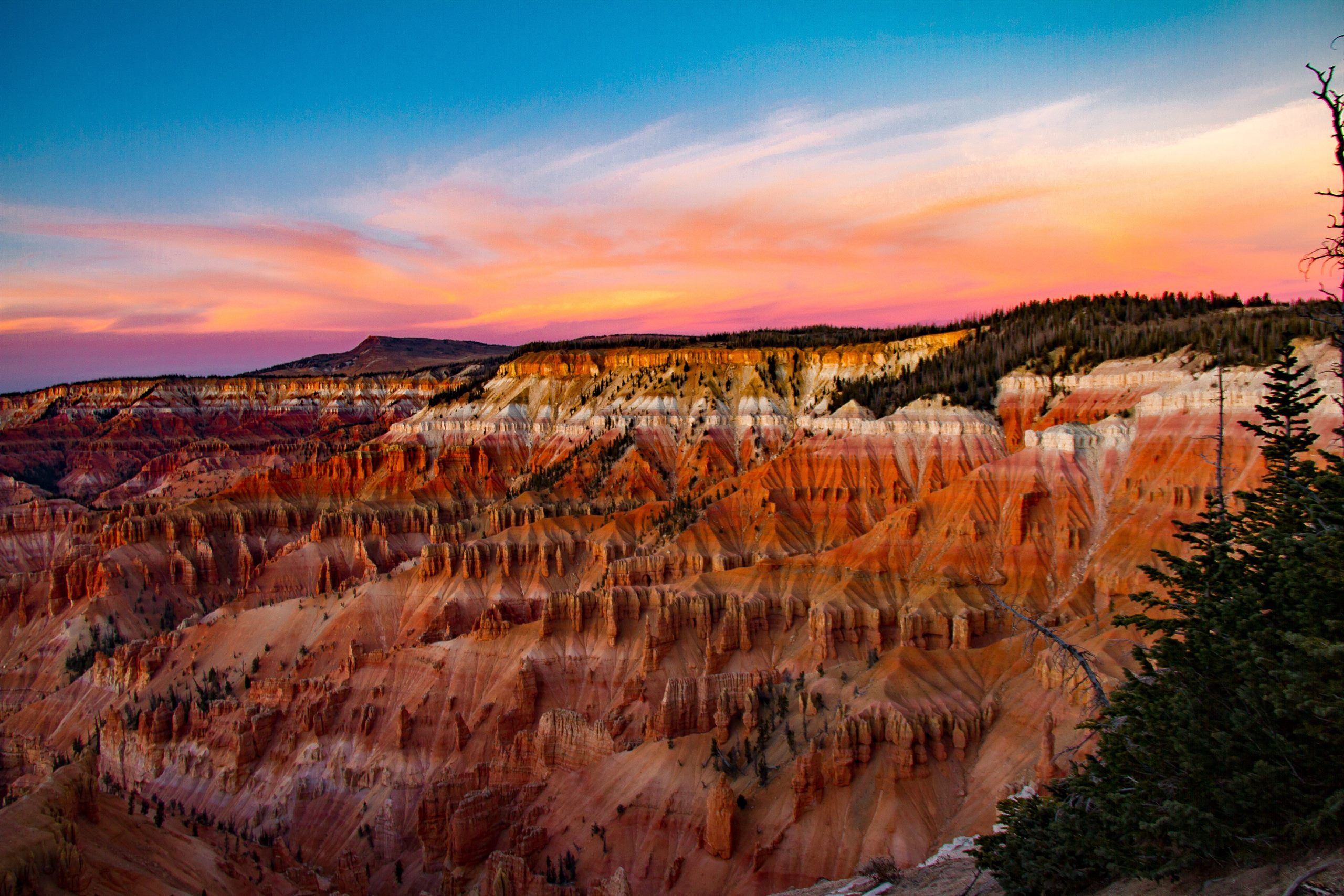
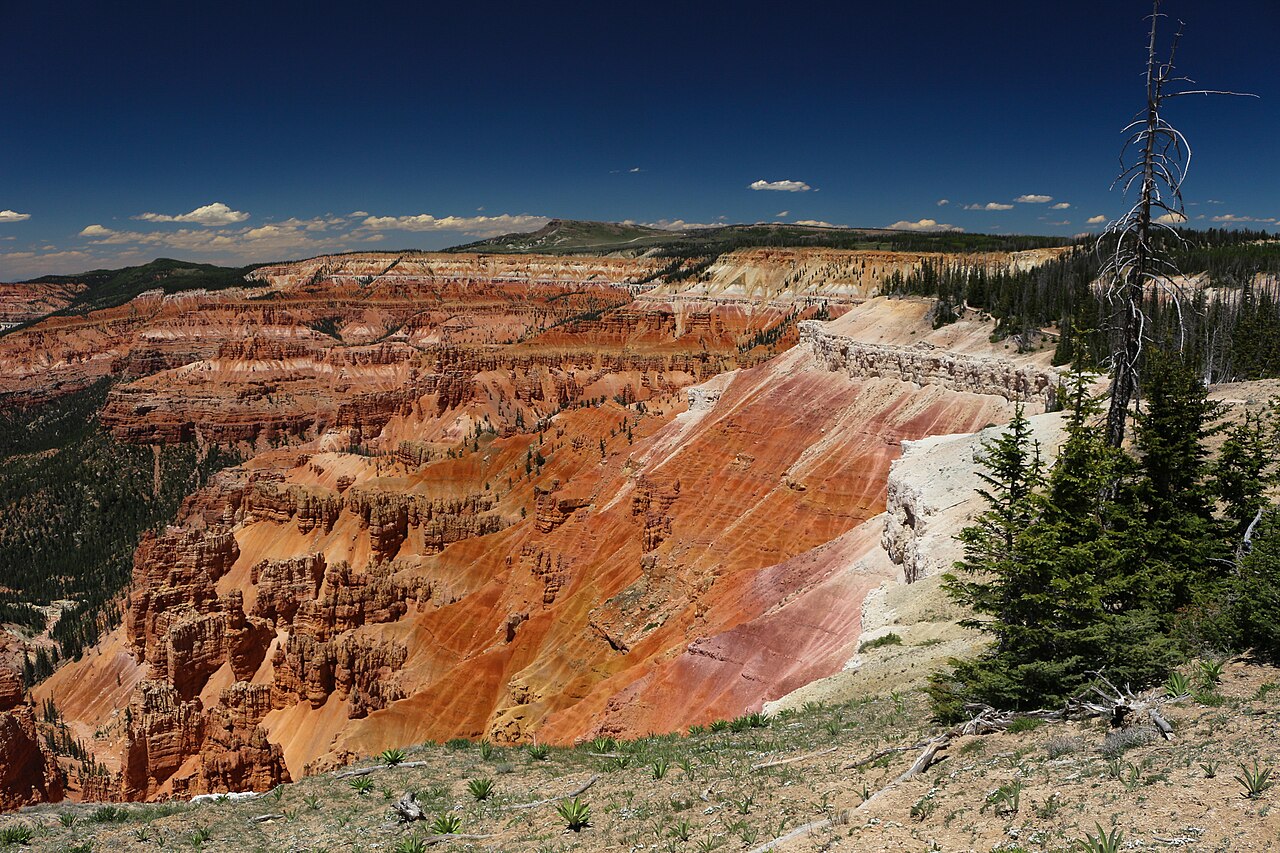
The aspens surrounding Cedar Breaks turn against the red, orange, and cream amphitheater formations, creating one of the most dramatic color contrasts in the region. The monument road is typically still open in September and early October. Combine a fall color drive with an overlook stop and the Alpine Pond Trail for a full morning.

Strawberry Point

The drive to Strawberry Point passes through aspen forest, and the overlook itself offers sweeping views of the canyon country below with fall color in the foreground. It is a moderate outing that pairs well with a scenic drive day.

Photography Tips

  • Shoot early or late. The golden hour light (first and last hour of sun) turns aspen leaves luminous. Midday light flattens the color.
  • Overcast days work too. Soft, cloudy light saturates fall colors and eliminates harsh shadows. Some of the best fall photos happen on overcast mornings.
  • Aspen Mirror Lake reflections. Go before 9 AM for still water. Bring a tripod for long exposures. The reflection shots are the most shareable images from Duck Creek in fall.
  • Include lava rock. The dark volcanic basalt creates striking contrast against golden aspens — look for it along trails and at lake edges.
  • Wide and telephoto. Wide-angle captures the sweeping Highway 14 mountainsides; telephoto compresses aspen groves into walls of gold. Bring both if you can.
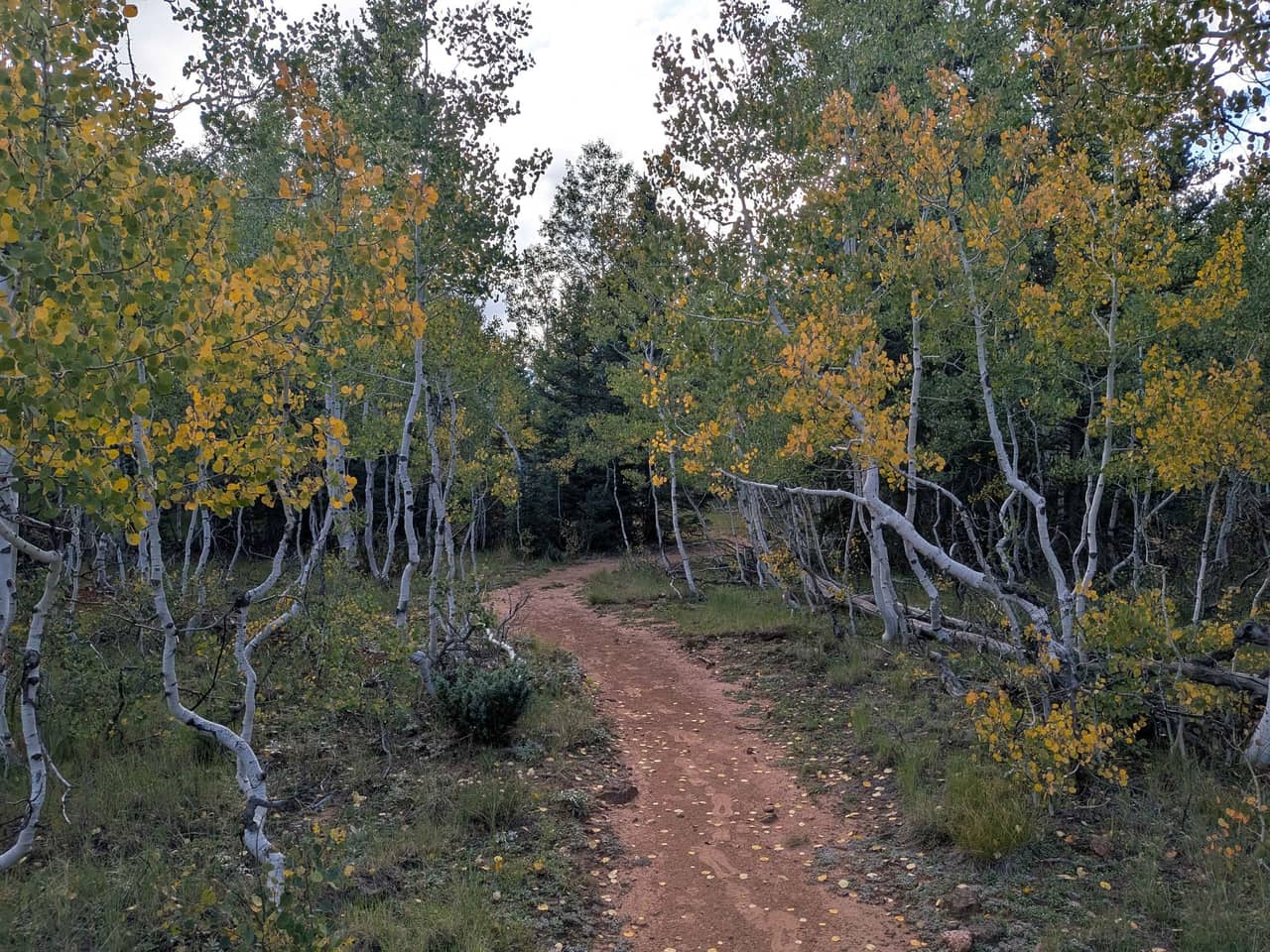
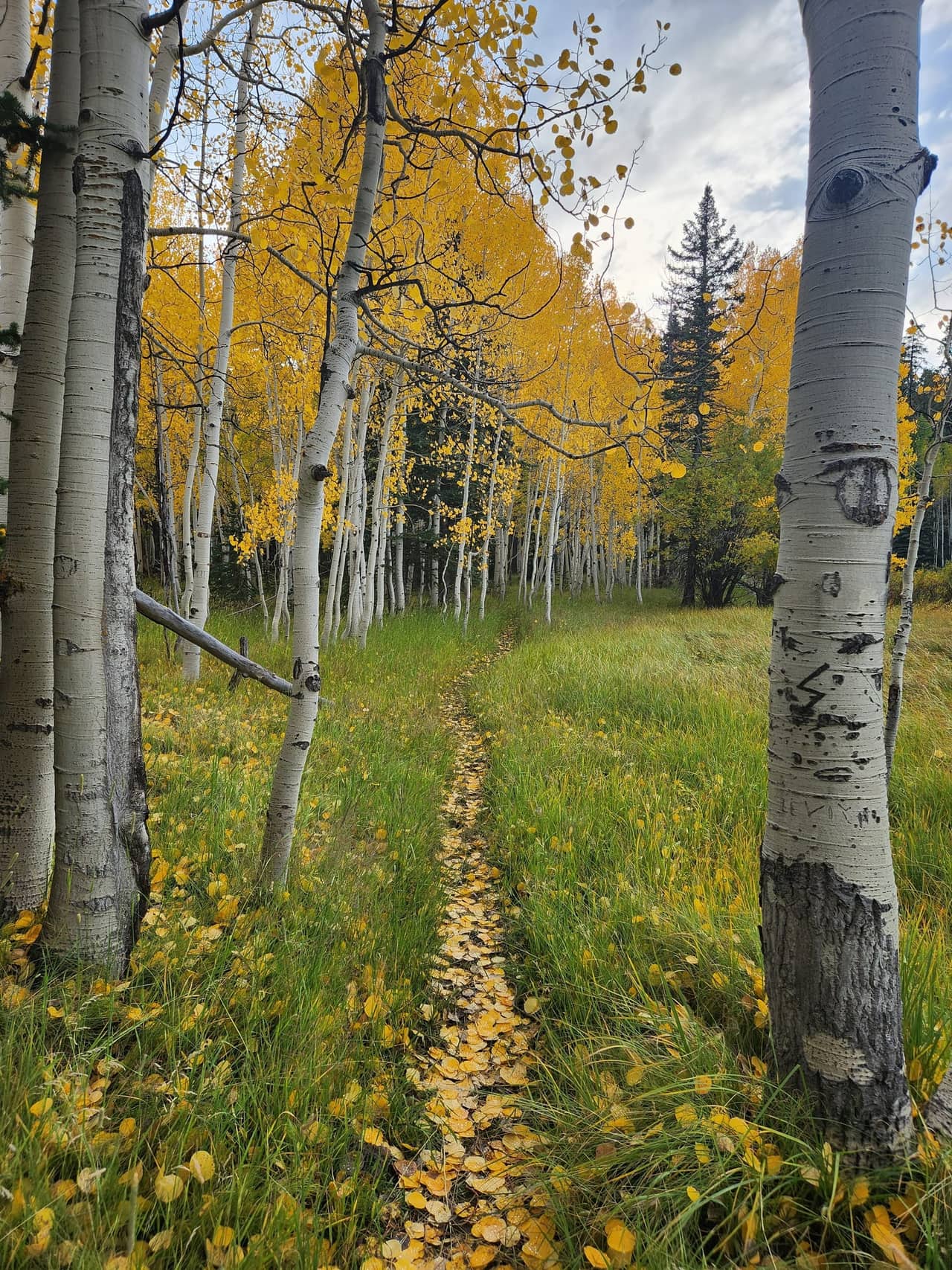
  • The tunnel of gold. Some stretches of Highway 14 create a tunnel effect with aspens arching over the road. Slow down (safely) and look for these compositions.

What Else to Do in Fall

Fall is about more than the leaves. The season layers several of Duck Creek's best experiences into a short window:

  • Elk rut — September and early October overlap with elk rutting season. Listen for bugling at dusk in the meadows and forest around the village.
  • Fishing — fall is one of the best fishing seasons. Cooler water temperatures activate trout, and brown trout become aggressive as spawning approaches. See our fishing guide.
  • Thinner crowds at the parks — Bryce Canyon and Zion are less crowded in fall, and the light is better for photography. Day trips from Duck Creek are more enjoyable.
  • ATV riding — the trail system stays open until snow closes it, and fall riding through golden aspens is a different experience from summer. See our ATV guide.
  • Sandhill Crane migration — late September and early October bring Sandhill Cranes and other migratory species through the area. See our wildlife guide.
  • Stargazing — cooler, drier fall air often produces the clearest dark skies of the year.

Planning a Fall Color Trip

Best window
Last week of September through first week of October (varies by year)
Weather
Daytime highs in the 50s–60s, overnight lows in the 20s–30s. Frost is common. Bring warm layers.
Road conditions
Highway 14 is typically clear through October. Early snow is possible — check UDOT before driving.
Crowds
Busier than average shoulder season, especially on peak color weekends, but nothing like summer at the national parks.
Book early
Peak fall weekends fill up. Reserve your room or cabin at the inn as early as possible if you want to target the color window.

Use Plan Your Days to build a fall itinerary that mixes leaf-peeping with Cedar Breaks, Bryce Canyon, or a fishing day. Compare our rooms and cabins — a cabin with a fireplace is hard to beat on a cool fall evening in Duck Creek.

Reviewed March 2026 by Duck Creek Village Inn editorial team

Why trust this guide

We watch the aspens turn every fall from Duck Creek Village Inn and update this guide based on what we see each season. Conditions change year to year — check the official sources before you plan around a specific weekend.

Fall color questions

Common questions from visitors planning around the autumn leaves.

When do the fall colors peak near Duck Creek Village?

Fall aspen colors near Duck Creek Village and along Scenic Highway 14 typically peak from mid-September through early October. The exact timing varies year to year depending on overnight temperatures, moisture, and elevation — higher elevations turn first, with color working its way down through the corridor over several weeks.

Is Highway 14 a good fall colors drive?

Yes. Scenic Highway 14 between Cedar City and Duck Creek Village is one of the best autumn drives in Utah. The road climbs through red rock canyons into dense aspen and conifer forest, and when the leaves turn the mountainsides light up in gold, orange, and red against dark evergreens and volcanic rock. The drive is about 30 miles each way with multiple pulloffs for photos.

Where are the best spots to see fall colors near Duck Creek Village?

The top spots are Aspen Mirror Lake (reflections of golden aspens on still water), the Highway 14 corridor between Cedar City and Duck Creek, meadows around Duck Creek Village itself, the drive to Navajo Lake, and Cedar Breaks National Monument overlooks. Each offers a different perspective on the fall color.

Can you see fall colors at Cedar Breaks?

Yes. The aspens surrounding Cedar Breaks National Monument turn in late September, and the golden canopy against the red and orange amphitheater formations makes it one of the most dramatic fall color viewing spots in Southern Utah. The monument road is typically still open through mid-October.

Is Duck Creek Village crowded during fall color season?

Fall is busier than the average shoulder-season week, especially on weekends when the colors peak, but it is nothing like peak summer at the national parks. You will share Highway 14 with other leaf-peepers, but the village and surrounding trails stay manageable. Book lodging early for peak fall weekends.

Stay Here for Fall Color Season

Book your room or cabin at Duck Creek Village Inn — golden aspens from your window and cool mountain evenings by the fire.