The 2026 Orionids peak on the mornings of October 21 and 22, but a bright waxing moon owns the first half of both nights. From Duck Creek Village the moon sets at 2:54 am and 3:57 am on those mornings, and the mornings of October 17 to 19 give five hours of dark sky or more.
Orionid Meteor Shower 2026 From Duck Creek Village: The Moon, the Peak, and the Better Mornings
The 2026 Orionid meteor shower peaks on the mornings of October 21 and 22, at 10 to 20 meteors an hour under a dark sky. A bright waxing moon spoils the first half of both nights. From Duck Creek Village the moon sets at 2:54 am on October 21 and 3:57 am on October 22. The mornings of October 17, 18 and 19 give five hours of moonless sky or more.
So the advice for this year runs against the headlines. Plan on the peak, and also plan an earlier morning, because the Orionids peak slow and wide while the moon fattens fast.
| Orionids 2026 | Details |
|---|---|
| Active | October 2 to November 7 |
| Peak mornings | October 21 and 22 |
| Rate at the peak | 10 to 20 an hour, dark sky |
| Speed | 41 miles per second |
| Parent comet | Halley’s Comet |
The moon decides the 2026 Orionid mornings
First quarter moon falls on October 18 and full moon on the night of October 25. Each night in between, the moon sets about an hour later and shines brighter. On the morning of October 21 it sits 78 percent lit until 2:54 am. By October 23 it hangs on until 5:01 am.
EarthSky describes the Orionid maximum as a broad plateau lasting several nights. NASA puts the peak on the night of October 21 to 22. Those two facts together point at the early mornings. On October 19 the moon sets at 12:49 am, and you get dark sky from about 12:55 am until astronomical dawn at 6:16 am.
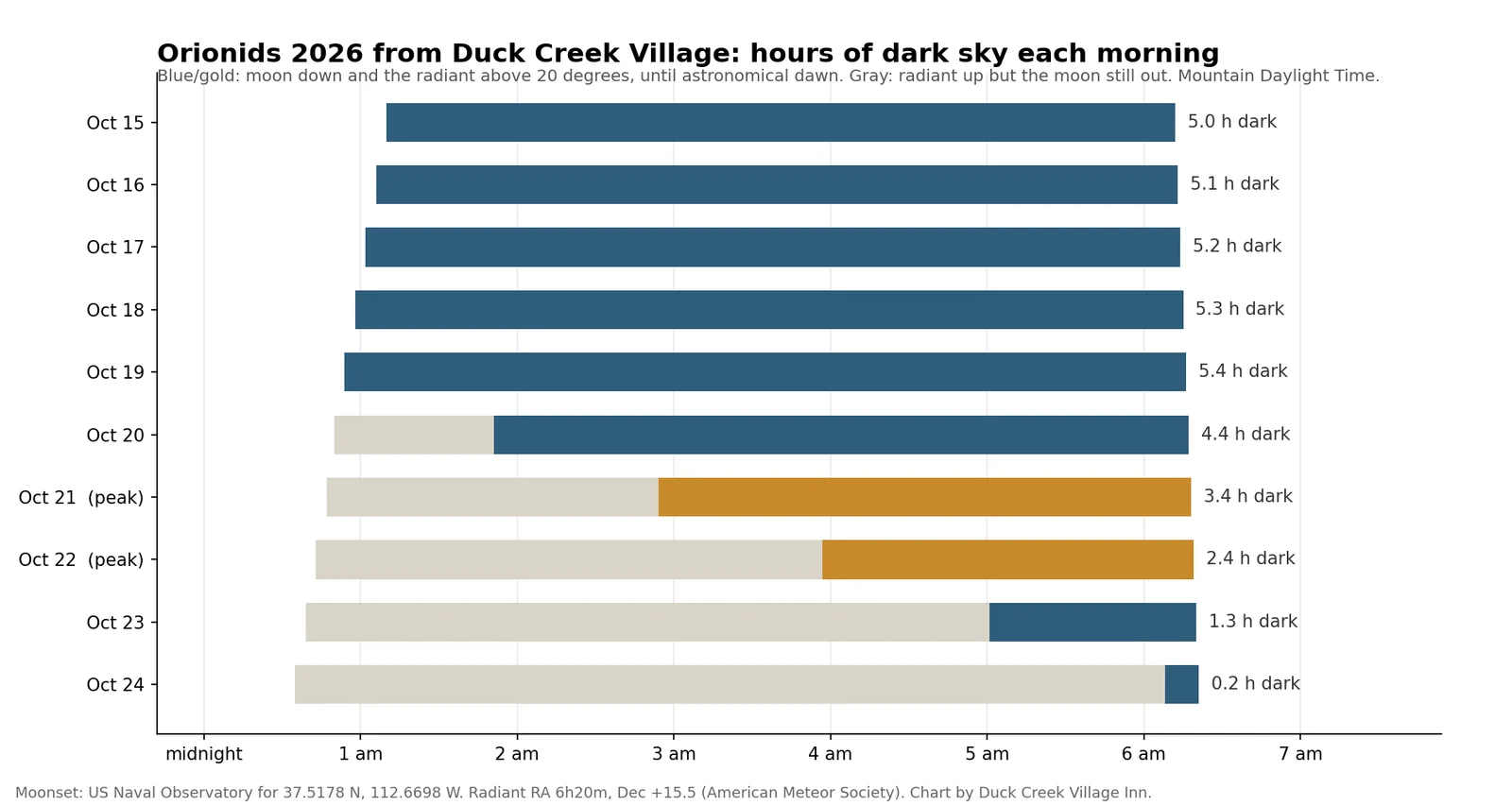 Dark hours each morning at the inn, from moonset (US Naval Observatory) and the radiant position (American Meteor Society). Chart by Duck Creek Village Inn.
The chart counts only the hours with the moon down and the radiant at least 20 degrees above the horizon, because a radiant sitting low in the trees throws few meteors your way.
| Morning (MDT) | Moonless window |
|---|---|
| Saturday, October 17 | 1:02 am to 6:14 am |
| Sunday, October 18 | 12:58 am to 6:15 am |
| Monday, October 19 | 12:54 am to 6:16 am |
| Wednesday, October 21 | 2:54 am to 6:18 am |
| Thursday, October 22 | 3:57 am to 6:19 am |
The radiant crosses due south near dawn on a Utah clock
EarthSky and most national articles say the Orionid radiant stands highest around 2 am. At Duck Creek Village it crosses due south at about 5:50 am on the October 21 morning, 68 degrees up. Two things push it late. The village sits near the western edge of the Mountain time zone, and Utah stays on daylight time until November 1. The sun here crosses the meridian at 1:15 pm, not noon, and the radiant keeps the same offset.
The radiant rises in the east around 11 pm and climbs all night. That makes the last two hours before dawn the strongest part of every morning on the chart. Face southeast or straight up, and let the meteors come to you. Orionids move at 41 miles per second, and the fast ones can leave glowing trains that hang for several seconds.
Clocks fall back on November 1, after the shower winds down.
Watch from the cabin, the overlook or Cedar Breaks
Most Orionid mornings start best a few steps from the door. You avoid driving Highway 14 at 2 am, and the bed waits 30 seconds away. If cabin lights or trees block the south and east, two places within half an hour open the whole sky.
| Spot | From the inn |
|---|---|
| Your cabin | 0 minutes, about 8,400 feet |
| Navajo Lake Overlook | 7.3 miles, about 10 minutes, 9,600 feet |
| Cedar Breaks, Point Supreme | 15.1 miles, about 23 minutes, 10,350 feet |
The Navajo Lake Overlook is a roadside pullout on Highway 14 above the north shore of the lake, so the view opens south over the water, toward the spot where the radiant ends its climb. Pull all the way off the road and keep headlights off once you park.
Cedar Breaks National Monument has held International Dark Sky Park status since 2017. State Route 148 through the monument stays open as of October 7, and the Park Service says the road closes to vehicles from mid November to mid May in an average year. The visitor center shuts for the season after October 17, and the ranger star parties ended in September, so you are on your own up there. The entrance fee is $25 per vehicle for seven days. Check current Cedar Breaks conditions before a predawn drive, and read our Cedar Breaks stargazing guide for the layout.
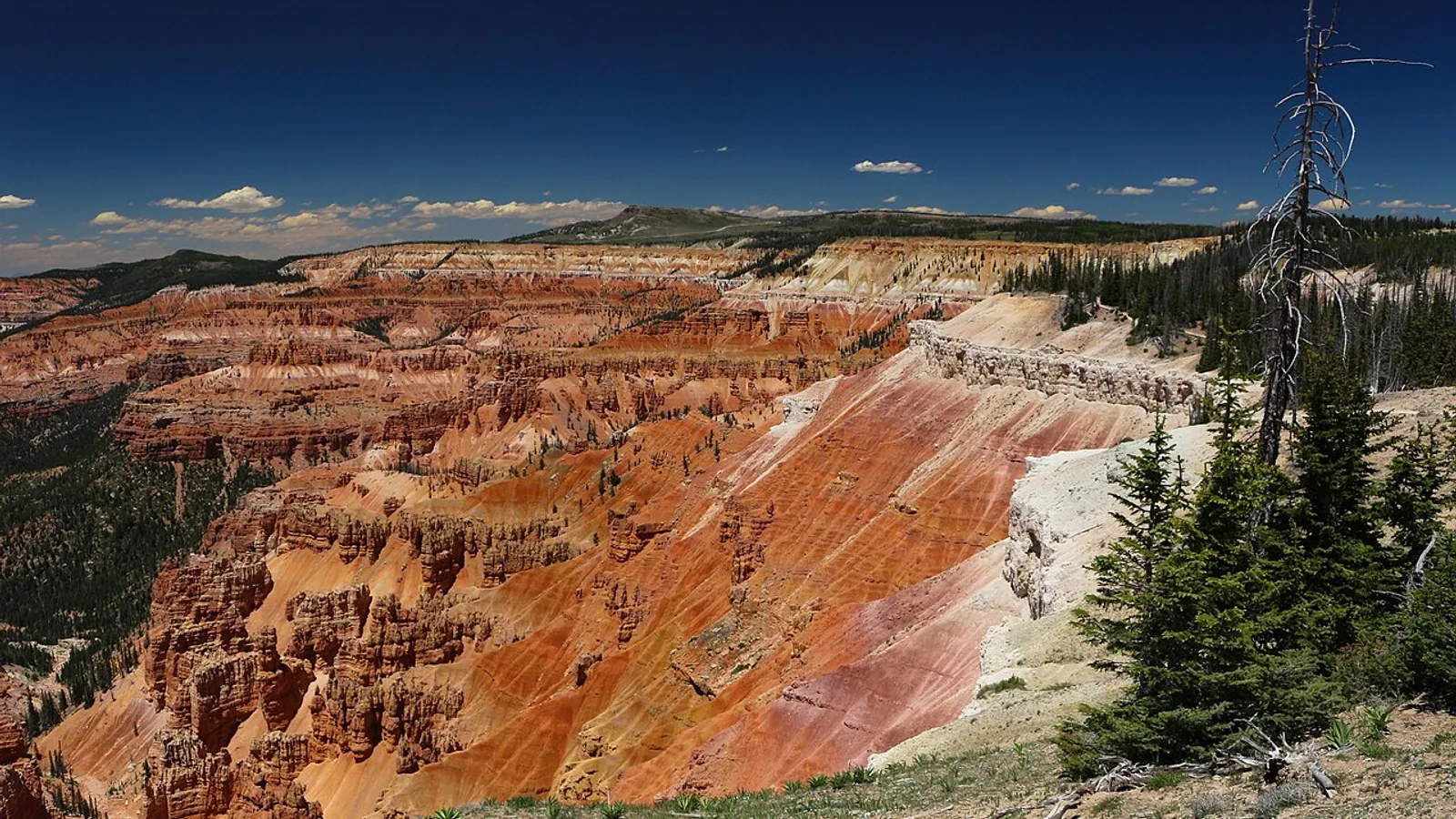
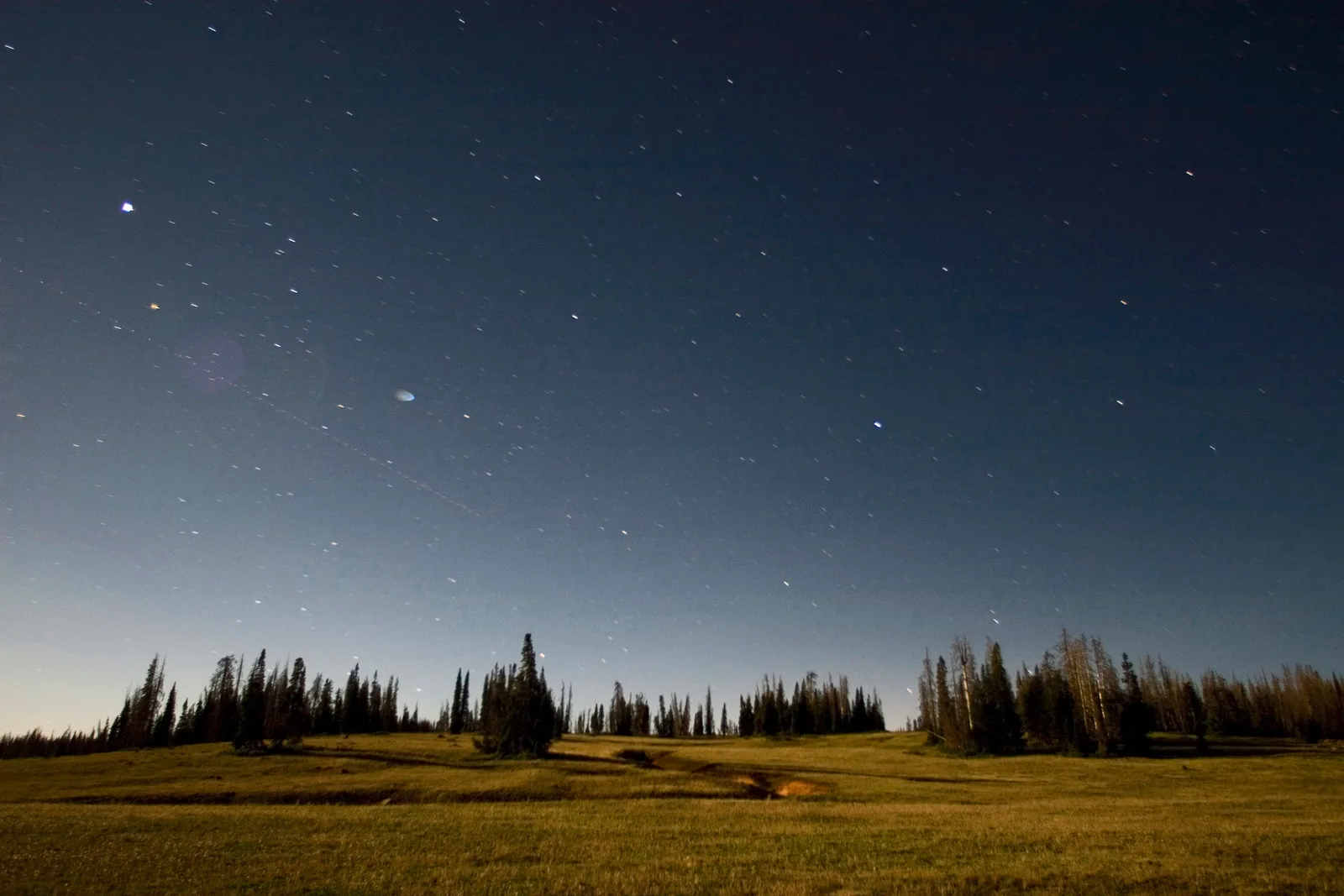 Night sky over a meadow at Cedar Breaks National Monument, 15 miles from the inn. National Park Service photo, public domain.
Dress for the coldest hour of the night
The dark window lands in the coldest stretch of the day. Station records for October 17 to 24 show a wide spread across the mountain, and the flat meadows run colder than the slopes because cold air drains downhill and settles there.
| Late October lows, Oct 17 to 24 | Median, nights at 32F or below |
|---|---|
| Panguitch Lake, 8,300 feet | 33F, 41 of 96 nights |
| Harris Flat meadow, 7,800 feet | 24F, 95 of 103 nights |
| Midway Valley, 9,830 feet | 29F, 97 of 128 nights |
Plan for the mid 20s. A sleeping bag over a reclining chair beats any jacket, a hat matters more than gloves, and a thermos earns its space. Our October weather post covers the daytime side of the month, and the Perseid post covers the summer shower if you want a second date on the calendar.
Quick answers about the 2026 Orionids
Which night is the 2026 Orionid peak? NASA gives the night of October 21 to 22. Watch the mornings of October 21 and 22 after moonset, plus October 17 to 19 for the longest dark stretch.
Will the moon ruin the Orionids in 2026? It ruins the evening and early morning. From Duck Creek Village the moon sets at 2:54 am on October 21 and 3:57 am on October 22, leaving about three and a half and two and a half dark hours before dawn.
How many Orionid meteors will I see? NASA says 10 to 20 an hour under a dark sky at the peak. Expect fewer with any moonlight and more as the radiant climbs toward dawn.
Do I need to drive to Cedar Breaks to see them? No, any open patch of sky away from lights works, because the meteors cross the whole sky. Cedar Breaks and the Navajo Lake Overlook help if trees block your view to the south and east.
Does the Orionid shower come from Halley’s Comet? Yes. The meteors are dust shed by Halley’s Comet, which last came by in 1986 and returns in 2061.
Pick your mornings, then find a cabin at Duck Creek Village Inn close enough that the walk back to bed takes less time than the moon takes to set.
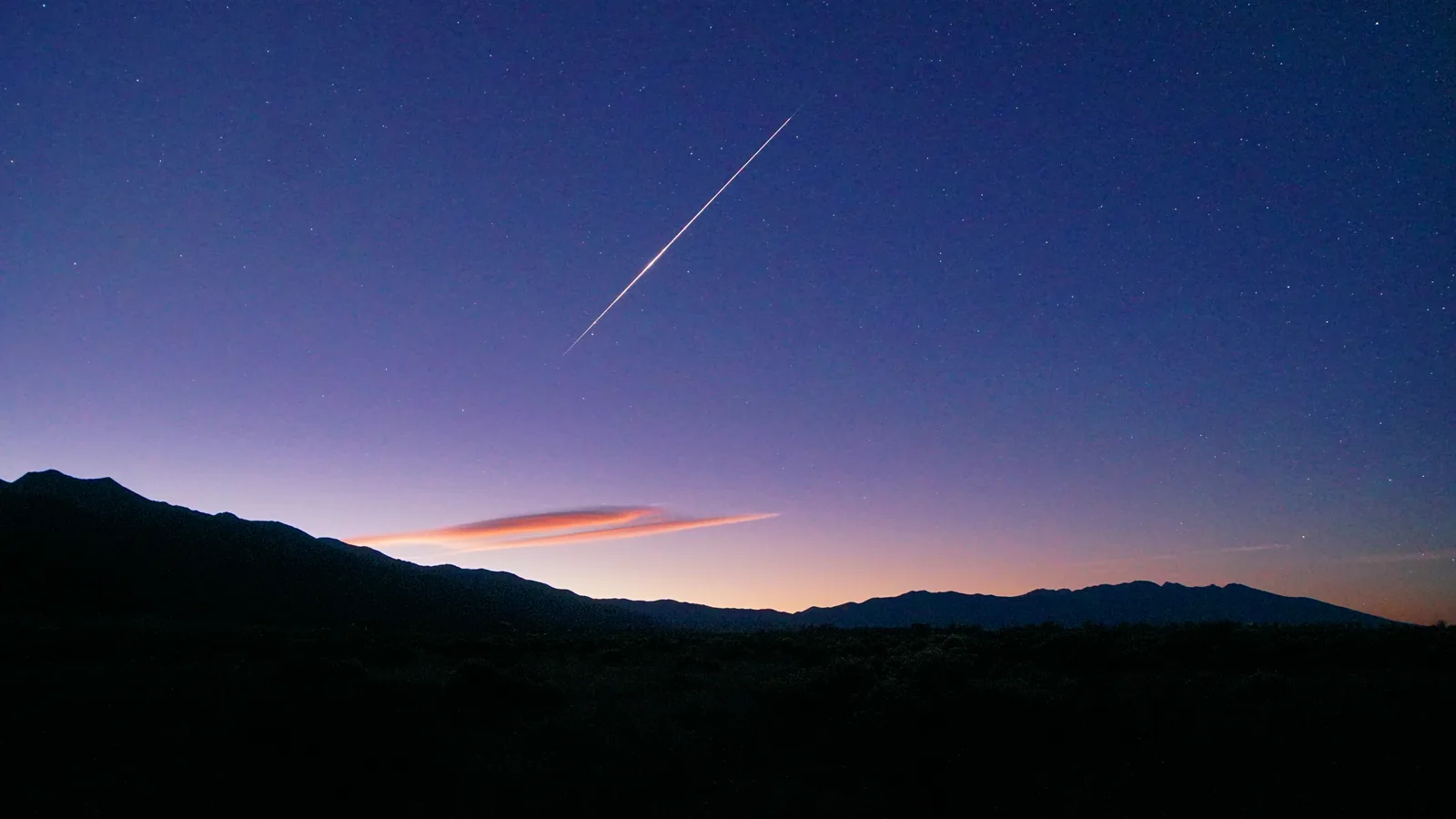
Hero photograph: an Orionid meteor at dawn over southern Colorado, October 2025, by Mike Lewinski, CC BY 4.0 via Wikimedia Commons.