
Trip Planning · Duck Creek Journal
Where Duck Creek Fits in a Grand Circle Road Trip
Most people chain the Vegas, Zion, Bryce, Capitol Reef loop through hot, pricey gateway towns. There is one night that belongs up at 8,400 feet. Here is exactly where Duck Creek fits, and why it is cooler, cheaper, and closer.
In this story
Most people build the southern Utah loop the same way. Vegas, then Zion, then Bryce, then Capitol Reef, with a night in each gateway town. It works. It also means paying peak summer rates for a room in Springdale, where the canyon walls hold the heat past dark and the shuttle line starts before your coffee.
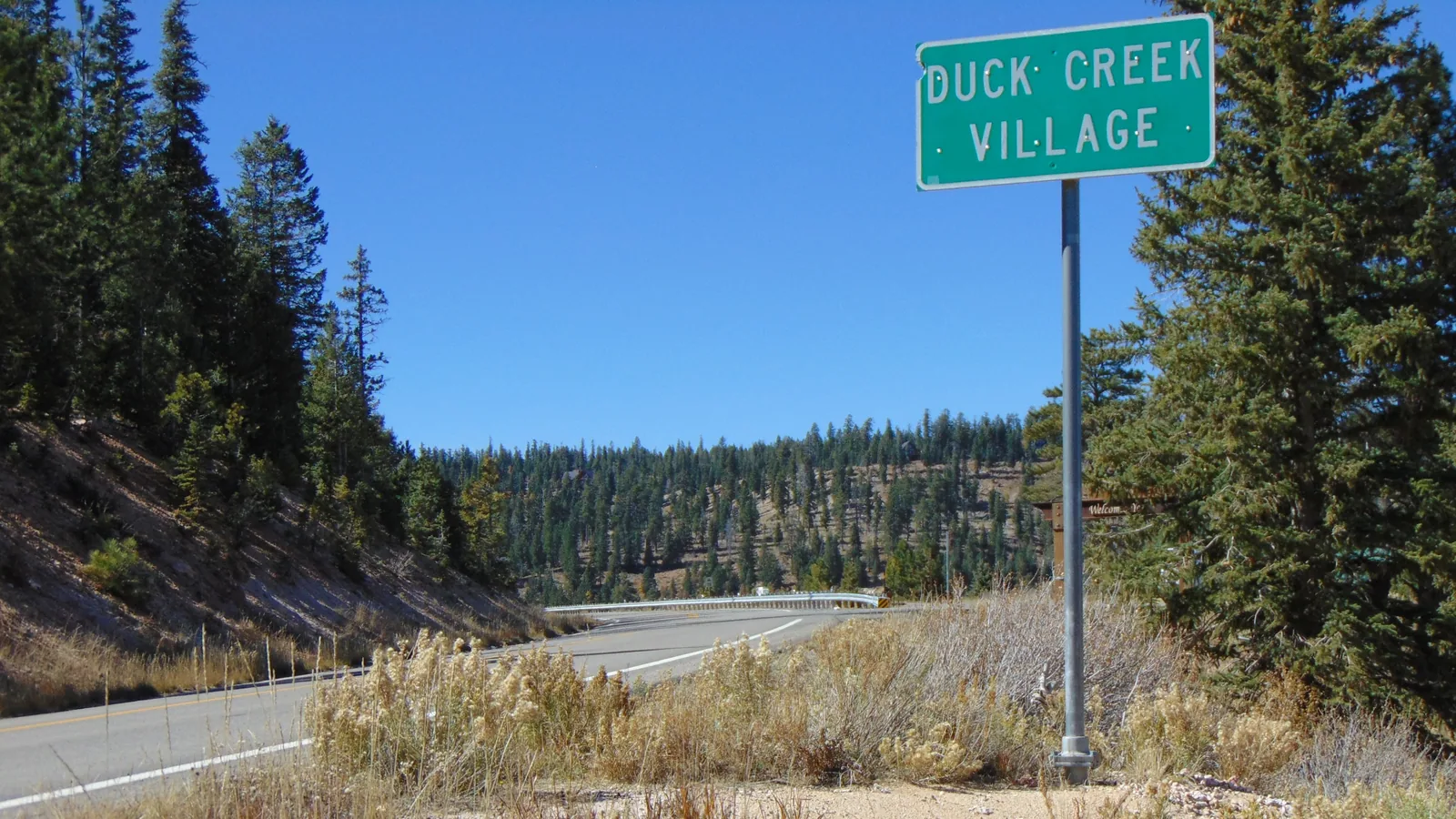
There is a better night in that itinerary, and most travelers drive right past it. Duck Creek Village sits at 8,400 feet on the Markagunt Plateau, on the road that connects the desert to the high country. One night up here shortens your next morning’s drive, drops the temperature 20 to 30 degrees, and costs less than a room at the mouth of a park. Here is where it fits.
Where Duck Creek sits on the map
Pull up the map and the loop looks like a chain of far-apart parks. Zoom in on the stretch between Zion and Bryce, and Duck Creek is sitting right in the middle of it.
The village is on State Route 14, the Markagunt High Plateau Scenic Byway. That road runs 41 miles from Cedar City and Interstate 15 on the west, up and over the plateau, down to US-89 on the east. US-89 is the same corridor that carries you to Zion’s east entrance and north to Bryce. So Duck Creek is not a detour off the loop. It is on the connector.
The distances tell the story. From the inn it is about an hour to Zion’s east entrance, and about an hour to Bryce Canyon. Cedar City and the interstate are 30 miles down the mountain. That puts you about halfway between the two biggest stops on the loop, up where the air is thin and cool.
The one night to sleep up here
The night that belongs to Duck Creek is the Zion to Bryce transition.
You spend the day in Zion. Instead of driving back into Springdale to sleep in the heat, you climb US-89 and SR-14 up onto the plateau. The next morning Bryce is an hour away, so you start already halfway there, rested, and a good 25 degrees cooler than the people who stayed in the canyon.
It works in both directions. If you are running the loop the other way, coming down from Bryce toward Zion, Duck Creek is the last cool-elevation stop before you drop into the desert. Sleep high, then descend into Zion in the morning when the east side is still quiet.
The part that surprises people: the temperature
The plateau runs 20 to 30 degrees cooler than the parks below it, and that is not a rounding error. A midsummer afternoon in Springdale or St. George sits around 100 degrees. Up at Duck Creek the same afternoon is in the mid 70s.
That gap changes the trip. You hike the parks in the morning while it is bearable, then drive up to a cool evening instead of hiding from the heat in an over-air-conditioned room. Dinner on a porch with a light jacket on, in the middle of a Utah summer, is the part people remember longest.
The part that surprises people twice: the cost
Springdale is a gateway town, and it prices like one. A room at the mouth of Zion in peak summer is one of the more expensive beds on the whole loop, and you are paying that premium to sleep in the hottest spot on your itinerary.
Duck Creek is a mountain town, not a park entrance, so the math runs the other way. You get a cabin or a room for less, in cooler air, closer to the middle of your driving day. If you are watching the budget across a week of national parks, this is the night that puts money back in your pocket. Our rundown on affordable cabins near Bryce and Zion lays out how that works.
What else fits in the stop
You do not have to treat Duck Creek as only a place to sleep. A few things sit close enough to fold into the transition without slowing the loop down.
Cedar Breaks National Monument is 25 minutes away, a 10,000-foot amphitheater of red rock and, after dark, some of the blackest skies in the region. It is the natural evening add-on the night you sleep up here.
The plateau itself is full of easy wins. Short walks to lakes, an ice cave, a lava tube, and dirt roads that a rented SUV handles in dry weather. If you have a slow morning before Bryce, the village has more than enough to fill it.
And if you flew into Vegas to start the loop, Duck Creek is about 200 miles and 3 hours out, which makes it a reasonable first night on the mountain too. Our guide on making the drive from Las Vegas covers that leg.
The plan on one page
- Build your loop the normal way: Vegas, Zion, Bryce, Capitol Reef.
- On the Zion to Bryce transition, sleep at Duck Creek instead of Springdale.
- Come and go through Zion’s east entrance, not the south gate.
- Bank the temperature drop and the lower room rate for that night.
- Add Cedar Breaks in the evening if you want the elevation to earn its keep.
The loop does not change. You just move one night up the mountain, and that single swap buys you cooler air, a shorter morning drive, a quieter way into Zion, and a smaller bill. That is the kind of thing you only learn from living on the road between the parks.
Ready to book that night? We keep it simple. Cabins and rooms 20 minutes from the middle of the loop, with a porch, cool nights, and someone at the desk who can tell you which entrance to use and which road to skip. Book direct, and let the plateau do the rest.
 Trip Planning
 The Back Door to Zion: Reaching the East Entrance From Duck Creek Without Touching the Shuttle Line
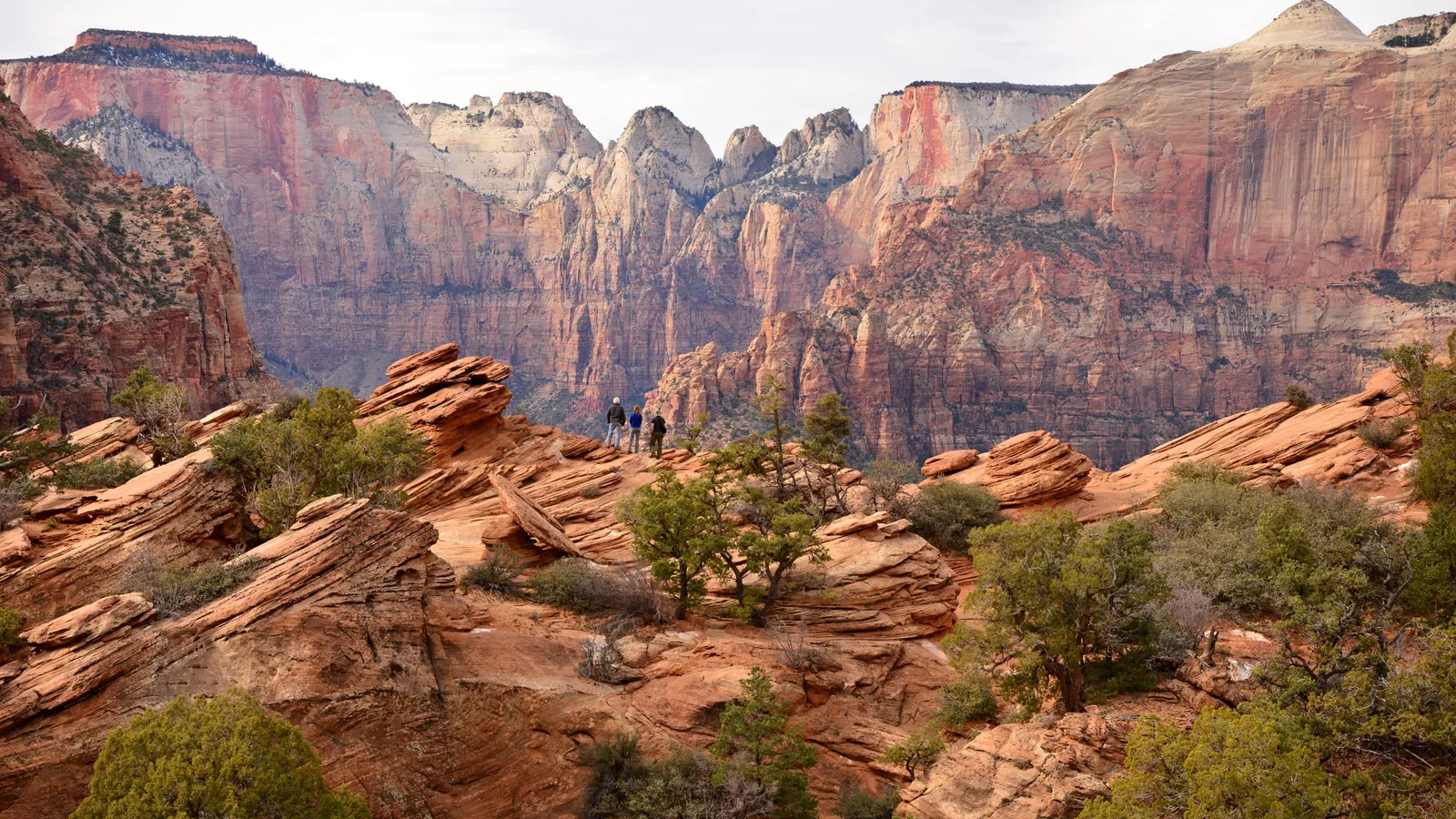
The east entrance at Mount Carmel is 46 miles from Duck Creek and opens onto the one part of Zion you can still drive yourself. Here is the route, the size limits that turn rigs around at the gate, and how to decide between the east side and the full canyon run.
 Trip Planning
 Affordable Cabins and Rooms Near Bryce Canyon and Zion That Feel Like a Real Getaway
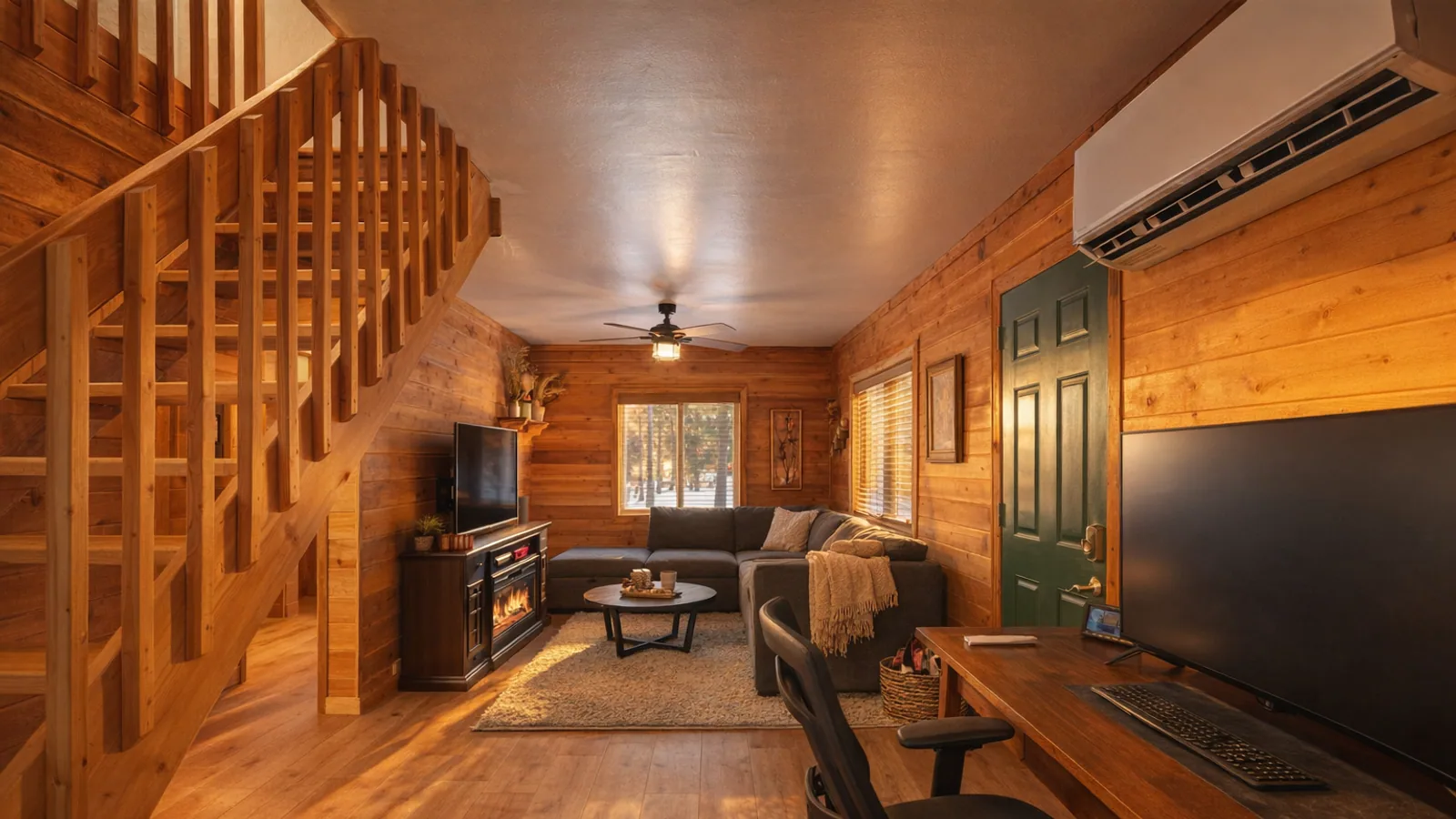
You do not need a resort bill to stay comfortable between Bryce Canyon and Zion. Duck Creek Village Inn offers renovated cabins with kitchens, breakfast-included rooms, and one private hot tub option when you want a little extra without blowing the budget.
 Trip Planning
 Where Is Duck Creek Village, Utah? A Southern Utah Map for Vegas and Park Travelers
Duck Creek Village sits on Highway 14 in the high forest east of Cedar City, giving Las Vegas visitors a cooler mountain base for Cedar Breaks, Bryce Canyon, Zion, and slower southern Utah road trips.
Book the basecamp
When the trip idea is taking shape, Duck Creek Village Inn makes an easy base between slower mountain time and bigger Southern Utah days.