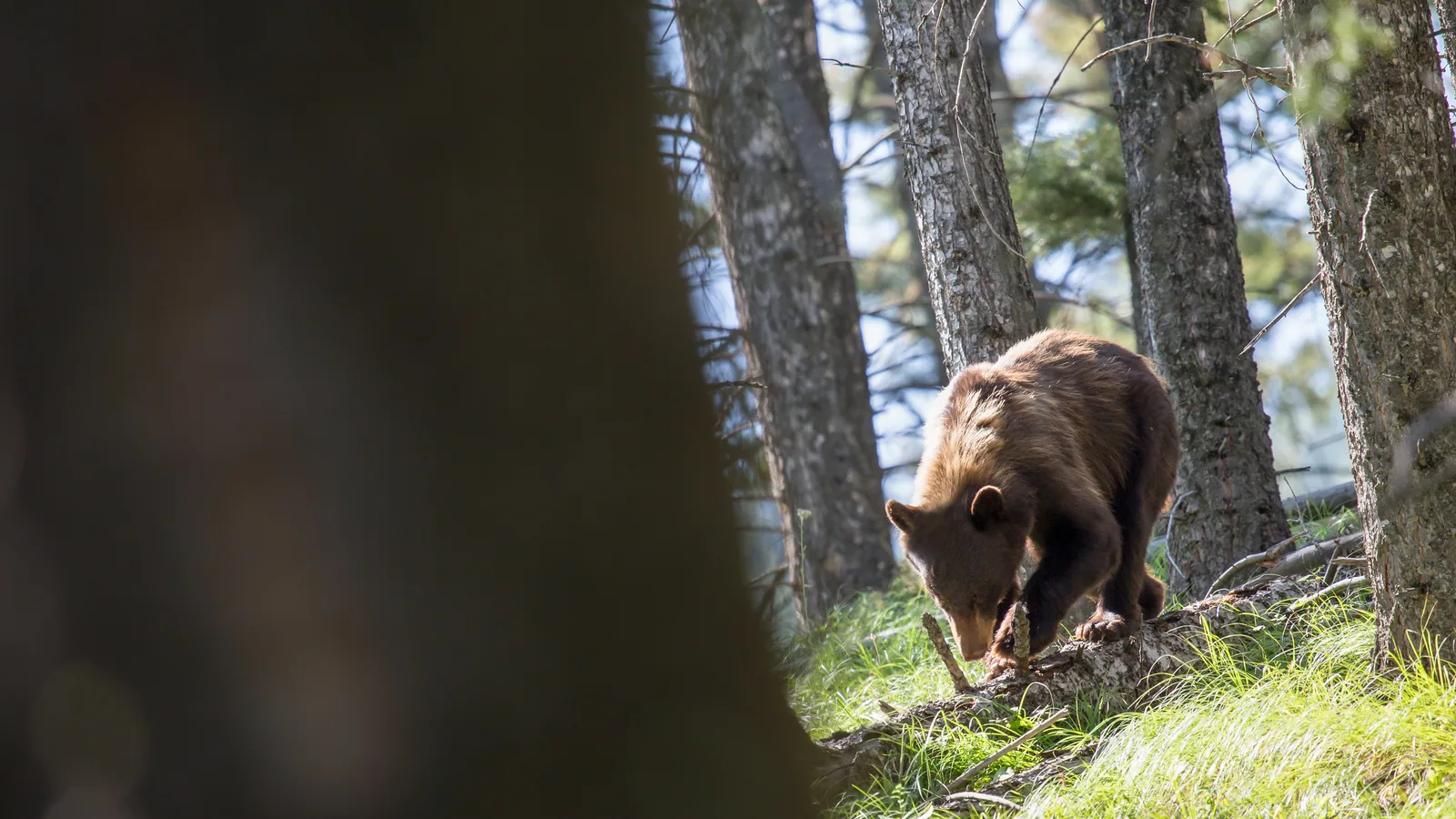
Yes. Black bears live on Cedar Mountain around Duck Creek Village, and they are the only bears in Utah. Sightings stay uncommon, but 2026 brought Utah its worst bear year on record, so food storage matters more this fall than usual.
Are There Bears in Duck Creek Village, Utah?
Yes. Black bears live on Cedar Mountain around Duck Creek Village, and they are the only bears in Utah, since the state lost its last grizzlies around 1930. Odds are you will not see one. Bryce calls sightings rare, and Cedar Breaks puts the odds low. But 2026 brought Utah more bear trouble than any year on record, so treat your food and trash like a bear might find them.
| Bears at Duck Creek Village | |
|---|---|
| Species | Black bear only, no grizzlies |
| Color | Black to reddish brown |
| Size | Males 100 to 300 lb, females 100 to 175 lb |
| Denning | Late October (females), mid November (males) |
| Back out | March or April |
| Report a problem bear | DWR Cedar City, 435-865-6100 |
Plenty of Utah black bears are not black. The Park Service at Bryce describes the local animals as reddish brown to black, so a cinnamon bear crossing a forest road is the same species as a black one.
Black bears on the plateau around the village
The Utah Division of Wildlife Resources manages bears by hunt unit, and its own boundary map settles the local question. We ran the inn’s coordinates through the DWR black bear hunt layer and the answer came back Panguitch Lake/Zion, a unit bounded by I-15, SR-20, US-89 and the Arizona line. That covers Cedar Mountain, Navajo Lake, Panguitch Lake and the Long Valley side, minus the national parks.
DWR runs a fall hunt on that unit, so somebody expects bears out there. The live harvest table lists the Panguitch Lake/Zion season as September 1 to October 25, 2026, with a quota of 3 bears and none taken as of today. Hunters there may not use bait or dogs. Other units on the same table carry quotas from 2 to 25, which gives you a sense of scale.
Cedar Breaks has its own pattern. The Park Service says bears seldom visit the rim, because the altitude up there does not suit their diet. They live down in the amphitheater, the wilderness below the overlooks. The Cedar Breaks guide covers the rim trails, which keep you above that country. Our wildlife guide lists the other neighbors, from elk to pikas.
Why 2026 changed the bear numbers in Utah
| Utah bear year, 2026 | |
|---|---|
| Incidents by Aug. 27 | 168 |
| Incidents in 2025 | 83 |
| Bears killed in 2026 | More than three dozen |
| Cause DWR names | Drought, hard spring freezes, heat |
| Statewide estimate | About 4,000 bears (DWR, 2024) |
A warm spring, several hard freezes and a dry summer wrecked the berries and acorns that make up most of a black bear’s diet. Hungry bears came down into towns. DWR and police answered 168 bear incidents by late August, double the 2025 count, and more than three dozen bears died, more than the previous three years combined.
The towns in that August coverage sit well away from us: Park City, Provo Canyon, Spanish Fork, Logan, Moab and others. Southern Utah has had its own bad years, though. DWR’s bear biologist told the Salt Lake Tribune that most of the 2022 spike of 104 reports came from southern and southeastern Utah, also during drought. Food shortage drives conflict here as much as anywhere.
October matters for one more reason. Bears feed hard before denning, and the Park Service puts females into dens in late October and males by mid November. The next few weeks on Cedar Mountain fall in the last feeding stretch before the dens close.
Food storage at a cabin or campsite
| If you meet a black bear | |
|---|---|
| First move | Stand your ground, give it room to leave |
| Do not | Run, climb a tree, lie down or play dead |
| Its speed | Up to 35 mph, and it climbs well |
| If it attacks | Fight back with anything you have |
| Bear spray | 92 percent effective, per DWR |
DWR’s rule for campers fits on one line: food, drinks and scented items go in your vehicle, a bear-safe container, or hung in a tree, never in your tent. Scented items mean things like toothpaste and pet food. The same logic applies at a cabin. Grills, bird feeders, pet bowls and open trash cans pull bears to buildings.
Dixie National Forest has no bear food storage order in force right now. The forest’s alerts page lists 21 current orders, including the Duck Creek OHV trail closure, and none covers food. The one it did have, on the Escalante district east of us, required food within 100 feet of a person or locked away, and it expired May 5, 2026. Follow those rules anyway. Our camping guide covers the campgrounds and dispersed sites nearby.
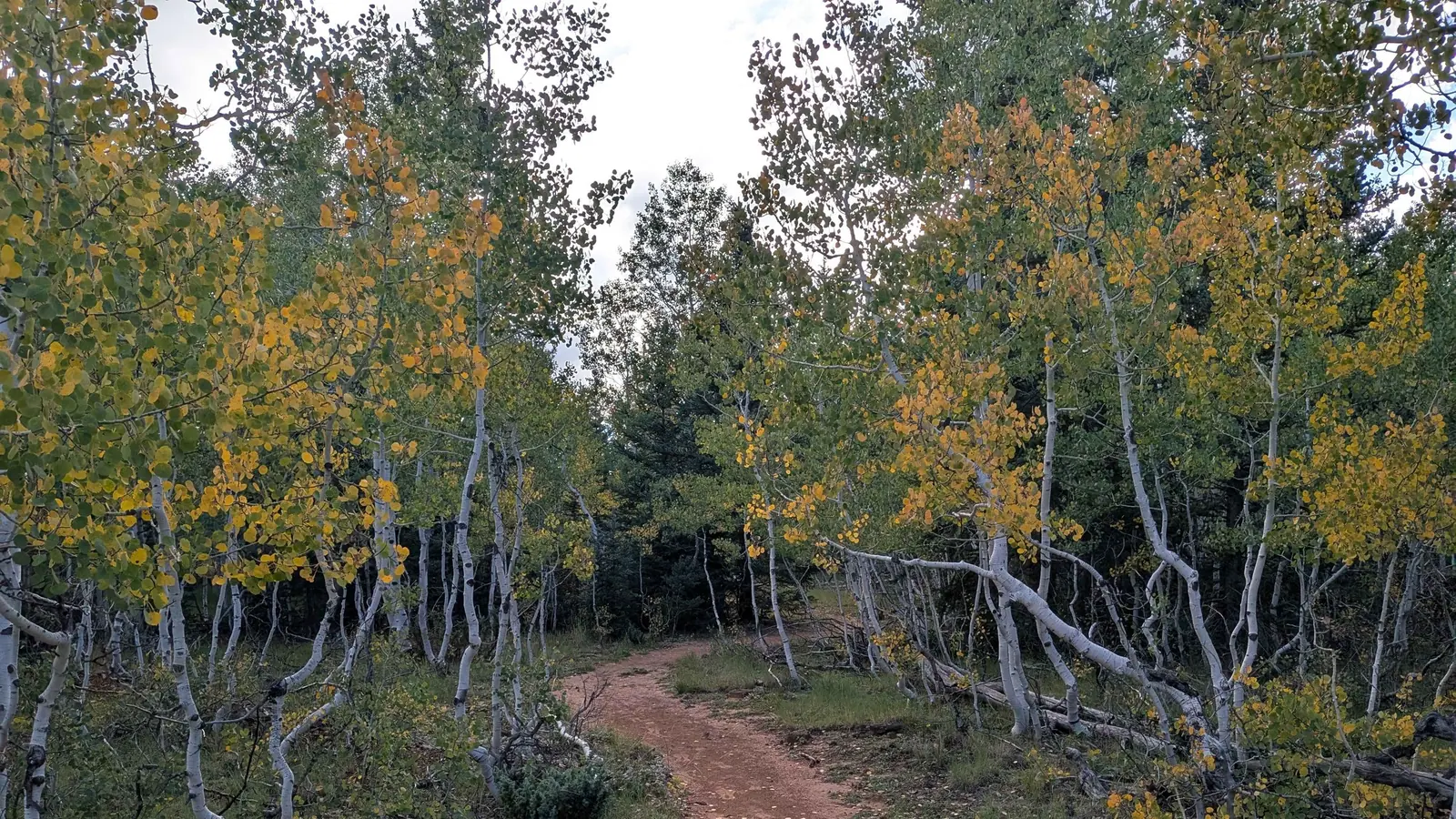
Hikers can stack the odds further. Bears move most in the early morning and evening, says the Park Service at Cedar Breaks. Talk on the trail, keep the dog leashed, and give any bear 150 feet or more. A few of our fall hikes run through thick aspen with short sight lines, so make noise on the blind corners. Orange belongs on you this month too, since the hunting season guide covers rifle hunts on both sides of Highway 14.
Quick answers about bears near Duck Creek
Are there grizzlies in Utah? No. The famous Old Ephraim died in Logan Canyon in 1923, and the Forest Service counted no grizzlies left in that forest by 1930. Every bear in Utah today is a black bear.
Do bears come into Duck Creek Village? Black bears roam the whole plateau, and the village sits inside a DWR bear hunt unit. Sightings stay uncommon, but a cabin with food or trash outside can draw one in a lean year like 2026.
Can you see a bear at Cedar Breaks? Not likely from the rim. The Park Service says the bears live down in the amphitheater wilderness.
Do bears hibernate on Cedar Mountain? Yes. Females den in late October, males by mid November, and both come out in March or April.
Who do I call about a bear? DWR’s Cedar City office takes nuisance bear reports at 435-865-6100. Call 911 if a bear threatens anyone.
Bears are part of what makes this a real mountain rather than a resort. Keep your food locked up and they stay a story you tell. Book one of our cabins for a fall stay and you get the forest, the elk and a door that shuts.
Hero photograph: a cinnamon colored black bear, NPS photo by Neal Herbert, public domain via Wikimedia Commons. Taken in Yellowstone, shown for the species.