
Things to Do · Duck Creek Journal
Leonid Meteor Shower 2026 From Duck Creek Village: The Peak in Daylight and the Clear Weekend Before It
The 2026 Leonids reach their maximum at 4:45 pm Mountain time on November 17, in daylight at Duck Creek Village. The moon sets before the radiant climbs every morning that week, so the forecast decides it: the mornings of November 15 and 16 look clear, and snow is due on both peak mornings.
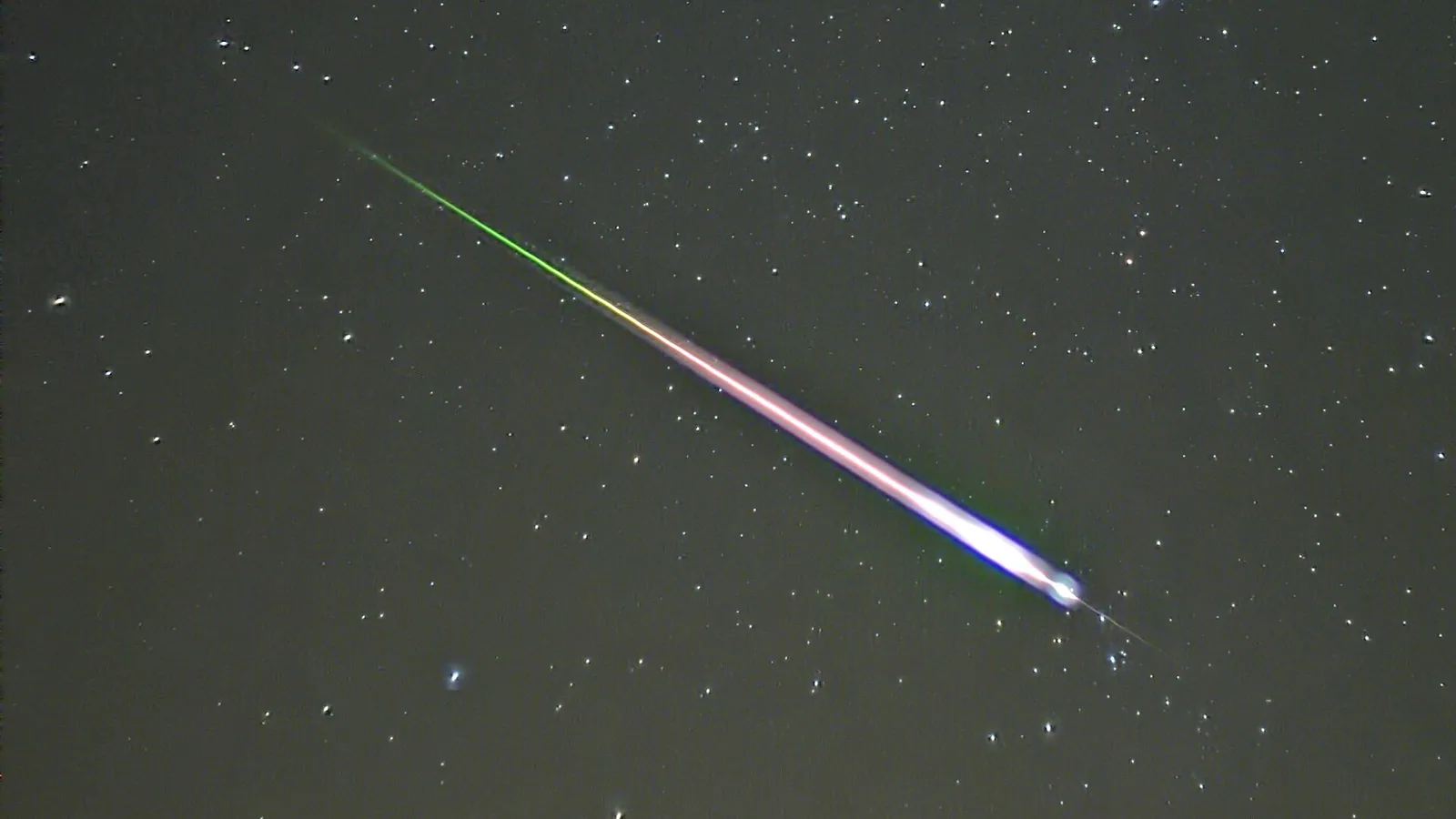
In this story
The 2026 Leonid meteor shower reaches its maximum on November 17 at 23:45 UT, which is 4:45 pm on a Utah clock, half an hour before sunset at Duck Creek Village. The radiant sits below the horizon at that moment. Watch the dark mornings around it instead. The moon sets before the radiant climbs on every one of them, and this year the forecast decides the best morning.
As of the National Weather Service forecast issued November 12, the mornings of Sunday, November 15 and Monday, November 16 look clear. Snow sits on both mornings that bracket the maximum.
| Leonids 2026 | Details |
|---|---|
| Active | November 6 to 30 |
| Maximum | November 17, 4:45 pm MST |
| Rate at the maximum | About 15 an hour, dark sky |
| Speed | 44 miles per second |
| Parent comet | 55P/Tempel-Tuttle |
The 2026 Leonid peak happens in daylight in Utah
The International Meteor Organization puts the nodal maximum at 23:45 UT on November 17. EarthSky gives 0 UT on November 18, fifteen minutes later. Both land between 4:45 and 5:00 pm Mountain Standard Time, while the sun still sits above the horizon. NASA and the American Meteor Society list the night of November 16 to 17 as peak night, and EarthSky points you at the midnight to dawn hours of November 17 and 18.
So the two mornings around the maximum carry the best rates you can see from here. Each one sits about 12 hours from it.
One modeled trail adds a small bonus. Sato’s 2025 model calculates a weak encounter with dust shed in 1533 at 3:33 am MST on Tuesday, November 17, with the radiant 45 degrees up over the village. The IMO calendar lists it as weak.
The moon stays out of the way all week
New moon fell on November 9 and first quarter arrives at 4:48 am MST on November 17. A half moon sets around midnight, and the Leonid radiant rises in the east at about the same hour. That timing gives every morning of peak week four dark hours with the moon down and the radiant at least 20 degrees up.
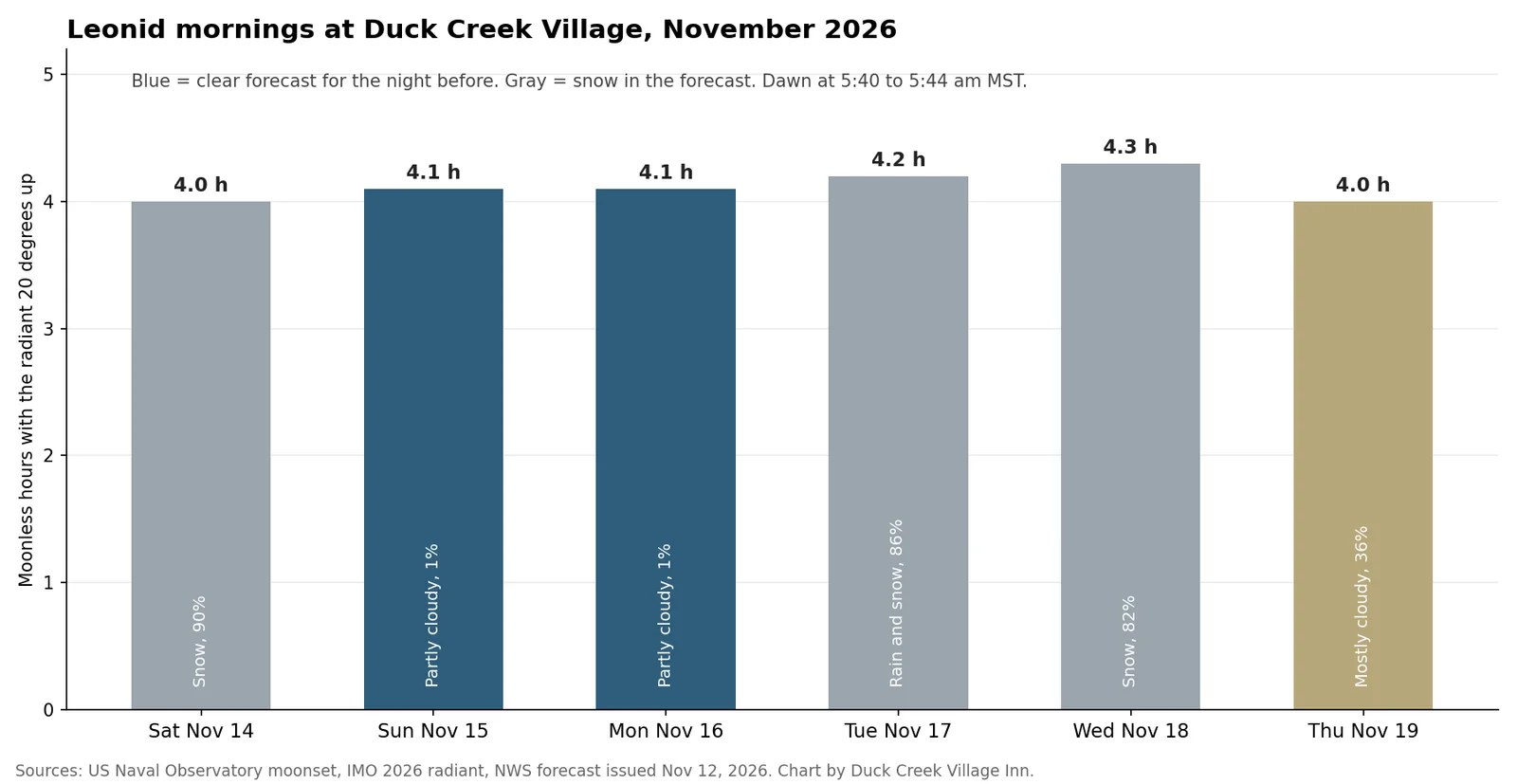
| Morning (MST) | Dark window, forecast |
|---|---|
| Sunday, November 15 | 1:37 to 5:41 am, some cloud, 1% |
| Monday, November 16 | 1:33 to 5:41 am, some cloud, 1% |
| Tuesday, November 17 | 1:29 to 5:42 am, snow 86% |
| Wednesday, November 18 | 1:25 to 5:43 am, snow 82% |
| Thursday, November 19 | 1:43 to 5:44 am, snow 36% |
Rates run highest near the maximum, so Sunday and Monday trade a few meteors for a sky you can see. A clear Monday morning sits 35 hours ahead of the peak. The forecast will move before then, so read it again on Saturday.
The radiant tops out after dawn on a standard-time clock
Utah left daylight time on November 1, and the sun now crosses the meridian at 12:16 pm here. The Leonid radiant follows the same offset. It rises at about 11:45 pm, passes 20 degrees near 1:30 am, and would reach its highest point, 74 degrees, at 6:52 am. Astronomical dawn arrives first, at 5:41 am, so the last hour before 5:40 gives you the radiant at its highest in a dark sky.
Leonids hit the air at 44 miles per second. NASA notes the shower for fireballs and for the trains that hang behind the bright ones. You do not need to find Leo. Look about halfway up toward the east or south, and the meteors cross every part of the sky.
The Navajo Lake Overlook sits 7.3 miles west of the inn on Highway 14 at 9,600 feet, a 10 minute drive, if trees block your view from the cabin. Check Highway 14 conditions after the weekend snow before you drive at 2 am, and park well off the pavement.
Storm years made this shower famous
The Leonids come from dust left by Comet 55P/Tempel-Tuttle, which circles the sun about every 33 years and returns to perihelion on May 20, 2031. NASA counts a storm of 1,000 or more an hour about once every 33 years. In 1966 the sky delivered thousands of meteors a minute for about 15 minutes, and the last storm came in 2002.
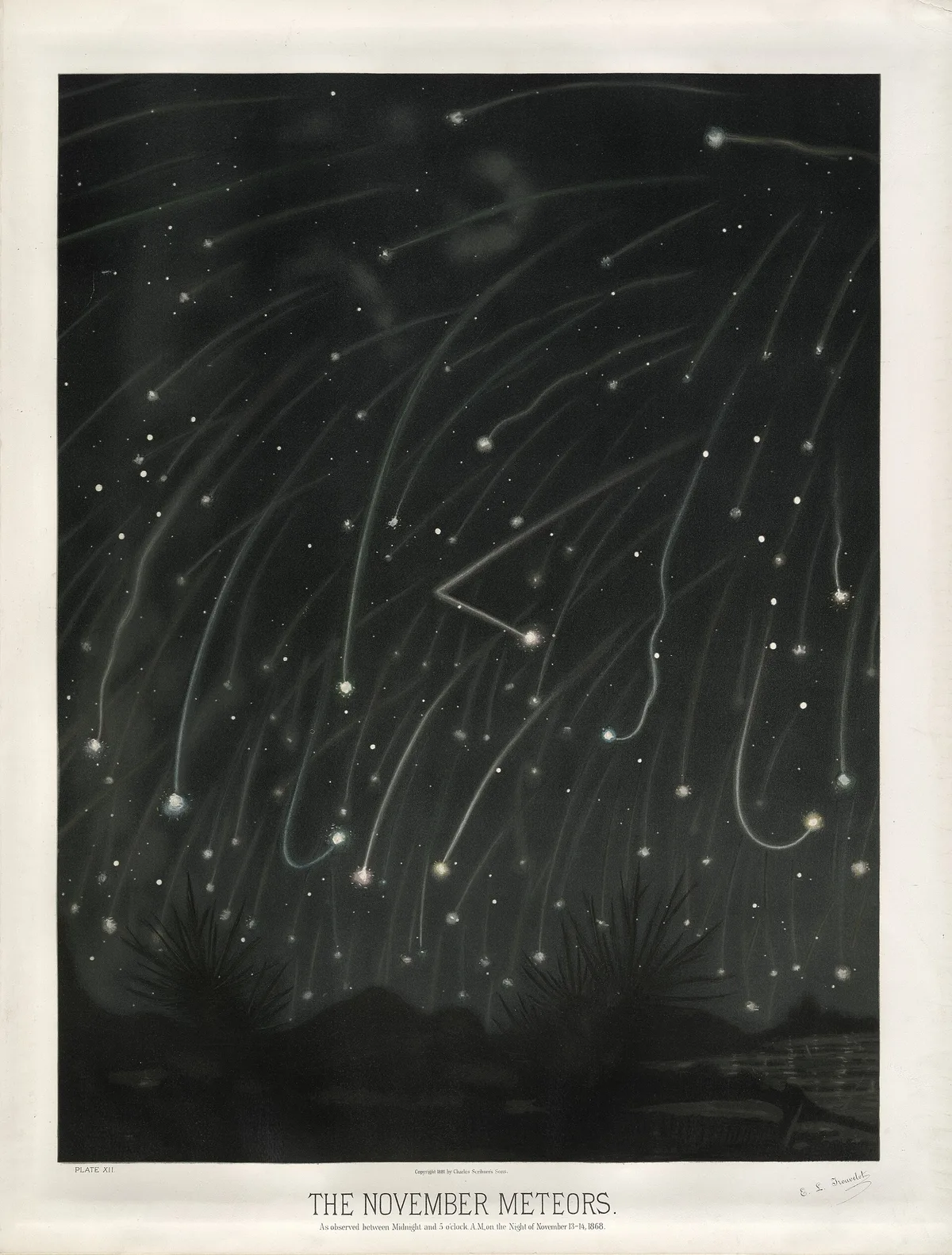
None of that applies in 2026. The IMO calendar lists six low-density trail encounters this year, and its modelers expect no significant outburst. Plan on a quiet shower of about 15 meteors an hour at best.
Dress for 20 degrees and a snowy yard
The forecast lows for the two clear nights run 20F on Saturday and 25F on Sunday, and the forecast puts fresh snow on the ground from the Friday and Saturday storm. Our November weather post covers the month at village height.
| What to bring | Why |
|---|---|
| Sleeping bag and a reclining chair | You sit still for an hour |
| Insulated boots | 3 to 7 inches of new snow forecast |
| Hat and a thermos | Lows of 20 to 25F |
| Red flashlight | Keeps your night vision |
Our Orionid post covers the October shower from the same cabins.
Quick answers about the 2026 Leonids
- Which night is the 2026 Leonid peak?
IMO puts the maximum at 4:45 pm MST on November 17, in daylight in Utah. Watch the mornings of November 17 and 18 for the highest rates, or November 15 and 16 if the clear forecast holds.
- Will the moon interfere with the Leonids in 2026?
No. On the mornings of November 15 to 18 the moon sets between 10:39 pm and 12:41 am at Duck Creek Village, before the radiant climbs high enough to matter.
- How many Leonid meteors will I see?
IMO expects about 15 an hour at the maximum, and EarthSky gives 10 to 15 under a dark, moonless sky. A cabin yard with trees and some lights will show fewer.
- Is 2026 a Leonid storm year?
No. The calculated dust trail encounters for 2026 are weak, and the next perihelion of the parent comet comes in 2031.
- What time should I go out at Duck Creek Village?
Go out between 2:00 and 5:40 am MST. The radiant climbs all night, so the last hour before dawn gives the most meteors.
Pick your morning, then book a cabin at Duck Creek Village Inn so the dark sky starts at your own door.
 Things to Do
Orionid Meteor Shower 2026 From Duck Creek Village: The Moon, the Peak, and the Better Mornings
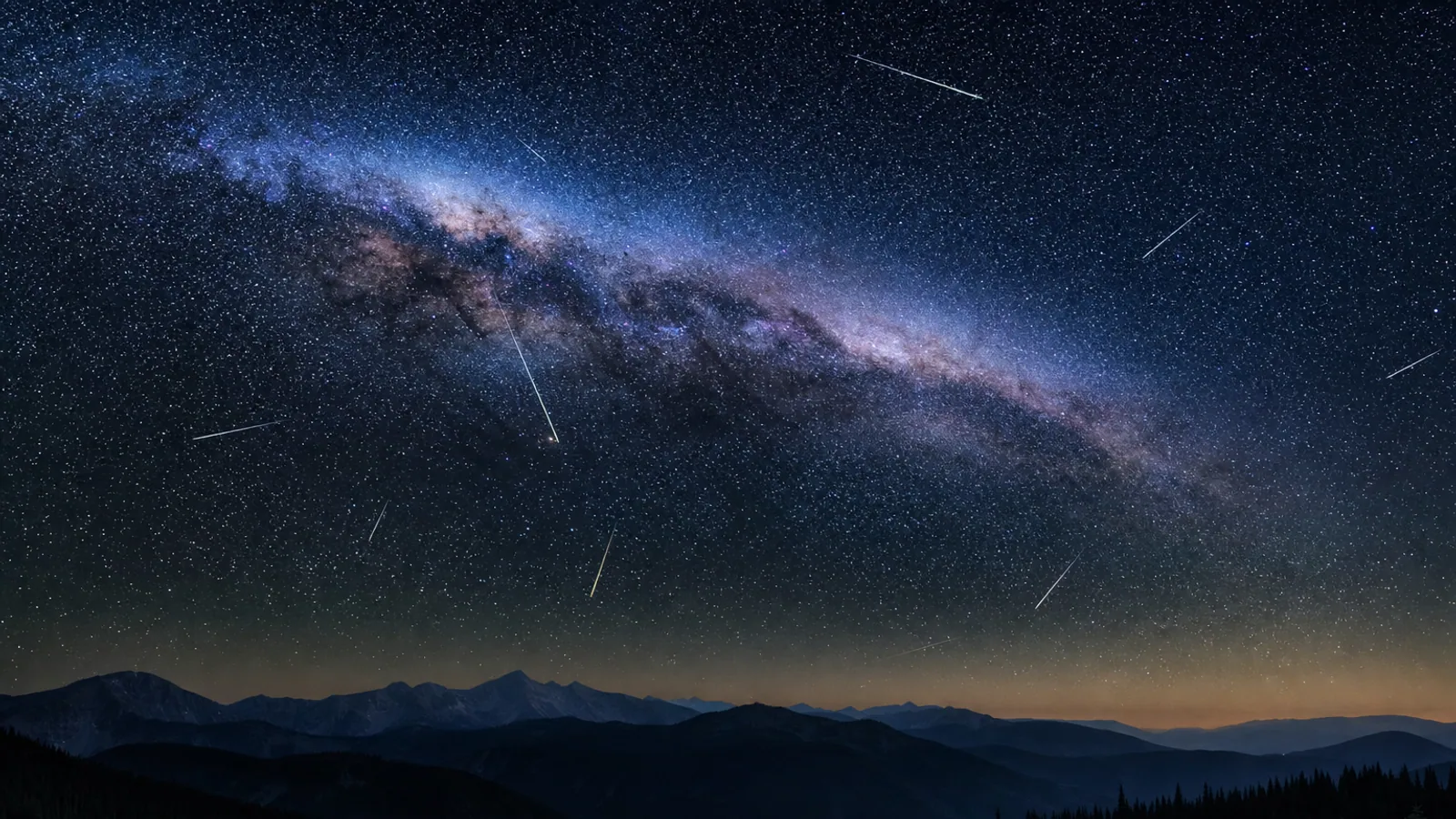
The 2026 Orionids peak on the mornings of October 21 and 22, but a bright waxing moon owns the first half of both nights. From Duck Creek Village the moon sets at 2:54 am and 3:57 am on those mornings, and the mornings of October 17 to 19 give five hours of dark sky or more.
 Things to Do
The Perseids at 8,400 Feet: Watching the August Meteor Shower Above the Monsoon
The 2026 Perseids peak on a moonless night, the darkest one in years, and Duck Creek sits at 8,400 feet with the kind of sky that makes it count. Here's when to go, where to stand, how to read the monsoon, and why elevation puts you above the haze the desert below is stuck under.
 Trip Planning
What Is the Weather Like in Duck Creek Village in November?
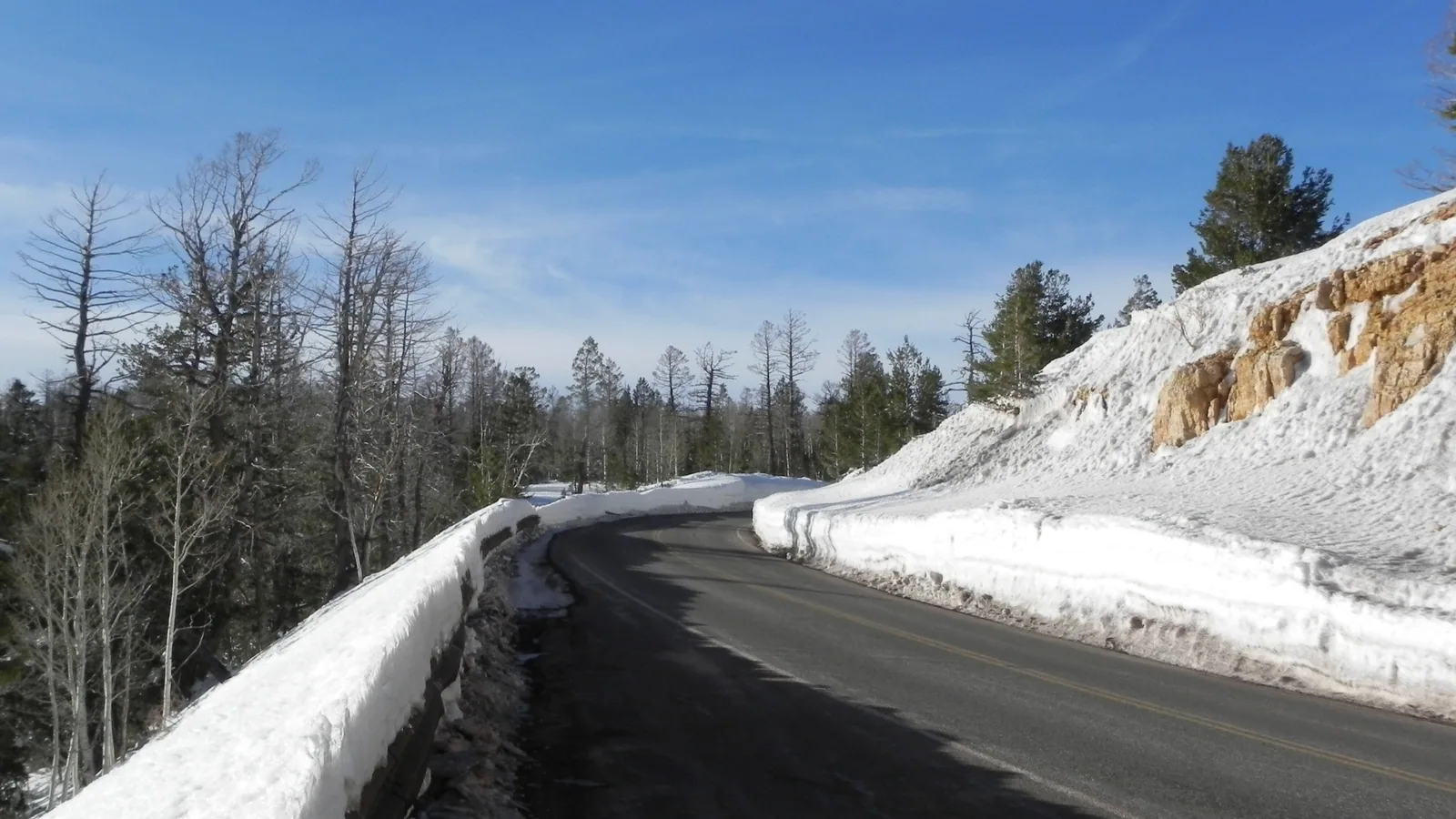
November in Duck Creek Village runs 48 to 49F by day and about 24F at night, with 24 to 29 freezing nights in the month. Snow sits on the ground about 10 days in an average November at village elevation and 22 days at the Highway 14 summit. The highway stays open; Cedar Breaks closes on snow.
Book the basecamp
When the trip idea is taking shape, Duck Creek Village Inn makes an easy base between slower mountain time and bigger Southern Utah days.