Book Book Your Stay
Book direct & save 10%: code Save 10% · stays thru Dec 1 · stays through Dec 1, 2026
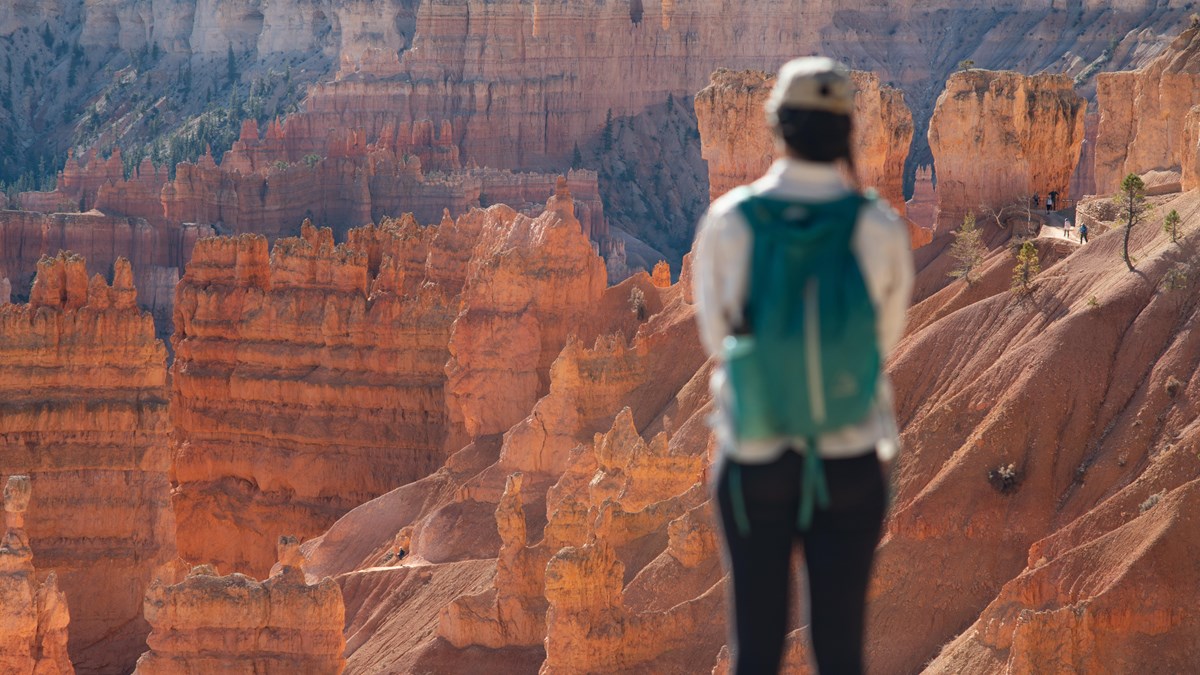
View from a Bryce Canyon overlook along the scenic drive with hoodoos and distant mesas

Duck Creek Guide

Bryce Canyon Scenic Drive

18 miles from the amphitheater rim to Rainbow Point at 9,115 feet

At a glance

Total length
18 miles (29 km) one way, entrance to Rainbow Point. It is a dead end, so 36 miles round trip
Southern Scenic Drive
The 15 miles (24 km) from Mile 3 to the road’s end, with nine overlooks
Highest point
Rainbow and Yovimpa Points, 9,115 ft (2,778 m), the highest viewpoints in the park
Visitor Center
7,894 ft, so the drive gains roughly 1,200 ft as you head south
Drive time, no stops
About 40 minutes each way from the Visitor Center
Realistic time
2 to 3 hours for the drive plus viewpoints; a full day if you add a hike

Bryce Canyon has one road. It runs 18 miles south from the entrance to Rainbow and Yovimpa Points at 9,115 feet, and every viewpoint and trailhead in the park hangs off it. It is a dead end, so you drive it twice, and that single fact decides how you should plan the day.

The National Park Service asks you to drive straight to Rainbow and Yovimpa Points first, then work back north stop by stop. Do it that way and every overlook is a right-hand turn on the return, which the park calls "much safer than pulling across traffic." Without stopping, the run from the Visitor Center to the end takes about 40 minutes. With the viewpoints, plan on 2 to 3 hours; add a hike and the day fills easily.

How the road is laid out

Miles 1 through 3 hold the Bryce Amphitheater, the dense hoodoo bowl everyone comes for, plus the park shuttle, the lodge, both campgrounds, and nearly all the parking pressure. From Mile 3 south, the road becomes what the park calls the Southern Scenic Drive: 15 quieter miles climbing through ponderosa and fir to nine overlooks, most of them a few steps from the car.

The character changes as you climb. The amphitheater is about looking down into a forest of hoodoos. The southern overlooks are about looking out: over the Paria Valley, across the stepped cliffs of the Grand Staircase, and on clear days to Navajo Mountain more than 80 miles away.

The road and every stop on it

One road, eighteen miles, a dead end at the top. The amber line is the park road from the visitor center to Rainbow Point; the dotted spur runs east on Highway 12 to Mossy Cave. Every viewpoint below is a pin, with its elevation and what the park says about it.

The interactive map needs JavaScript. The route is SR-14 east to US-89, north through Hatch to Scenic Byway 12, east through Red Canyon, then south on SR-63 into the park.

  • Your drive from the inn
  • Park road to Rainbow Point
  • Mossy Cave spur
  • Viewpoint or trailhead
  • Food stop
Road geometry traced from OpenStreetMap routing; viewpoint coordinates and elevations from the National Park Service and USGS 3DEP. Basemap by CARTO and OpenStreetMap contributors.

The climb from the entrance to Rainbow Point

Elevation profile of the drive from Duck Creek Village Inn to Rainbow Point in Bryce Canyon About 66 miles. The road drops from 8,455 feet at the inn to 6,745 feet where Scenic Byway 12 leaves US-89, climbs through Red Canyon to the visitor center at 7,894 feet, and keeps climbing along the park road to Rainbow Point at 9,115 feet. 7,000 8,000 9,000 inside the park The inn 8,455 ft Long Valley Jct 7,460 ft US-89 / SR-12 6,745 ft, low point Red Canyon the tunnels Visitor Center 7,894 ft Rainbow Point 9,115 ft mile 0102030405060
The park road gains about 1,200 feet between the visitor center and Rainbow Point, which is why the southern overlooks hold snow weeks after the amphitheater has cleared. USGS 3DEP elevations sampled every 500 m along the traced route, shown here as the tail of the full drive from Duck Creek Village.

The amphitheater viewpoints (Miles 1-3)

These are the famous ones, and they sit within the first three miles of road. All four main overlooks are open year-round with paved, relatively flat access, and the free shuttle stops at each of them. You can also walk between them on the Rim Trail, which is often faster than moving the car in July.

Fairyland Point: 1-mile spur just inside the entrance, before the fee booth. The northernmost rim viewpoint in the park, looking over Fairyland Canyon and the northern Paria Valley. Trailhead for the Fairyland Loop, with a picnic table and 20 parking spaces. No shuttle stop, and the spur road closes to vehicles for the winter once plowing begins.

Sunrise Point: 8,100 ft (2,469 m), the northernmost of the four amphitheater overlooks. A 360-degree view that shows the whole hoodoo life cycle, from the eroding plateau rim to lone standing columns, with Boat Mesa and the tilted Sinking Ship to the northeast. Trailhead for Queen’s Garden. Despite the name it is just as good at day’s end. The park says both Sunrise and Sunset Points were named to lure early lodge guests out at either hour.

Sunset Point: Mile 2.25, and the busiest stop in the park with 115 spaces that still fill. Thor’s Hammer stands almost directly below the railing, and the iron and manganese oxides in the rock throw reds, oranges, yellows, purples and pinks at you all at once. Trailhead for the Navajo Loop. Restrooms, drinking water, and picnic tables here; the restrooms need assistance for wheelchair users.

Inspiration Point: just before Mile 3, and built as three separate levels, each with its own angle on the Silent City. The highest tier is the widest panorama in the amphitheater and the reason to climb past the first railing. From here it is 0.7 miles to Sunset Point, 1.2 miles to Sunrise Point, and 1.5 miles south to Bryce Point on the Rim Trail.

Bryce Point: 2 miles up a spur from Mile 3, or 3.5 miles from the Visitor Center. The park calls it perhaps the most iconic viewpoint: the whole amphitheater seen from the south, with the Wall of Windows, the Silent City, and Boat Mesa laid out below. Tropic sits nearly 3,000 feet down in the Paria Valley to the east. Trailhead for the Peekaboo Loop (5.5 miles) and the Hat Shop (4 miles), and the southern end of the Rim Trail.

Paria View: a short, quiet detour off the Bryce Point spur road that most people drive past. It faces southeast over a 500-foot amphitheater, and the White Cliffs and the dome of Navajo Mountain are at their best here at sunset. Closed to oversized vehicles at all times, and the 0.3-mile road closes for the winter with the Fairyland spur.

The Southern Scenic Drive (Miles 3-18)

Nine overlooks in fifteen miles, listed here in the order you will meet them going south. Remember the park’s advice: run to the end first, then take them in reverse on the way back so each pullout is a right turn. Almost every one of these is a short paved walk from the parking lot, and the crowds thin out dramatically past Mile 6.

Swamp Canyon: Mile 6. The hinge point of the drive, where the hoodoo amphitheaters give way to steep cliffs and buttes; Mud and Noon Canyon Buttes stand off to the southeast. Two small creeks and a spring keep it greener than the name suggests, with tiger salamanders, wild iris, and four distinct habitats packed together. Trailhead for the Swamp Canyon Loop (4 miles, 647 feet down and back up, 3 to 4 hours), which also links to the 23-mile Under-the-Rim Trail.

Farview Point: Mile 10.25. The name earns itself: Navajo Mountain sits roughly 80 to 90 miles off on the Utah and Arizona line, and on a clear day the Henry Mountains show up about 85 miles east. You are looking across the Table Cliff and Kaiparowits Plateaus with a thousand feet of forest below the rim. Restrooms here, including accessible ones. Watch for California condors.

Piracy Point: a flat, unpaved 0.15-mile walk north from the Farview parking lot, and worth the five minutes. It is named for stream piracy: Willis Creek is slowly cutting toward the Sheep Creek drainage and will eventually steal its water outright. Views north over Swamp Canyon. This is the one viewpoint in the park where pets are not allowed, even on a leash.

Natural Bridge: Mile 12.25, and the most photographed feature on the southern road. It is not actually a bridge: bridges are carved by running water, while this window was opened by ice expanding in cracks under a hard cap layer, freeze after freeze. The gully now runs more than 125 feet below the arch. No trails leave from here: it is a park-and-look stop with 30 spaces, nine of them oversized.

Agua Canyon: Mile 13.5. Two named hoodoos anchor the view: The Hunter, the taller one on the left, and the Rabbit (some call it the Backpacker) on the right. The park is honest that many of the classic named formations have fallen or partly fallen, so bring your imagination. Only seven parking spaces, four of them oversized, so this is the one southern stop that can genuinely be full. The Agua connecting trail below is closed indefinitely after rockslides.

Ponderosa Canyon: Mile 14.75. Named for the ponderosa pines on the canyon floor a thousand feet below, though up at the rim you are standing in Engelmann spruce, Douglas-fir and white fir, a neat illustration of how far the forest shifts in a thousand vertical feet. Navajo Mountain to the southeast, the Henry Mountains about 86 miles east.

Black Birch Canyon: Mile 16.5. A bowl-shaped amphitheater of hoodoos eroded out of the plateau edge, with pine and fir a thousand feet down. There is no black birch here; that tree only grows in the eastern United States, and what you are actually looking at is quaking aspen. The park frames it as the first stop on the return trip from Rainbow Point, which is exactly how you should use it.

Rainbow Point: Mile 18, elevation 9,115 ft (2,778 m), the end of the road and the high point of the park. You look out over the eroded Paunsaugunt Plateau, the Pink Cliffs, the Paria River valley, and the distant Tushar and Black Mountains. Trailhead for the Bristlecone Loop (an easy 1-mile round trip along the plateau edge), the 8.8-mile Riggs Spring Loop, and the 23-mile Under-the-Rim Trail. Restrooms, picnic tables, accessible facilities, and 56 parking spaces.

Yovimpa Point: the same parking lot as Rainbow Point, facing the other way. Looking south you see more than 100 miles across the Grand Staircase, and the five cliff layers stacked in front of you (Pink, Grey, White, Vermilion and Chocolate) hold one of the world’s most complete sedimentary records of the last 300 million years. You are standing roughly 1,000 feet higher than the park entrance. Do not skip it because you already parked; it is a different view entirely.

Which stops to prioritize

One to two hours: stay in the amphitheater. Start at Bryce Point, then Inspiration, then Sunset, and walk the paved half mile of rim to Sunrise Point. That is the park’s greatest hits in a very small footprint.

Three to four hours: drive straight to Rainbow Point, walk the Bristlecone Loop, and take Black Birch, Ponderosa, Agua Canyon, Natural Bridge, Farview and Swamp Canyon on the way back. Finish in the amphitheater in the late afternoon. This is the version we send most guests out with, and it is the only version that shows you both halves of the park. Add a hike from our Bryce Canyon hikes guide if you have the legs for it.

A full day: run south first while the road is empty, then hike the Queen’s Garden and Navajo Loop combo from the amphitheater late morning, and walk the Rim Trail in the afternoon. Roughly six or seven hours in the park, plus an hour each way from Duck Creek.

Light, timing, and where the crowds are

The amphitheater faces east, so morning is when the hoodoos are lit head-on and glowing. By mid-afternoon the bowl falls into its own shadow and the color flattens. That argues for the same plan as the traffic does: south early, amphitheater when you get back.

The park does not publish a single "best" sunset overlook, but it does say Paria View, facing southeast toward the White Cliffs and Navajo Mountain, is wonderful at sunset, and Bryce Point’s southern angle holds light late. Both Sunrise and Sunset Points were named as marketing, not as astronomy, and the park says plainly that each is spectacular at either end of the day.

Parking is the real constraint, not the road. Sunset Point has 115 spaces and Sunrise 113, and both fill on summer mornings. Agua Canyon has seven. If you arrive at a full lot in the amphitheater, take the shuttle instead of circling; if you arrive at a full lot in the south, drive on and catch it on the way back.

Winter and shoulder season

The park never closes, and the main road is plowed. What happens after a storm is that the road beyond Mile 3 closes temporarily while crews clear the higher southern section, usually for a day or more, depending on how much fell. The amphitheater stays reachable; Rainbow Point may not be.

Two spur roads close for the whole season once snow removal begins: the 1-mile road to Fairyland Point and the 0.3-mile road to Paria View. Both stay open to skiers and snowshoers, which is why the park closes them. Everything else on the drive stays drivable between storms.

Underfoot is the other winter story. The park warns that popular trails and even parking lots and paved areas get icy enough that steep sections cannot be crossed safely without traction devices. Bring microspikes if you plan to walk anything beyond the railing. Check today’s Bryce conditions before you leave, and our road-conditions page for the drive over Cedar Mountain.

The shuttle, and what it does not cover

The free shuttle runs a roughly 50-minute loop with 15 stops through the amphitheater area (Shuttle Station, Visitor Center, the lodge and campgrounds, Sunrise, Sunset, Inspiration and Bryce Points) with buses about every 15 minutes. It is included with admission and the buses carry powered wheelchair lifts with space for two wheelchairs.

In 2026 it runs April 3 to May 8 and September 21 to October 18 from 8 a.m. to 6 p.m., and May 9 to September 20 from 8 a.m. to 8 p.m. Dates shift year to year, so confirm on the NPS shuttle page before you build a plan around it.

It does not go south. There is no shuttle service to Natural Bridge, Agua Canyon, or Rainbow Point, and the three-hour Rainbow Point bus tour is not being offered. The park points visitors to commercial operators instead. For everything past Mile 3 you need your own vehicle.

How the day flows from Duck Creek

  1. Bryce is about an hour from Duck Creek Village Inn, south on UT-14 to US-89 and east on UT-12. A workable summer day looks like this:
  2. 7:00 AM: Leave the inn with a full tank; fill up in the village before you drop off the mountain.
  3. 8:00 AM: Through the entrance and straight past the amphitheater turnoffs. Do not stop yet.
  4. 8:45 AM: Rainbow and Yovimpa Points. Walk the Bristlecone Loop while the air is still cold.
  5. 10:00 AM to 12:30 PM: Work north: Black Birch, Ponderosa, Agua Canyon, Natural Bridge, Farview and Piracy, Swamp Canyon. Every one a right turn.
  6. 12:30 PM: Lunch at the lodge or from the cooler at a picnic table.
  7. 1:30 PM: Amphitheater: Bryce Point, Inspiration, Sunset, and the paved rim walk to Sunrise.
  8. 4:00 PM: Mossy Cave on UT-12 on the way out, if anyone still has energy.
  9. 5:30 PM: Back at Duck Creek Village Inn, 8,400 feet and about twenty degrees cooler than the valley.

Practical details

Entrance fee
$35 per vehicle for 7 days, $30 motorcycle, $20 on foot or bike; America the Beautiful pass accepted. The park is cashless, cards only
International visitors
Non-US residents aged 16 and up pay a $100 nonresident fee on top of the entrance fee, unless admitted with an Annual or America the Beautiful pass
Fuel
Fill up before you go. The park’s own services run to a lodge, a general store and two campgrounds, not a gas station
Altitude
Around 8,000 ft through the amphitheater, over 9,000 ft at the south end; take the first day easy
Restrooms on the drive
Visitor Center, Sunset Point, Farview Point, and Rainbow Point
Dogs
Paved surfaces and paved viewpoints only, 6-foot leash, never on the shuttle, and never at Piracy Point
Bikes
A 5-mile shared use path links the Shuttle Station to the Visitor Center, Sunrise, the lodge, Sunset and Inspiration Point; e-bikes under 750 W allowed, and the shuttle carries two bikes

Stay planning

A scenic drive day pairs naturally with a slower day closer to home: Cedar Breaks in the morning, or an afternoon on the property. See staying near Bryce Canyon for how the drive from Duck Creek compares with the gateway towns, and where to eat near the park if you would rather not pack a cooler.

You get the park at its best hours without paying gateway-town rates, and you come home to cool mountain evenings at 8,400 feet instead of a parking lot.

August 2026

Why trust this guide

We drive this road regularly and write it from a guest’s point of view: an hour out, a full day in the park, an hour back. Every mile marker, elevation, size limit, and shuttle date on this page comes from nps.gov/brca and was verified in August 2026. Bryce changes its shuttle dates and road rules by season, so check the NPS links below before you go.

Scenic drive questions

Common questions from trip planners.

How long does the Bryce Canyon scenic drive take?

About 40 minutes each way from the Visitor Center to Rainbow Point if you never stop. With the viewpoints, the National Park Service suggests 2 to 3 hours for the round trip. Add a hike at either end and it becomes a full day. The road is 18 miles one way and dead-ends, so you drive 36 miles total.

Can I tow a trailer on the Bryce Canyon scenic drive?

Yes. The Southern Scenic Drive is open to all vehicles, including rigs over 23 feet, and every viewpoint from Swamp Canyon south to Rainbow Point has oversized parking. The restriction is in the amphitheater: during shuttle season, vehicles 23 feet and longer cannot park at the Visitor Center, Sunrise, Sunset, Inspiration or Bryce Points, or the lodge, between 8 a.m. and 8 p.m. (8 a.m. to 6 p.m. in April and October). Paria View bans oversized vehicles year-round. The simplest plan is to drop the trailer at the Shuttle Station in Bryce Canyon City, the additional Visitor Center lot, or your campsite, then drive south unhitched.

Is the Bryce Canyon scenic drive open in winter?

Yes. The park is open year-round and the main road is plowed. After a snowstorm the road beyond Mile 3 closes temporarily, usually a day or more, while crews clear the higher southern section, so the amphitheater stays reachable when Rainbow Point may not. The 1-mile Fairyland Point spur and the 0.3-mile Paria View road close for the whole season once plowing begins, and stay open to skiers and snowshoers. Check the NPS current conditions page the morning you go.

Does the Bryce Canyon shuttle go to Rainbow Point?

No. The free shuttle covers only the amphitheater area (Shuttle Station, Visitor Center, lodge, campgrounds, and Sunrise, Sunset, Inspiration and Bryce Points) on a roughly 50-minute loop with buses about every 15 minutes. There is no service on the Southern Scenic Drive, and the three-hour Rainbow Point bus tour is not being offered. You need your own vehicle for everything past Mile 3. In 2026 the shuttle runs April 3 to October 18, with hours that change by month.

Which direction should I drive the Bryce Canyon scenic drive?

Drive straight to Rainbow and Yovimpa Points first, then take the viewpoints on the way back north. That is the National Park Service’s own recommendation: on the return every overlook is on the right-hand side, which the park calls much safer than pulling across traffic. It also puts you at the quiet southern end early and back in the amphitheater after the first morning rush.

What are the best viewpoints on the Bryce Canyon scenic drive?

For hoodoos, the four amphitheater overlooks in the first three miles: Bryce Point for the widest view from the south, Inspiration Point for its three tiers over the Silent City, Sunset Point for Thor’s Hammer, and Sunrise Point at 8,100 feet. Heading south, do not skip Natural Bridge at Mile 12.25, Agua Canyon at Mile 13.5 for The Hunter, and Rainbow and Yovimpa Points at the end, where the view runs more than 100 miles across the Grand Staircase.

Stay Here, Drive Bryce Tomorrow

Book your room or cabin at Duck Creek Village Inn, about an hour from the park entrance, with cool mountain evenings and no gateway-town traffic.

10% off direct with code · stays through Dec 1, 2026 Best rate direct · Reserve now, pay later

Call Us · 435-990-5488