Book Book Your Stay
Book direct & save 10%: code Save 10% · stays thru Dec 1 · stays through Dec 1, 2026
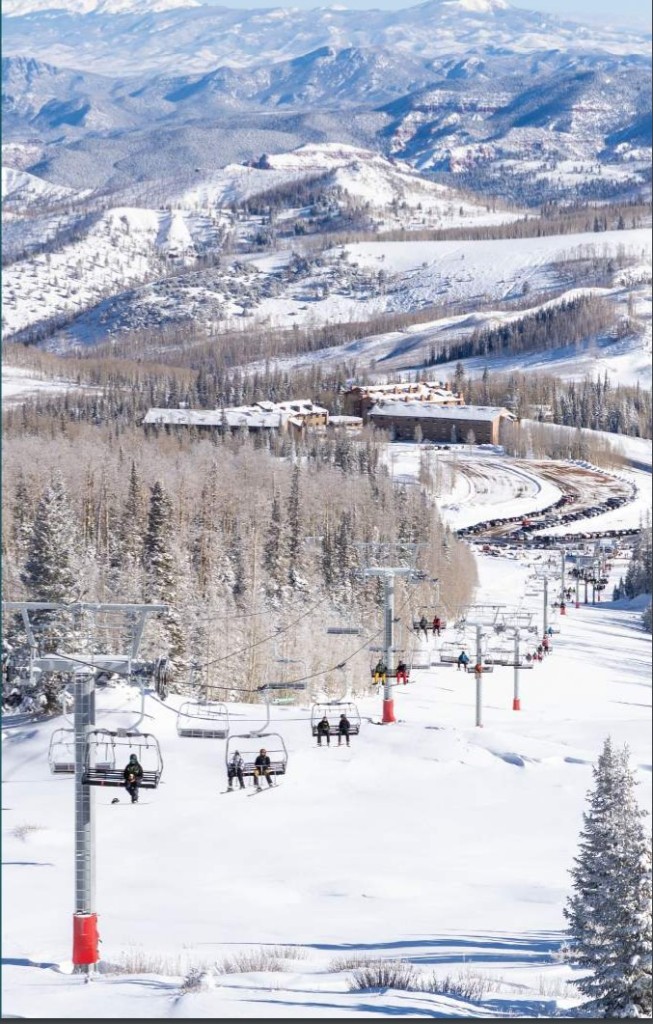
Brian Head ski slopes under fresh snow

Duck Creek Guide

Brian Head, Utah

Utah’s highest resort town — skiing, snow tubing, and summer chairlift days, about 40 minutes from Duck Creek Village Inn in summer and a longer winter drive through Parowan

At a glance

Drive from Duck Creek
~35 min in summer via Hwy 14 and Hwy 148; ~1 hr 15 min in winter via Cedar City and Parowan
Elevation
Town base 9,800 ft, peak 11,300 ft
Resort size
8 chairlifts, 75 runs, 650+ acres across Giant Steps and Navajo
2026-27 opening day
Friday, November 6, 2026 (resort announcement)
Snow tubing
Giant Steps base, 1.5-hour sessions, ages 4+, tube included

At a glance

The short version

Brian Head is a small resort town in Iron County, Utah, built around Brian Head Resort. Brian Head Town lists a base elevation of 9,800 feet and a peak elevation of 11,300 feet, which makes it the highest resort town in America by its own reckoning. The resort spans two connected mountains, Giant Steps and Navajo, with 8 chairlifts and 75 runs across more than 650 acres, plus a snow tubing hill at the Giant Steps base. From Duck Creek Village Inn it is roughly 35 minutes in summer over Highway 148 through Cedar Breaks, and closer to an hour and 15 minutes in winter once that road closes and you route through Cedar City and Parowan.

Quick facts

Drive from Duck Creek ~35 min in summer via Hwy 14 and Hwy 148; ~1 hr 15 min in winter via Cedar City and Parowan
Resort size 8 chairlifts, 75 runs, over 650 acres across Giant Steps and Navajo
Elevation Town base 9,800 ft; peak 11,300 ft
2026-27 opening day Friday, November 6, 2026 (resort announcement)
Snow tubing Giant Steps base area, 1.5-hour sessions, ages 4 and up

Good to know

  • Snow tubing runs at the Giant Steps base area in 1.5-hour sessions with the tube included — no skiing required.
  • Brian Head Resort has announced Friday, November 6, 2026 as opening day for the 2026-27 winter season.
  • Navajo is the beginner-friendly side of the mountain, which is why Brian Head reads as a family hill rather than an expert one.
  • Winter closes Highway 148 through Cedar Breaks, so the drive from Duck Creek goes the long way through Cedar City and Parowan.
  • Summer keeps the lifts turning for downhill mountain biking, scenic chairlift rides, and a hike down the Vista Trail.

Brian Head is a small resort town wrapped around a ski hill, sitting at the top of Parowan Canyon on Highway 143. Brian Head Town puts its base elevation at 9,800 feet and its peak at 11,300 feet — high enough that it calls itself the highest resort town in America, and high enough that snow arrives early and hangs around late.

From Duck Creek Village Inn it is the nearest place to buy a lift ticket, rent skis, or put a kid on a tube and let gravity do the rest. In summer the same chairlift keeps turning for mountain bikers and sightseers, so the answer to "what is there to do in Brian Head" changes completely depending on which month you are asking about.

This guide covers both halves of the year, with the practical parts first: what the resort actually operates, what the snow tubing hill requires, and how the drive from Duck Creek changes once winter closes the shortcut through Cedar Breaks.

Skiing and snowboarding at Brian Head Resort

Brian Head Resort spans two connected mountains, Giant Steps and Navajo, with 8 chairlifts and 75 runs across more than 650 acres. Navajo is the beginner-friendly side, with a dedicated learning area and kids' lesson programs, and it is the reason Brian Head reads as a family hill rather than an expert's mountain. Giant Steps is where the main lodge sits, along with the tubing hill and the night-ski rental counter.

The resort advertises the highest base elevation of any ski area in Utah, and it uses that elevation to run one of the state's longer seasons — it counted 160 ski days in 2025-26 and describes a typical season stretching from early November into May. For 2026-27 it has announced Friday, November 6, 2026 as opening day.

Night skiing runs on Friday and Saturday evenings from 4pm to 9pm once the season is underway, on the Blackfoot lift and the Giant Steps conveyor, and expands to every night during holiday weeks. Night rentals are available in the Giant Steps Lodge on those same evenings. The resort publishes each season's night-skiing window separately from the main season, so check it before you build an evening around it.

If you are travelling with kids, it is worth checking the resort's current family pricing — Brian Head has been advertising free skiing for children 12 and under, but promotions like that are set season by season.

Snow tubing at Brian Head

Snow tubing is the single best reason to drive up to Brian Head if nobody in your group skis. It is a groomed hill with its own lanes and its own ticket, at the Giant Steps base area, and the tube comes with the ticket.

  • Where: the Giant Steps base area, separate from the ski runs
  • Session length: tickets are sold in 1.5-hour blocks
  • Tube rental: included in the ticket price
  • Minimum age: 4 years old
  • Under 50 pounds: the child rides alone in their own tube and a ticketed adult must be alongside them in a separate lane
  • Tickets: buy online in advance or at the ticket office

In a normal week the tubing hill has been running Sunday through Thursday from 10:00am to 4:00pm, and Friday and Saturday from 10:00am to 7:00pm, with extended hours seven days a week across the holiday periods. Those are the resort's published operating patterns rather than a promise: tubing is snow dependent, and the hill needs deeper coverage than the first ski runs do, so it typically opens later in the season than the lifts.

Tickets for the 2026-27 season are already on sale, but the resort has not yet posted the tubing hill's opening date or its holiday-week calendar for that season. Check current season dates, hours, and pricing on brianhead.com before you commit a family afternoon to it — and if you are coming on a weekend or over a holiday, buy the session online rather than hoping for a walk-up slot.

Two practical notes from the elevation. First, dress for standing around in the cold, not for a car ride: waterproof gloves, snow boots, and a hat matter more here than a heavy coat. Second, a 1.5-hour session is genuinely enough for most young kids at 9,800 feet.

Other winter things to do around Brian Head

Snowmobiling is the other big one, and it is the activity that connects Brian Head back to Duck Creek. The Cedar Mountain snowmobile complex covers the plateau between the two towns, and the resort points visitors toward guided tours on it. If you would rather ride from our side of the mountain, our snowmobile guide covers snowpack, grooming, rentals, and the rules that apply on Dixie National Forest land.

Cedar Breaks National Monument becomes a winter destination in its own right, but only under its own terms. Highway 148 and the monument's Rim Road close around mid-November each year and stay closed until mid to late May. Once they do, the snow-covered road becomes a marked, groomed snowmobile route — and riding off that marked route inside the monument is prohibited, with fines up to $5,000 and impoundment. Snowshoers and cross-country skiers are freer: the National Park Service sets track only on the road, but all trails are open to travel on foot, and rangers lead guided snowshoe walks on the monument calendar.

The plowed lot at the Highway 143 junction with the monument road is the closest winter access point to Brian Head, and Point Supreme overlook is 4.1 miles from there. Trailers are not allowed in that lot. If you would rather start from the Duck Creek side, the maintained lot where Highway 14 meets Highway 148 puts the overlook 3.5 miles away.

Brian Head Resort also lists snowshoeing, cross-country skiing, ice skating at Brian Head Ice, and spa services among its winter offerings, which is useful on a storm day when the lifts are on wind hold. Our Cedar Breaks guide covers the monument in more depth across all four seasons.

Things to do in Brian Head in summer

Summer at Brian Head is lift-served rather than snow-covered. The Giant Steps Express keeps running for downhill mountain biking on more than 100 miles of single track, and the same lift sells scenic rides for people who just want the view — Cedar Breaks is visible from the top. The Vista Trail is the hiking version: ride the lift up, then walk three miles back down through aspen.

The base area fills in around that with an 18-hole disc golf course and an Adventure Zone that runs Thursday through Sunday: a climbing wall, a 300-foot mini zip line, a bungee trampoline, and Avalanche Tubing, a summer tubing hill with a conveyor lift back to the top. Avalanche Tubing has both an age and a weight minimum, so check the requirements if you are bringing small kids.

In 2026 the resort ran Friday through Sunday from June 12, went daily from June 29 through August 30, then dropped back to Friday through Sunday from September 4 to September 20 with Labor Day added. Summer lift hours have been 9:30am to 5:00pm. Those dates shift year to year, so confirm the current calendar before planning around it.

Above the resort, a Dixie National Forest spur road climbs from Highway 143 toward the Brian Head Peak observation site, where a stone shelter built by the Civilian Conservation Corps in 1934-35 still stands — built, as it happens, by Camp F-16, which was stationed at Duck Creek. On a clear day the view reaches Nevada's Wheeler Peak, Arizona's Mount Trumbull and Navajo Mountain, and the Tushar Range. The road is unpaved and only snow-free for part of the year, so check Dixie National Forest alerts first.

Getting to Brian Head from Duck Creek

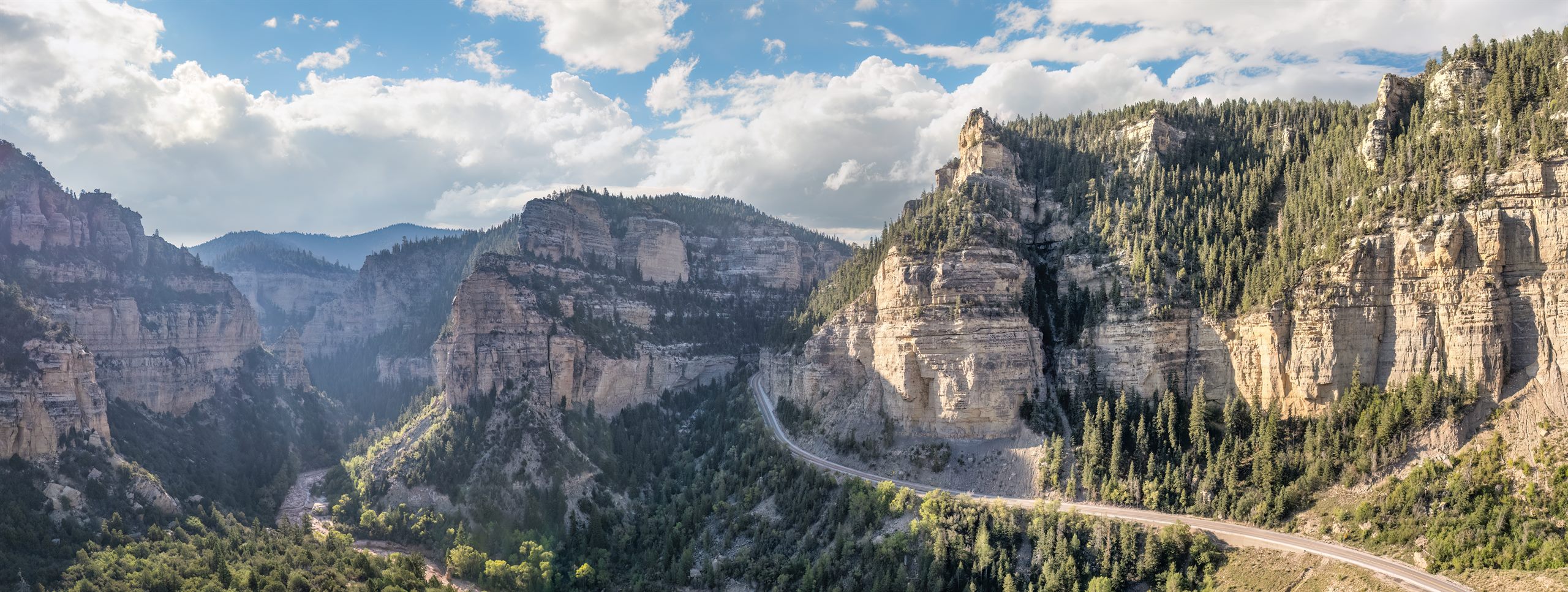
In summer the drive is short and scenic: Highway 14 west from the village, north on Highway 148 through Cedar Breaks National Monument, then onto Highway 143 into Brian Head. Roughly 35 minutes, and one of the better half-hours of driving in southern Utah.

In winter that route does not exist. Highway 148 closes around mid-November and does not reopen until mid to late May, so the drive becomes Highway 14 down to Cedar City, I-15 north to Parowan, then Highway 143 up Parowan Canyon — about an hour and 15 minutes when conditions are good. Parowan Canyon is a steep, sustained climb, and snow tires or chains are generally required on that approach from about November 30 to March 1.

Plan the drive before you plan the day. Check road conditions — including the Brian Head corridor page — plus the snow report and the mountain weather forecast the night before and again the morning of. A storm that makes Brian Head worth the drive is the same storm that can make the drive a bad idea for the wrong vehicle.

What to bring

  • Warm layers and waterproof outerwear — the base sits near 9,800 ft and runs colder than Duck Creek
  • Snow boots and gloves for a tubing session, even if you are not skiing
  • Sunglasses or goggles and high-SPF sunscreen — high-elevation sun is strong off snow
  • Winter tires or chains from roughly November 30 to March 1 on the Brian Head approach
  • Cash or card for tickets you did not buy online, plus a plan B if a storm closes the road

When to go

Winter is the headline season, with a 2026-27 opening day scheduled for Friday, November 6, 2026 and a typical run from early November into May. Summer operations restart in mid-June for biking, scenic lift rides, and the Adventure Zone, then taper to weekends in September. Late spring and late fall are the dead zones: the snow is gone or going, and the summer lifts are not turning yet.

Tips

Check the drive before you check the forecast. Highway 148 through Cedar Breaks closes for winter, so a 35-minute summer hop becomes a 75-minute loop through Cedar City and Parowan, and snow tires or chains are generally required on the Brian Head approach from about November 30 to March 1. Buy tubing sessions online if you are coming on a weekend or holiday. And bring more layers than you think you need — the base sits well above Duck Creek and the wind at the top is a different animal.

Staying in Duck Creek instead of on the mountain

We will be straight about the trade-off. If your whole trip is skiing and you want to walk to the lift in ski boots, stay in Brian Head. Nothing we can offer beats ski-in convenience on a powder morning.

What Duck Creek Village Inn offers instead is a quieter, less expensive base with more to do when you are not on the hill. You are 35 minutes away in summer and about 75 minutes in winter, in a village with restaurants, a snowmobile trail network out the door, and no resort-village bustle in the evening. For a trip that mixes one ski or snow tubing day with snowmobiling, Cedar Breaks, and slow mornings, that balance works better than paying resort rates for nights you spend asleep.

Compare our rooms and cabins, or start from the 3-day winter itinerary if you want the whole week sketched out before you book.

August 2026

Why trust this guide

We write this page for guests driving up from Duck Creek Village Inn, so the parts that matter most here are the drive, the seasonal road closures, and what actually operates when. Resort dates, hours, and prices change every season — cross-check them against the official sources below before you go.

Planning a Brian Head day

The questions trip planners usually ask next.

Is there snow tubing at Brian Head?

Yes. Brian Head Resort runs a snow tubing hill at its Giant Steps base area, separate from the ski runs, and the tube is included with your ticket. Sessions are sold in 1.5-hour blocks and you can buy online in advance or at the ticket office. The minimum age is 4, and children under 50 pounds ride alone in their own tube with a ticketed adult alongside them in a separate lane. Tubing is snow dependent, so confirm current-season dates, hours, and pricing on brianhead.com before you drive up.

How far is Brian Head from Duck Creek Village?

About 35 minutes in summer: Highway 14 west, then Highway 148 north through Cedar Breaks National Monument to Highway 143. In winter that shortcut disappears, because Highway 148 closes around mid-November and does not reopen until mid to late May. The winter route runs Highway 14 down to Cedar City, I-15 north to Parowan, then Highway 143 up Parowan Canyon — roughly an hour and 15 minutes in good conditions.

When does Brian Head open for the season?

Brian Head Resort has scheduled Friday, November 6, 2026 as opening day for the 2026-27 winter season. The resort describes a typical season running from early November into May, and it claimed 160 ski days in 2025-26. Opening terrain always depends on early-season snow and snowmaking, and the snow tubing hill usually needs more coverage than the first ski runs do.

What is there to do in Brian Head in summer?

The resort keeps the Giant Steps Express running for downhill mountain biking on more than 100 miles of single track, scenic chairlift rides with Cedar Breaks in view, and the Vista Trail, a three-mile hike down from the top of the lift. There is also an 18-hole disc golf course and an Adventure Zone with a climbing wall, mini zip line, bungee trampoline, and a summer tubing hill. In 2026 the resort ran daily from June 29 through August 30, with weekend operations on either side of that window.

Can you drive to Brian Head Peak?

A Dixie National Forest spur road climbs from Highway 143 to the Brian Head Peak observation site, where a stone shelter built by the Civilian Conservation Corps in 1934-35 still stands. On a clear day you can pick out Nevada’s Wheeler Peak, Arizona’s Mount Trumbull and Navajo Mountain, and the Tushar Range. The road is unpaved and only clear of snow for part of the year, so check Dixie National Forest alerts before you plan a drive up.

Stay Here, Ski Brian Head Tomorrow

Book your room or cabin at Duck Creek Village Inn — a quieter, cheaper winter base with snowmobile trails at the door and Brian Head an easy drive away.

10% off direct with code · stays through Dec 1, 2026 Best rate direct · Reserve now, pay later

Call Us · 435-990-5488